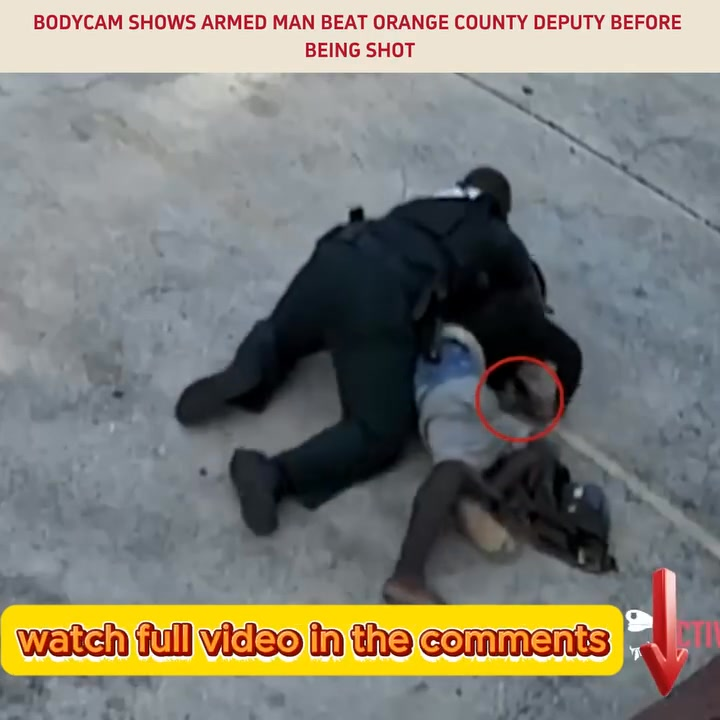
ORANGE COUNTY, FL — Shocking bodycam footage released by the Orange County Sheriff’s Office (OCSO) shows the terrifying moments when a routine traffic stop turned into a violent struggle, as an armed man brutally attacked a deputy before being shot. The video offers a raw and unfiltered view of how quickly a calm encounter can erupt into chaos — and how close the deputy came to losing his life.
A Routine Stop Turns Deadly
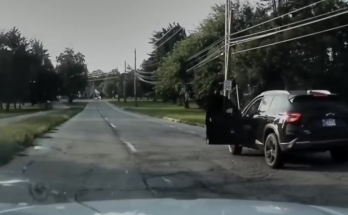
The incident unfolded just after 10:40 p.m. on South Rio Grande Avenue, when Deputy Brian Keller, a five-year veteran of the force, pulled over a black Dodge Challenger with no headlights and expired tags. The stop began calmly — Keller’s body-worn camera was already rolling as he approached the driver’s side window.
The driver, later identified as 29-year-old Jerome Taylor, appeared nervous, fumbling through paperwork while avoiding eye contact. Keller’s tone was calm but professional:
“Evening, sir. You know your lights are off? Can I see your license and registration?”
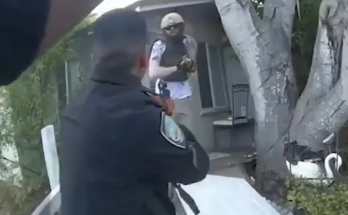
Taylor hesitated before responding. The deputy’s bodycam shows his hands trembling slightly as he handed over a crumpled ID card. Moments later, the deputy’s flashlight beam caught the glint of a firearm grip tucked into Taylor’s waistband.
“Hey, don’t reach for that! Keep your hands up!” Keller commanded.
That’s when everything spiraled out of control.
Bodycam Captures Sudden Violence
Without warning, Taylor flung the door open and lunged at the deputy, slamming him to the pavement. The camera jolts violently as the two men struggle, the audio filling with grunts, scuffling, and the deputy’s panicked shouts.
“Stop! Stop resisting! Drop the gun!” Keller yells as the fight spills onto the roadside grass.
The footage becomes chaotic — a flurry of movement and noise. Taylor lands multiple punches to the deputy’s face, momentarily dislodging his bodycam, which spins sideways but continues recording the muffled struggle.
“He’s hitting me! He’s going for my gun!” Keller can be heard shouting.
Backup units race to the scene as the first responding deputy’s dashcam captures flashes of movement in the darkness. Keller manages to regain control, drawing his service weapon and firing three rounds at close range.
Taylor collapses beside the patrol car, the gun falling from his hand.
“Shots fired! Suspect down!” Keller gasps into his radio, his voice shaking. “Send EMS — I’m hit!”
Later reports confirmed Keller suffered a broken nose, facial fractures, and severe bruising, but his ballistic vest and quick reflexes likely saved his life.
Aftermath: Chaos and Clarity
The bodycam continues rolling as responding deputies arrive, securing Taylor’s firearm and beginning first aid. Keller’s bloodied face is visible in the footage as he leans against his patrol unit, breathing heavily.
“He just kept swinging,” Keller mutters, dazed. “I couldn’t stop him.”
Paramedics arrived within minutes and pronounced Jerome Taylor dead at the scene. The recovered weapon — a loaded 9mm Glock — had one round chambered. Investigators later confirmed the gun was stolen from a vehicle burglary earlier that week.
Sheriff John Mina spoke at a late-night press briefing, praising Keller’s restraint and survival under extreme duress:
“Deputy Keller showed extraordinary courage. He faced a violent, armed suspect who had no regard for human life. The bodycam footage proves that our deputy fought for his life, and his actions were both justified and heroic.”
The Investigation
As standard procedure, the Florida Department of Law Enforcement (FDLE) and the Orange County State Attorney’s Office have launched independent investigations into the shooting. Keller has been placed on administrative leave pending the outcome.
Initial reports and footage indicate that Keller followed departmental policy at every step: clear commands, verbal warnings, and de-escalation attempts before using deadly force.
OCSO policy allows officers to use lethal force when a suspect poses an immediate threat of serious bodily harm — a threshold that, according to the footage, was unmistakably met.
“He had no choice,” Sheriff Mina said. “This could’ve ended with one of our deputies dead on the side of the road.”
Who Was Jerome Taylor?
Public records show that Taylor had a lengthy criminal history, including prior arrests for aggravated assault, battery on a law enforcement officer, and possession of a firearm by a convicted felon. He had been released from state prison just seven months prior after serving a five-year sentence.
Family members described him as “troubled but not evil,” claiming he had been struggling to adjust to life outside prison. His mother, Claudia Taylor, told reporters:
“Jerome made mistakes, but he wasn’t a monster. I just wish he had walked away that night.”
Bodycam Footage and Public Transparency
The bodycam video, released less than 48 hours after the shooting, has drawn widespread attention across Florida. In the footage, the realism is jarring — the sound of blows landing, the heavy breathing, the split-second between chaos and control.
For some viewers, the video was difficult to watch. For others, it was a clear vindication of the deputy’s response.
Civil rights attorney Marcus Denning, who frequently reviews police encounters, said the video leaves little ambiguity:
“This is one of those cases where the footage speaks volumes. The suspect initiated violence, the deputy tried to survive, and the use of force was legally and morally justified.”
The sheriff’s office stated that the decision to release the footage quickly was intentional:
“Transparency builds trust,” said spokesperson Michelle Alvarez. “We want the public to see exactly what our deputies face, moment by moment.”
Community Reaction
The release of the video sparked strong emotions throughout the community. Many residents expressed sympathy for Deputy Keller and outrage over the rising number of violent encounters with armed suspects.
“These deputies risk their lives every night,” said Anthony Williams, a local business owner. “You can hear the fear in his voice. He could’ve died right there.”
Others, however, raised broader concerns about systemic issues surrounding repeat offenders and gun violence.
“Why was this man on the street with a stolen gun?” asked community advocate Janelle Pierce. “We need stronger supervision for ex-felons and better mental health outreach.”
Expert Commentary
Retired police trainer Lt. Brad Connelly reviewed the bodycam footage for a local news station. He noted that Keller’s calm communication and restraint were exemplary, especially given the rapid escalation.
“You can see he never lost control of his voice until he was attacked. Even then, he kept issuing commands,” Connelly said. “It’s a textbook example of why officers are trained to expect the unexpected.”
He also emphasized the importance of body-worn cameras in clarifying officer-involved incidents:
“Without that footage, this could’ve been twisted into any number of narratives. The video doesn’t lie — it shows courage, danger, and the ugly reality of the job.”
Final Moments on Tape
In the final seconds of the video, after Taylor is subdued and the scene stabilizes, another deputy places a hand on Keller’s shoulder. The camera captures his trembling hands and bloodied face.
“You’re okay, Brian. You did what you had to do,” the fellow deputy says softly.
Keller exhales deeply, his voice barely above a whisper:
“He almost got my gun.”
The video fades out as paramedics arrive — flashing lights reflecting off the blood-stained pavement.
Conclusion
The Orange County bodycam footage provides a sobering, first-person look into the unpredictable nature of police work. What began as a simple traffic stop escalated in seconds into a fight for survival — one that could have easily claimed a deputy’s life.
As the investigation continues, the footage stands as both evidence and education — a reminder that behind every flashing light and uniform is a human being making split-second decisions under impossible pressure.
In the words of Sheriff Mina:
“Bodycams don’t just record what happened — they record why it happened. And in this case, they recorded a deputy’s will to live.”