76-Year-Old Suspect Opens Fire On Multiple Officers In Wild Shootout
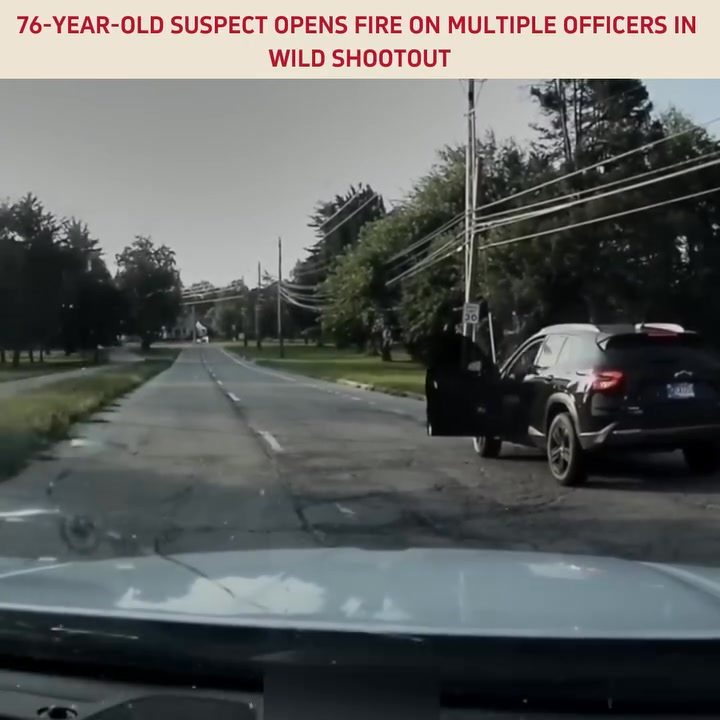
A normally quiet suburban street in Tulsa, Oklahoma, became the scene of a chaotic and deadly gun battle when a 76-year-old man opened fire on responding officers during a welfare check — a shocking confrontation that was captured in its entirety on police body-worn cameras and dashcam video.
The incident, which unfolded just after 9:00 a.m. on a Saturday morning, left the neighborhood rattled and underscored the unpredictable dangers officers face — even in calls that begin as routine.
The Call
According to the Tulsa Police Department, officers were dispatched to a residence on South Peoria Avenue after neighbors reported hearing gunshots inside a home and seeing an elderly man pacing outside with a rifle. The man was later identified as Harold Jennings, a retired construction worker who, according to family members, had been suffering from increasing paranoia and dementia.
When officers arrived, their bodycams were already recording. The footage begins with two patrol cars pulling up to a quiet cul-de-sac lined with one-story homes and neatly trimmed lawns.
“Dispatch, we’re 10-23 at the location,” one officer radios in. “Male subject outside with a firearm, appears agitated.”
The camera captures Jennings standing in his driveway, barefoot, wearing a flannel shirt and pajama pants. In his hands: a lever-action hunting rifle.
“Sir! Put the gun down! We just want to talk!” one officer shouts from behind his cruiser.
Jennings doesn’t respond. Instead, he raises the rifle slightly, eyes fixed on the officers.
“Don’t do it!” another officer yells.
A shot rings out — then chaos erupts.
The Shootout
The bodycam footage jolts as officers dive for cover behind patrol cars. Bullets crack through the morning air, ricocheting off metal and concrete. The distinct “ping” of rifle rounds can be heard as Jennings fires repeatedly from his driveway.
“Shots fired! Shots fired!” an officer shouts into his radio. “Suspect firing at police!”
From multiple angles, the footage shows the intense crossfire. Officers return fire, coordinating their movements and shouting commands.
“He’s reloading — move up! Watch the right side!”
Jennings retreats toward his garage, firing as he goes. The bodycams capture smoke rising from the rifle barrel, the echo of gunfire bouncing through the neighborhood.
One bullet narrowly misses an officer, shattering the rear windshield of a patrol car. Another round strikes a nearby tree, splintering bark.
Despite the heavy gunfire, officers maintain composure. They communicate clearly, calling for backup and medical personnel while trying to contain the threat.
After nearly two minutes of sustained gunfire, Jennings stumbles back into view — his rifle still in hand — and fires again. Officers return fire, striking him multiple times. He collapses onto the driveway.
“Cease fire! Cease fire! Weapon down!” one officer yells.
The sudden silence that follows is almost eerie. The bodycam captures the faint sound of wind and distant sirens growing louder as reinforcements rush in.
The Aftermath
Officers cautiously approach the fallen suspect, rifles trained on him until the scene is secure. One officer kicks the weapon away while another checks Jennings for signs of life.
“He’s down. Start medics,” an officer says quietly, his breathing heavy.
The bodycam footage shows officers immediately switching from defense to rescue mode. They retrieve a medical kit and begin performing CPR.
Paramedics arrive within minutes, taking over lifesaving efforts. Jennings is transported to Saint Francis Hospital, where he is later pronounced dead.
No officers were injured, though several patrol cars were hit by gunfire.
Investigation
The Oklahoma State Bureau of Investigation (OSBI) has taken over the case, as is standard procedure for officer-involved shootings. Investigators recovered Jennings’ rifle, along with more than two dozen spent shell casings from the driveway and garage area.
According to police, Jennings had fired at least 15 rounds at officers before being shot. They also discovered a note inside his home containing incoherent ramblings about “intruders” and “government spies,” suggesting severe mental decline.
Tulsa Police Chief Wendell Franklin addressed the public in a press briefing later that day.
“Our officers responded to what they thought was a welfare check,” Franklin said. “Instead, they faced a barrage of gunfire from an armed individual who clearly intended to do harm. The bodycam footage shows their professionalism, restraint, and coordination under fire.”
Public Reaction and Bodycam Release
Five days later, the department released an edited version of the bodycam footage and accompanying 911 calls. The video, roughly nine minutes long, includes synchronized views from multiple officers’ cameras as well as dashcam footage from responding units.
In the recording, the viewer can hear the officers’ calm communication amid chaos — clear evidence of training and discipline. The release quickly went viral, garnering millions of views online.
Public reactions were mixed — some praising the officers’ response, others saddened by the tragic circumstances.
“Those cops showed incredible control,” one commenter wrote. “They could’ve easily panicked, but they didn’t.”
Others expressed sympathy for Jennings and his family. “He was old, confused, and sick,” one neighbor told local reporters. “It’s just heartbreaking that it came to that.”
Family Statement
Jennings’ daughter, Carolyn Hayes, released a statement through her attorney expressing grief and disbelief.
“My father was not a violent man. He was suffering from dementia and delusions,” she said. “We wish there had been a mental health professional on scene that morning. Maybe he’d still be alive.”
Her comments reignited discussions in Oklahoma about crisis-intervention teams and how law enforcement responds to mentally unstable individuals.
Expert Analysis
Law enforcement analysts reviewing the bodycam footage agreed that the officers acted appropriately and within policy.
Dr. Steven Castillo, a police tactics instructor and former SWAT commander, explained:
“Even at 76, a person with a rifle poses a deadly threat. The video clearly shows officers attempting de-escalation before shots were fired. Once the suspect began shooting, their only option was to stop the threat while minimizing harm to themselves and nearby residents.”
He added that the footage was a sobering reminder of how unpredictable calls can become.
“There’s no such thing as a ‘routine’ call. You never know what’s waiting behind that door — or in this case, standing in the driveway.”
The Final Moments on Camera
The last minute of the bodycam video is quiet and haunting. After paramedics take Jennings away, the camera pans slowly across the scene: bullet holes pepper the patrol cars, a trail of blood stains the driveway, and a fallen mailbox lies in pieces.
One officer, leaning against his cruiser, exhales deeply. His hands are shaking. Another approaches and asks softly, “You good?”
He nods, still staring at the ground. “He shot first,” he says quietly. “He really shot at us.”
It’s a raw moment — the kind of truth that only bodycams can reveal.
Broader Implications
Chief Franklin has since called for increased funding for mental health response programs and improved communication between police and health agencies.
“This was a tragedy all around,” he said. “The bodycam footage shows bravery, but it also shows pain — for our officers and for a family that lost someone they loved. We have to do better at preventing these situations before they start.”
The officers involved remain on administrative leave pending the outcome of the investigation. The department says the footage will also be used for future training on responding to armed, mentally unstable subjects.
Conclusion
The Tulsa shootout serves as a stark reminder that danger knows no age — and that body-worn cameras have become vital tools for transparency, truth, and accountability.
The footage captures every terrifying second: the split-second decisions, the controlled chaos, and the humanity that follows when the smoke clears.
For the officers, it’s an encounter they’ll never forget. For the Jennings family, it’s a loss that words can’t mend. And for the public, it’s an unfiltered look at the thin, fragile line between protection and tragedy.
As Chief Franklin concluded at the press conference:
“The bodycam doesn’t just show what happened. It shows what it feels like — the fear, the duty, the heartbreak. That’s the reality of policing in America today.”