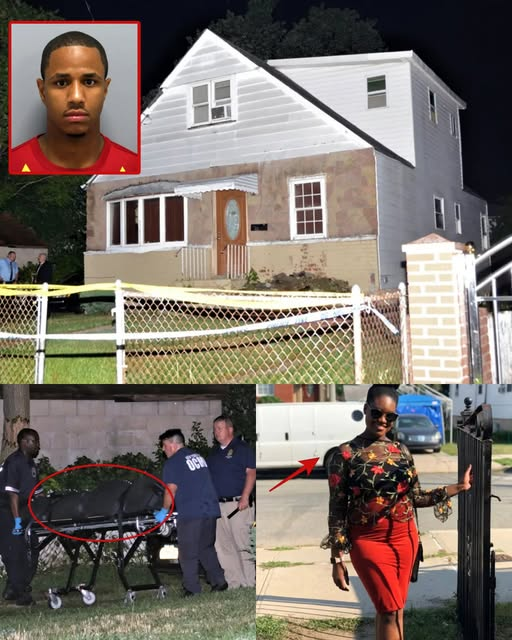
The summer of 2018 was supposed to mark another ordinary chapter in the life of 29-year-old nurse Samantha Stewart.
She was building her career in New York, working long hours caring for patients and staying closely connected with her family in Queens.
Instead, July 16 of that year became the date at the center of one of the city’s most unsettling criminal cases involving a dating app meeting.
According to prosecutors, Stewart met Danueal Drayton through Tinder.
The two agreed to go on a date and later returned to her home in the Springfield Gardens neighborhood of Queens.
What allegedly happened inside that residence has since been detailed in an 18-count indictment.
Prosecutors allege that after the pair returned to the house, Drayton attacked Stewart.
He is accused of beating and strangling her inside her own bedroom.
Authorities say the violence left her dead in the apartment she had once considered safe.
The indictment further alleges that Drayton remained at the scene after her death.
He is accused of taking her credit cards and personal identification.
Financial records later became a key part of the investigation.
According to court documents, one of Stewart’s credit cards was used to purchase a plane ticket.
That ticket allegedly allowed Drayton to fly from New York to Los Angeles shortly after the killing.
Investigators say he abandoned a white van at JFK Airport before boarding the flight.
The van was later discovered, helping authorities reconstruct his movements in the hours following the crime.
Stewart’s body was not immediately discovered by law enforcement.
It was her brothers who found her after they became alarmed when they could not reach her.
The discovery devastated the family, who had expected to see her continuing her promising career and personal life.
At the time of her death, Stewart was employed at North Shore University Hospital in Manhasset.
Colleagues described her as dedicated and compassionate, someone who treated patients with patience and kindness.
Her sudden absence was felt deeply within the hospital community.
Drayton was apprehended roughly a week later in North Hollywood.
Authorities in California took him into custody after locating him at a hotel.
Law enforcement officials alleged that at the time of his arrest, he was holding another woman against her will.
That detail intensified the scrutiny surrounding the case.
Following extradition proceedings, Drayton was returned to New York.
He was arraigned in Queens Supreme Court on the 18-count indictment.
The charges include second-degree murder, sexual misconduct, grand larceny, identity theft, unlawful possession of personal identification information, and criminal possession of stolen property.
If convicted of second-degree murder, he faces a potential sentence of 25 years to life in prison.
During the arraignment, Queens District Attorney Melinda Katz addressed the seriousness of the allegations.
She described the case as one that could cause fear among individuals who use dating applications.
Katz stated that the victim was allegedly misled by someone who presented himself as trustworthy online.
Prosecutors argue that digital evidence and financial transactions provide a clear timeline.
Phone data, surveillance footage, and airline records have all been referenced in court filings.
Credit card statements reportedly show purchases made after Stewart’s death.
Authorities believe these transactions link directly to the defendant’s movements.
The case has raised broader conversations about safety in online dating.
Millions of people use apps like Tinder without incident.

Yet isolated cases such as this have sparked renewed advice from law enforcement about meeting strangers in public places and informing trusted contacts of plans.
Friends and relatives of Stewart have continued to attend court proceedings.
They have spoken publicly about their desire for justice through the legal system.
In statements to the media, family members have emphasized remembering Samantha as more than a victim.
They describe her as ambitious, loving, and committed to her profession.
Legal analysts note that the prosecution must prove each charge beyond a reasonable doubt.
The presumption of innocence remains in place until a verdict is reached.
Defense attorneys have not publicly outlined a comprehensive strategy but are expected to challenge elements of the prosecution’s timeline and evidence.
Pretrial motions are likely to examine the admissibility of digital records and forensic findings.
The indictment includes allegations that after the fatal attack, Drayton engaged in additional unlawful acts.
Those allegations are among the most disturbing aspects of the case, contributing to public outrage.
However, the details will ultimately be evaluated by a jury if the case proceeds to trial.
The investigation involved coordination between New York and California authorities.
Law enforcement agencies worked together to track flight records and confirm the defendant’s location.
Extradition procedures required formal approval before Drayton could be returned to Queens.
Such cooperation is common in cases where suspects cross state lines.
For Stewart’s family, the legal process has been a prolonged ordeal.
Court dates, hearings, and procedural delays have extended the timeline.
Each appearance in court revives memories of July 2018.
Family members have expressed hope that the trial will bring clarity and accountability.
The case also underscores how digital connections can intersect with real-world consequences.
Dating apps have transformed modern relationships, offering convenience and access.
Yet they also require users to exercise caution when meeting strangers offline.
Advocates for personal safety stress the importance of verifying identities and choosing safe environments for initial meetings.
The prosecution has indicated that forensic evidence from the apartment will play a central role.
Investigators collected physical samples and documented the scene extensively.
Financial institutions cooperated by providing transaction histories tied to the stolen credit cards.
Airline booking data reportedly confirmed the purchase of a ticket shortly after the alleged crime.
Authorities believe these records support their claim that Drayton attempted to flee immediately.
The abandoned van at JFK became another critical piece of the narrative.
Surveillance cameras at the airport helped confirm when the vehicle was left behind.
From there, investigators traced the flight path to Los Angeles.
Drayton’s arrest in North Hollywood concluded a weeklong search.
At the time, California authorities stated that another woman was found in the hotel room.
Those circumstances are separate from the Queens indictment but contributed to the urgency of the extradition.
Queens prosecutors have emphasized that Stewart’s case stands on its own evidence.
They argue that the timeline from date to death to flight demonstrates intent.
Defense counsel is expected to examine every element of that sequence.
The courtroom proceedings will determine how the facts are interpreted.
Meanwhile, Stewart’s former coworkers have honored her memory privately.
Some described lighting candles or holding small gatherings in remembrance.
Her family has shared photographs of happier times, focusing on her smile and dedication to nursing.
For them, the headlines cannot capture the fullness of who she was.
The legal system now bears the responsibility of evaluating the allegations.
Drayton’s next scheduled court appearance will continue the pretrial process.
If the case goes to trial, jurors will hear testimony from investigators, forensic experts, and possibly digital analysts.
They will also review documentation of financial transactions and travel records.
Prosecutors must demonstrate that the evidence supports each charge beyond a reasonable doubt.
The defense will seek to cast doubt on that interpretation.
Cases involving digital footprints often hinge on technical analysis.
Cell phone pings, IP addresses, and purchase timestamps can become central exhibits.
In this instance, the prosecution appears to rely heavily on such data.
The outcome remains uncertain until the judicial process concludes.

For Samantha Stewart’s family, the trial represents an attempt to transform grief into accountability.
They continue to advocate for her memory in public statements.
Beyond the courtroom, the case serves as a sobering reminder of vulnerability and trust.
It has encouraged conversations about precaution without diminishing the responsibility of those accused of crimes.
As proceedings move forward in Queens, attention remains fixed on the evidence and the pursuit of justice.
The story began with an online connection and a date in the city.
It now rests in the hands of the courts, where the final determination will shape how this case is remembered in New York’s legal history.