In March 2014, an 18-year-old girl in the United States pulled the trigger on a rifle, believing the sound would be the last thing she ever heard.
She expected darkness and silence, not survival.
Instead, she woke up alive, breathing through machines, surrounded by doctors who were stunned she had not died on the spot.
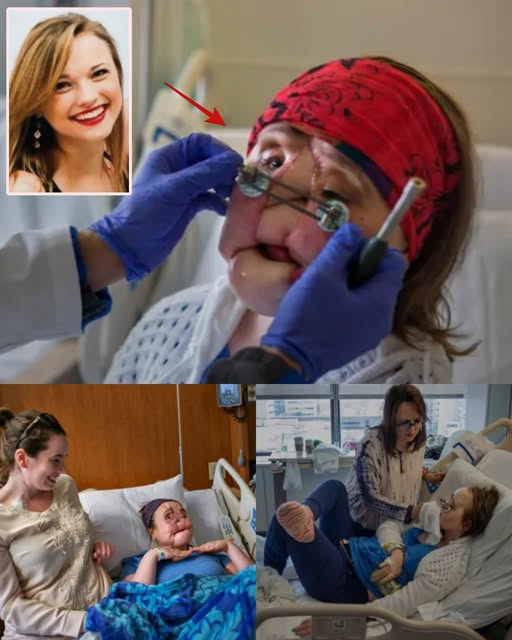
Her name was Katie Stubblefield, and in a single moment, her life was permanently altered.
The bullet missed her brain by a fraction of an inch.
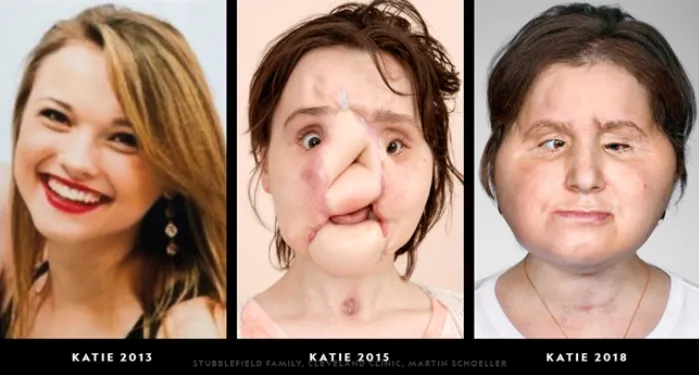
But everything else was destroyed.
Her nose was gone.
Her mouth, lips, jaw, and much of the bone and muscle that formed her face were shattered beyond recognition.
Doctors later described her injuries as catastrophic.
They said survival alone placed her case among the rarest they had ever seen.
When Katie regained consciousness, she could not speak.
She could not eat.
Breathing was difficult and unnatural, dependent on medical tubes and constant monitoring.
Her body was alive, but her sense of self had vanished.
At first, there were no mirrors.
When she eventually saw her reflection, she turned away in shock.
The girl she had known all her life no longer existed.
In her place was someone she did not recognize and did not know how to become.
Emergency surgeons worked without pause in the first days after the shooting.
Their goal was not reconstruction, but survival.
They fought infection.
They fought bleeding.
They fought the constant risk that her airway could collapse.
Every hour mattered.
There was no roadmap for what came next.
No promise that things would ever improve.
In the months that followed, Katie’s life became a cycle of hospital rooms, surgeries, and long nights filled with pain and uncertainty.
Her teenage years disappeared behind sterile walls and medical equipment.
Over the next three years, she endured 22 separate surgeries.
None of them gave her a face.
They were temporary measures to preserve basic function.
To keep her alive long enough to see another day.
She relied on feeding tubes to survive.
Drinking water became a challenge without lips to hold it.
Her eyes were constantly at risk without proper eyelids.
Simple tasks required medical assistance and supervision.
Emotionally, the damage was just as deep.
Katie struggled with shame, grief, and the crushing weight of regret.
Her parents never left her side.
They slept in chairs, memorized medical terminology, and carried hope when Katie could not.
Doctors were honest with them.
Traditional reconstructive surgery could not restore what had been lost.
Then, slowly, a different option entered the conversation.
At Cleveland Clinic, a team of specialists began discussing something that had only been done a handful of times in the world.
A full face transplant.
This was not cosmetic surgery.
It was one of the most complex and risky procedures in modern medicine.
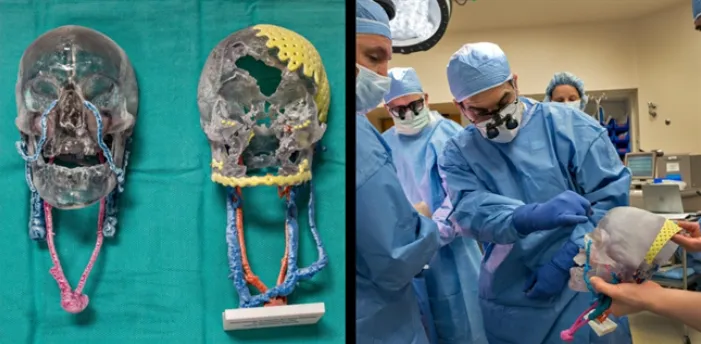
A face transplant requires transferring skin, bone, muscles, nerves, blood vessels, teeth, and jaw structure from a donor to a recipient.
Every connection must be precise, or the entire transplant can fail.
The surgery carries lifelong consequences.
Immune-suppressing drugs must be taken forever to prevent rejection.
Infections become more dangerous.
Even a common cold can be life-threatening.
Katie understood the risks.
She also understood the alternative.
Without a transplant, her life would remain confined to hospitals and medical dependency.
She chose to take the chance.
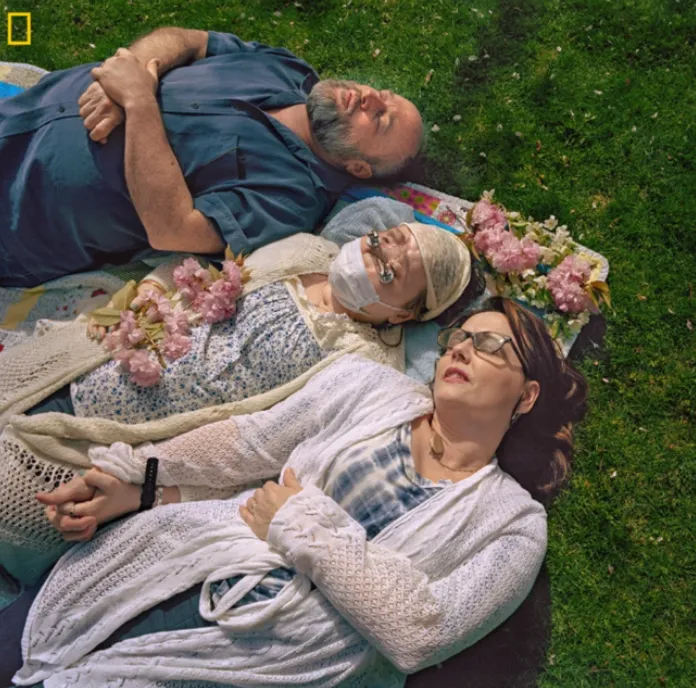
At just 20 years old, Katie became the youngest person in the United States to be placed on a face-transplant waiting list.
The wait was agonizing.
Days turned into weeks.
Weeks into months.
Every phone call brought hope and fear in equal measure.
Every delay felt heavier than the last.
In early 2017, the call finally came.
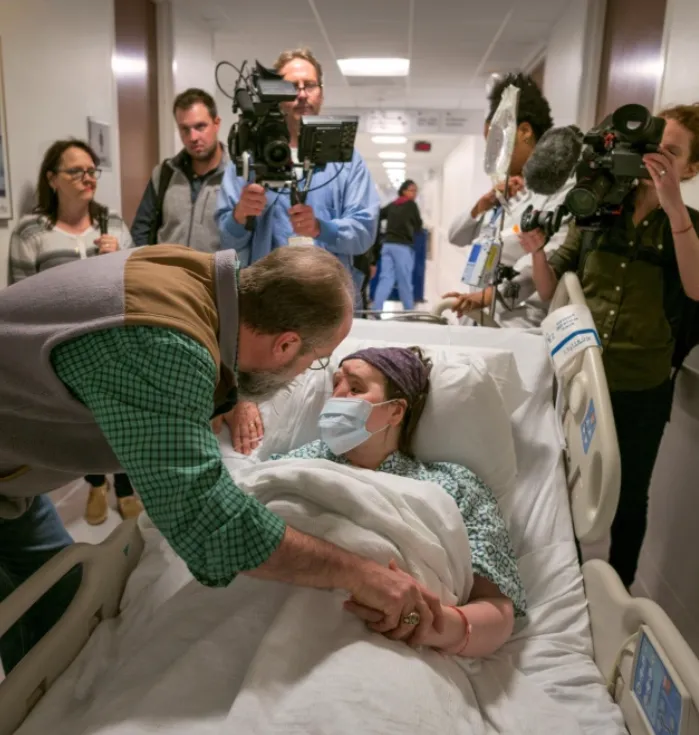
A donor had been found.
The donor was Andrea Schneider, a young woman who had died from a drug overdose.
In death, her family made a decision that would change another life forever.
Andrea’s grandmother, Sandra Bennington, agreed to donate her granddaughter’s face.
It was an act of unimaginable generosity born from unbearable loss.
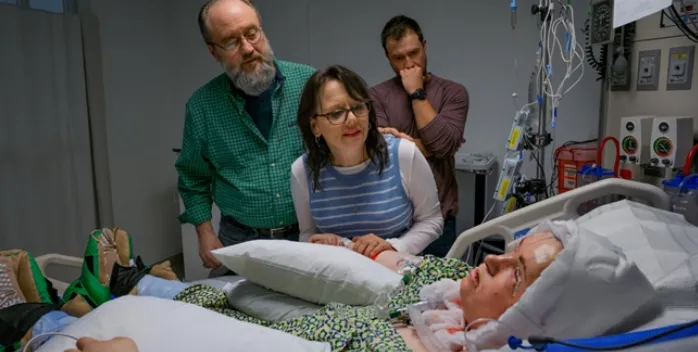
On May 4, 2017, Katie was wheeled into the operating room.
No one could promise she would wake up.

The surgery would last 31 hours.
More than 40 surgeons, nurses, anesthesiologists, and specialists worked in shifts to keep their focus sharp.
They carefully removed Andrea’s facial tissue.
Then they began rebuilding Katie, layer by layer.
Forehead.
Upper and lower eyelids.
Eye sockets.
Nose.
Mouth and lips.
Cheeks.
Upper jaw.
Lower jaw.
Teeth.
Facial muscles.
Halfway through the operation, the surgical team made a critical decision.
Instead of a partial transplant, they would replace 100 percent of Katie’s face.
It was riskier.
But it offered the best chance for functionality and balance.
Every nerve connection was painstaking.
Every blood vessel had to be perfectly aligned.
When the final stitches were placed, the room fell silent.
Then came cautious relief.
Katie was alive.
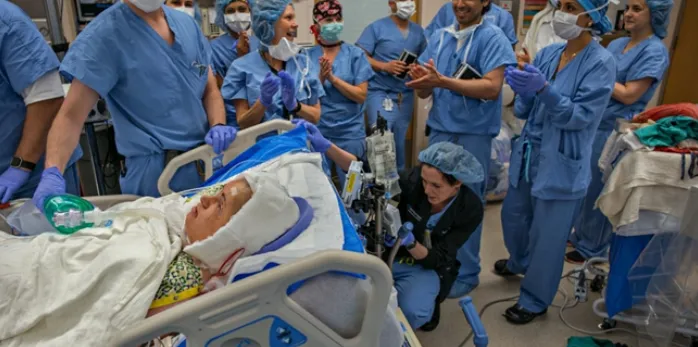
The days after surgery were some of the hardest of her life.
Her new face was swollen, stitched, and almost unrecognizable.
Pain was constant.
Fear lingered in every moment.
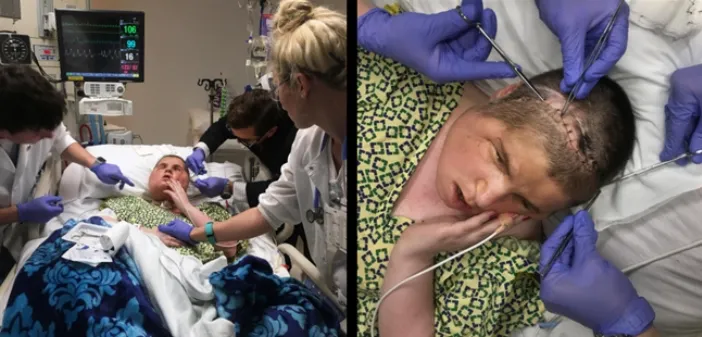
Recovery meant relearning everything most people take for granted.
Speaking required months of therapy.
Chewing was a skill she had to rebuild from nothing.
Smiling took effort and patience.
Katie sang in hospital hallways during physical therapy sessions.
Her voice was weak, but it reminded her she was still here.
Months passed.
Swelling slowly faded.
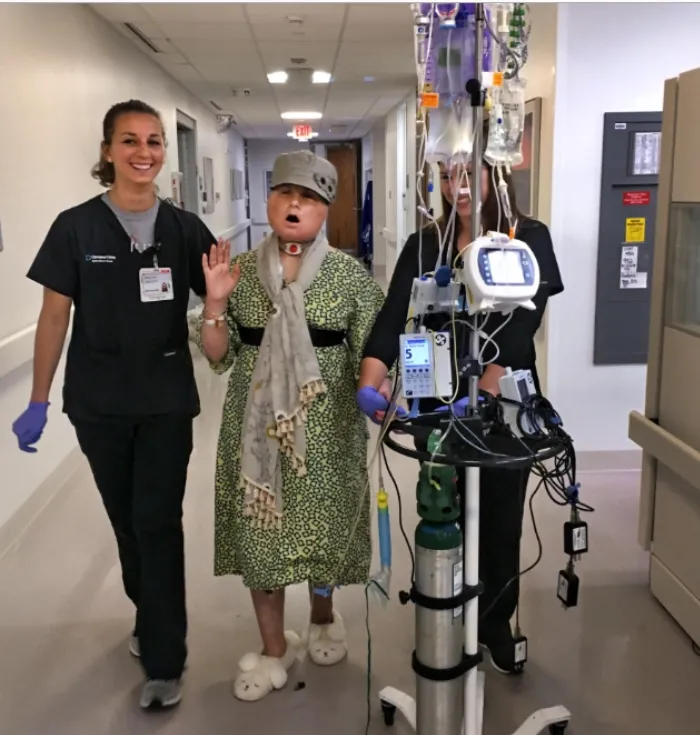
One day, she looked in the mirror and did not turn away.
The face looking back was not the one she was born with.
But it was alive.
And it was hers.
Eight months later, Katie met Sandra Bennington.
The woman who had allowed her granddaughter’s face to give someone else a future.
Sandra recognized familiar features immediately.
The nose.
The shape of the mouth.
“You’re beautiful,” she told Katie through tears.
That meeting became one of the most powerful moments in modern medical history.
Grief and hope standing face to face.
Today, Katie lives with the reality of lifelong medical care.
Every illness is taken seriously.
Every medication matters.
Rejection is always a possibility.
But she also lives independently.
She goes out in public without hiding.
She talks about college.
She talks about helping others who feel trapped by despair.
Once, Katie believed death was the only escape.
Now she represents one of the greatest breakthroughs in reconstructive surgery.
Her case changed medical guidelines.
It reshaped how doctors view young transplant candidates.
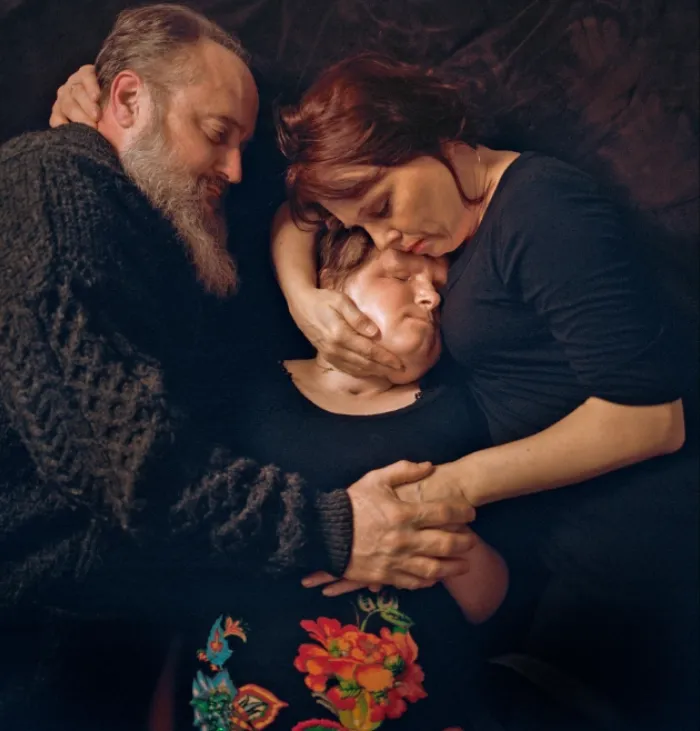
More than that, it changed how millions of people see second chances.
How survival can lead to purpose.
One gunshot destroyed her face.
Thousands of skilled hands rebuilt her future.
And that is why her story continues to spread across America.
Because it is not just about medicine.
It is about what happens when a life refuses to end.