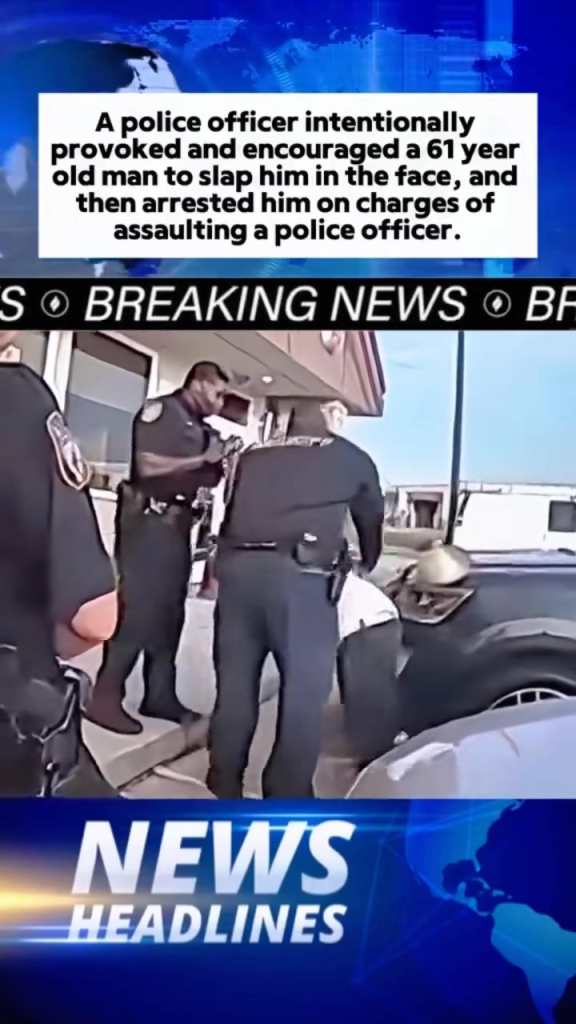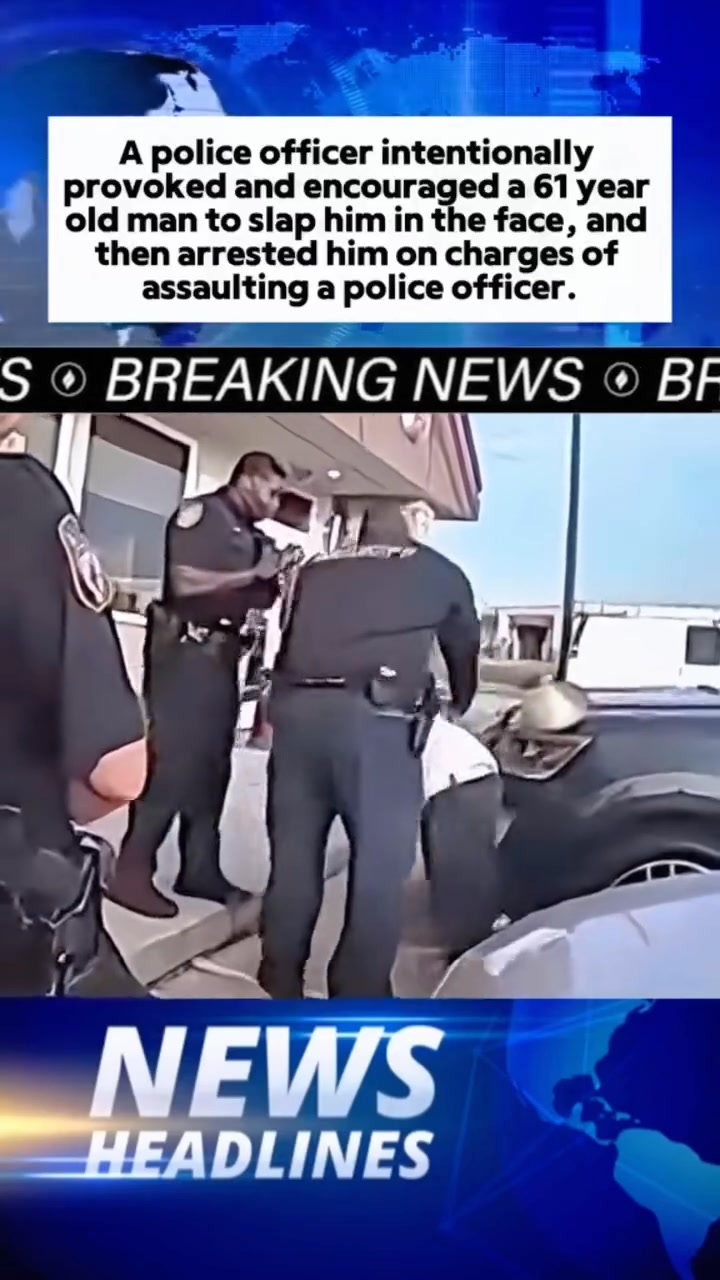
In Harris County, Texas, a confrontation outside an IHOP drew attention after a video account described a deputy sheriff allegedly provoking a sixty one year old man during a dispute and then arresting him. The encounter, presented in the clip as a breaking news style report, fueled questions about police conduct, the limits of officer discretion, and how quickly an exchange over enforcement can escalate into an arrest.
According to the spoken narration, the deputy, identified as thirty nine year old Ellison Collins, was inspecting at the restaurant entrance when he became involved in a disagreement with Jerry Allen over parking rules. The report claims the quarrel centered on whether the older man had committed a violation serious enough to justify detention, and it portrays the deputy as unable to find clear grounds for an arrest.
From there, the narration says, the deputy shifted from arguing about parking to verbally challenging the man, repeatedly telling him he had permission to strike him if he wanted to release his frustration there. The video presents that invitation as a calculated attempt to provoke a response, suggesting the officer was no longer trying to calm the encounter but instead creating conditions that could support criminal charges later.
After a brief hesitation, the man appears, according to the transcript, to make contact with the deputy’s face, only for the deputy to respond by striking him and forcing him down during the arrest. In the account given, the officer then orders him to turn around and get up, framing the touch as an assault despite the earlier verbal encouragement described in the same sequence by narrators afterward.
The man was then handcuffed and booked on a charge of assaulting a police officer, a decision that has become central to criticism because the preceding exchange appears, in the narration, to invite contact. Additional remarks captured in the transcript indicate that the deputy and another officer mocked the arrested man afterward, adding a note of humiliation to an incident already raising concerns about judgment among viewers nationwide.

Although the video offers a forceful version of events, it does not include full body camera footage, court documents, or statements from attorneys, meaning some context remains unavailable in the material provided to viewers. Still, the core allegation is clear an officer is said to have encouraged conduct he later treated as a criminal act, a sequence that experts often cite as deeply troubling when evaluating police authority.
Cases involving alleged provocation by law enforcement are especially sensitive because officers hold legal power, carry weapons, and make immediate decisions that can alter a civilian’s safety, liberty, and future standing within the community. When an arrest grows out of a challenge issued by the officer himself, even supporters of assertive policing may ask whether enforcement served public safety or simply turned anger into punishment for a reaction.
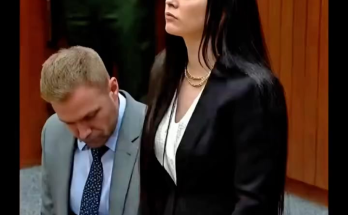
The Harris County episode has also resurfaced because of what happened afterward, with the transcript stating that a grand jury later brought charges against the deputy over the confrontation at the restaurant entrance there. That development suggests prosecutors or jurors believed the evidence merited criminal review, an uncommon step that typically signals broader institutional concern about whether an officer exceeded lawful or ethical boundaries during the incident itself.
The same narration says the deputy was transferred to another position after the case emerged, a move often used by departments to separate personnel from controversy while investigations or disciplinary processes continue behind scenes. Transfers, however, do not always answer the larger public question of accountability, especially when residents want to know whether department leaders found misconduct, imposed consequences, or revised training after a troubling event for officers.
Complicating the story further, the video says the deputy returned in twenty twenty five and was recognized as an outstanding team member by the Harris County department for service to others that same year. That reported honor has intensified criticism online, where viewers see a contradiction between the alleged misconduct described in the case and the commendation celebrating dedication, teamwork, and public service by the agency later on.

Supporters of the deputy might argue that any physical contact with an officer can create danger and that split second decisions in heated confrontations are difficult to evaluate from a short retelling alone afterward. Critics respond that the issue is not merely contact, but whether an officer used his authority to entice a civilian into conduct that would predictably justify force and arrest in that moment at all.
Civil rights advocates have long warned that encounters beginning with minor violations can become flashpoints when respect breaks down, particularly if officers treat sarcasm, taunting, or personal offense as grounds for escalation during stops. For them, the restaurant dispute fits a broader pattern in which routine enforcement can spiral when those with institutional power abandon de escalation and instead lean into confrontation rather than seeking a peaceful outcome.
The account’s reference to mockery after the arrest may prove especially damaging in the court of public opinion, because ridicule from officers can suggest contempt rather than professionalism after a volatile incident for everyone. Even when charges are filed, members of the public generally expect police to act with restraint and dignity, not to celebrate an outcome that leaves an older man on the ground in handcuffs afterward.
Because the video condenses the incident into a brief narrative, important questions remain unanswered, including what witnesses saw, whether any surveillance recordings exist, and how supervisors later explained the deputy’s actions to the public. Readers would also want to know the final status of the criminal case, the department’s disciplinary findings, and whether county officials believe existing policies were strong enough to prevent similar confrontations in the future.
What is not in doubt is that the story has resonated far beyond the restaurant parking area, tapping into national anxieties about accountability, discretion, and unequal power during police encounters for ordinary people everywhere. For many viewers, the most unsettling detail is the apparent sequence itself: permission granted, contact made, punishment delivered, and an arrest completed under the label of assault on an officer during that single exchange.
As attention returns to the Harris County confrontation, the case stands as a test of how transparent institutions are willing to be when officer conduct, prosecutorial action, and public recognition collide in one story. Until fuller records are publicly available, the video’s account will continue to shape debate over whether this was a lawful arrest born of uncertainty or an avoidable abuse of authority by a sworn officer.