For days, people in San Francisco held onto one fragile thread of hope after the West Portal bus stop crash. A baby boy named Caue was still alive, the only remaining survivor from a family that had been standing together just moments before everything changed.
On March 21, 2024, San Francisco police confirmed that Caue died from his injuries. With that update, the loss became even heavier: his parents and his older brother had already been killed, and now the infant who had fought to stay here was gone too.
Authorities said the crash happened the Saturday before, on March 16, 2024, near Ulloa Street and Lenox Way in the West Portal neighborhood. The family was waiting at a bus stop when an SUV left the roadway and struck them.
Police identified the father as Diego Cardoso de Oliveira. Reports said he was a Brazilian citizen, and consular officials later issued a statement expressing grief and asking for privacy for those affected.
The mother was identified as Matilde Ramos Pinto in multiple reports, with some outlets listing her full name as Matilde Moncada Ramos Pinto. The couple’s older child, Joaquim, was just 1 year old.
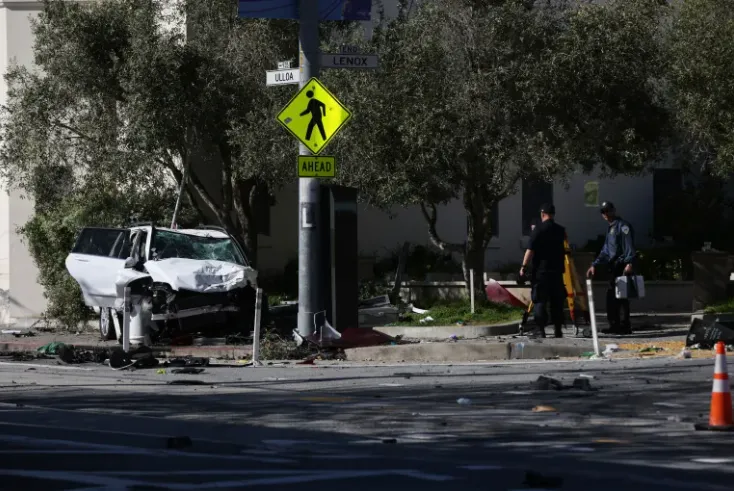

Caue, their baby, was initially hospitalized after the crash. In the days that followed, he became the name strangers kept repeating softly at vigils and in comment sections—because as long as he was alive, people still felt there was something left to hold.
That hope ended when police confirmed his death. KTVU reported that Caue had been the last survivor of the collision that took his entire immediate family.

Investigators said the vehicle involved was a Mercedes SUV. The driver, identified by police as Mary Fong Lau, was 78 at the time of early reporting and was arrested on suspicion of multiple offenses, including felony vehicular manslaughter, reckless driving, and driving at an unsafe speed.
KTVU reported that Lau was also hospitalized after the crash and was cooperating with investigators. At the time of that March 2024 report, she had not yet been charged, and her attorney said she was no longer in police custody.

Her lawyer, Sam Geller, issued a statement saying she joined the community in mourning and would continue cooperating, while also requesting privacy as the investigation continued.

In the neighborhood around West Portal, grief quickly became visible. Routes were temporarily rerouted away from the scene, and residents began leaving flowers, notes, and stuffed animals at the bus stop where the family had been standing.

A vigil was held on Monday evening after the crash. Hundreds of people attended, many of them strangers who had never met the victims but felt pulled there anyway—because a family being erased in public space makes a city feel suddenly unsafe in a deeply personal way.
Walk SF, a pedestrian safety advocacy group, helped organize the vigil. A representative from the group said the tragedy resonated so widely partly because so many people have stood at that same kind of curb, feeling exposed, trusting that the sidewalk is where safety begins.
Multiple reports also noted a broader concern that the crash added to a grim tally of traffic deaths on city streets in early 2024. In statements and later press materials, Walk SF referenced the family’s deaths in the context of ongoing calls for safer street design and stronger protections for people outside vehicles.

At the vigil, San Francisco Mayor London Breed and Police Chief Bill Scott attended as residents gathered around the growing memorial. Community members described the moment as both mourning and warning—an insistence that this could not be treated as just another headline that fades.
Questions about what caused the SUV to crash remained unresolved in the immediate aftermath. KTVU reported that it was unclear whether a medical issue may have contributed.

As the investigation developed in the months afterward, additional court reporting described the legal path ahead for the driver. Later coverage indicated Lau faced felony charges connected to the crash, and court updates followed as the case moved through the system.
But in March 2024, the city’s attention stayed fixed on the family’s names—and especially the smallest one, because Caue’s survival had become a fragile symbol that something could still be saved.
When police confirmed he died, it changed the story from a tragedy with a survivor into a tragedy with no one left from that immediate family to go home.

For relatives and community members, the loss was not only about numbers or charges. It was about a family that had been doing something ordinary—waiting for a bus—being caught in a moment they could not predict or outrun.

In public statements reported by the San Francisco Chronicle, relatives described the parents as loving and devoted, people who cherished time with their young children. That portrait, offered in grief, helped strangers understand that this was not an abstract event—it was a life with routines, jokes, plans, and tiny hands to hold.

The memorial at West Portal continued to grow, layered with flowers and soft toys and handwritten messages from people who felt shaken by how quickly an everyday street corner could become a place of mourning.

And long after the news trucks left, the basic question lingered in the way people looked before stepping off curbs: if a family can be lost while simply waiting at a bus stop, what does safety on a city street really mean.
If you want, paste the next article you’re working from and I’ll rewrite it in the same clean, non-sensational style—one SEO title, short 2–3 sentence paragraphs, and a full long-form arc.