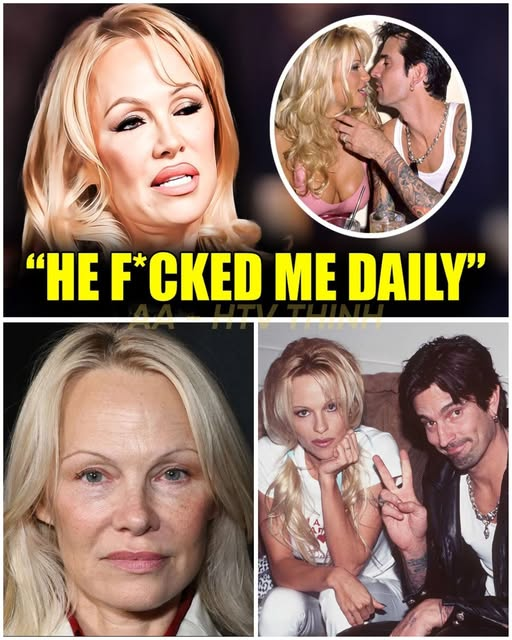
Pamela Anderson’s life has unfolded in the spotlight for nearly four decades, from her early days as a model and Baywatch star to her evolution into an actor, activist, and author. One chapter of her life that has fascinated the public since the 1990s remains her marriage to Mötley Crüe drummer Tommy Lee — a relationship marked by high-profile romance, intense scrutiny, personal difficulty, and decades of changing context. Recently, after nearly thirty years since the end of that marriage, Anderson has offered candid reflections on what she now thinks about that period and how it shaped her life. Her words give insight into how she has processed that experience in adulthood.
In a recent appearance on a talk show, Anderson spoke openly about her current relationship with Lee, acknowledging that although the pair once maintained a closer connection, they are not currently in frequent contact. “We used to talk a lot more. Not recently, unfortunately, but, you know, I wish we did have a better rapport right now,” she said while discussing their family dynamics. Their bond today is defined largely by co-parenting their two adult sons and an anticipation of future family milestones, including grandchildren.
These public reflections are part of a larger narrative Anderson has shared over the past several years about her life, her relationships, and her personal growth. They add context to a story that has moved well beyond tabloid headlines and into deeper considerations of love, identity, trauma, healing, and resilience.
The Early Years: A Rapid and Highly Publicized Romance
Pamela Anderson and Tommy Lee’s romantic story began in 1995 under dramatic circumstances. The two met and married in a remarkably short amount of time — famously only four days after first meeting in Mexico — capturing intense global media attention as an impulsive and passionate union.
Their marriage quickly drew public fascination not only because of the speed with which it unfolded, but also because it symbolized an era of celebrity culture hungry for flamboyant personalities and headline-grabbing moments. Anderson was already a major television star from Baywatch, known for her striking screen presence and charismatic persona. Lee, as the drummer of heavy metal icons Mötley Crüe, was recognized for his rock-and-roll lifestyle and larger-than-life reputation.
From the very beginning, their relationship seemed to combine elements of genuine affection, intense emotions, and high drama, creating a narrative that became enshrined in popular culture long before either of them had fully processed it themselves.
Marriage, Children, and Public Scrutiny
During their time together, Anderson and Lee welcomed two sons: Brandon Thomas Lee in 1996 and Dylan Jagger Lee in 1997, anchoring their whirlwind relationship with the realities of family life.
But their marriage also existed within a broader context of intense public attention. One of the most notorious events of the mid-1990s was the unauthorized release of their private honeymoon video, stolen and distributed widely without their consent. At the time, this unauthorized release became one of the earliest viral scandals in the modern internet era, and its impact on their lives was deep and lasting.
Anderson later described her sense of loss of control and privacy around that episode, explaining that personal material she had recorded for private use was taken from her without permission. The fallout from that event reverberated across their personal lives and careers, contributing to pressures that many couples never face.
The Hardest Time of Her Life
In her memoir and in interviews around its release, Anderson has been frank about how difficult the end of her marriage to Lee was for her. She described the divorce — finalized in 1998 after three years of marriage and on-again/off-again attempts at reconciliation — as “the hardest, lowest, most difficult point of my life.”
Her reflections go beyond the tabloid portrayal of a rock-and-roll marriage to emphasize the emotional toll it took on her. In her writing, she underlines how invested she was emotionally and how much the dissolution of that bond impacted her sense of self and life trajectory. Even many years later, those early emotional impressions resonate in her reflections.
While truthfully acknowledging that her marriage was far from perfect — and that it ended under painful circumstances — she has also spoken about the depth of her feelings for Lee during that time. In public interviews and in her documentary projects, she described those early years as genuinely full of love and intensity, not just headline-grabbing flamboyance.
In a candid moment shared during a television interview, she acknowledged to her son that her love for Lee had been profound and unlike any other, illustrating how complicated love and personal history can be. “I really loved your dad for all the right reasons and I don’t think I’ve ever loved anybody else,” she said. “It’s impossible to be with anybody else.”
A Long Road to Healing
The years following Anderson and Lee’s separation saw both of them live dynamic lives — personally, professionally, and in the public eye. Their romantic relationship did not end neatly, and they reunited several times after their divorce, with on-again, off-again attempts at rekindling parts of their partnership.
Despite their separation, their connection remained shaped by the shared experience of raising their sons together, as well as the lasting imprint of a relationship that had begun with intensity and hardship. In interviews years later, Anderson acknowledged that they have had periods of communication and periods of distance, illustrating the nuanced nature of long-term personal relationships rather than pure closure or rupture.
Today, Anderson’s reflections on that time are rooted in maturity and perspective rather than youthful spontaneity. She has spoken about wanting to foster a respectful rapport with Lee today, particularly as family circumstances evolve. Her comment that she hopes their communication might improve, especially as grandchildren enter the picture, underscores her wish for a positive family dynamic beyond personal history.
Beyond the Headlines: Personal Growth and Self-Understanding
Part of Anderson’s more recent public narrative involves exploring how her experiences — both joyful and painful — have influenced her growth as a person. Her memoir and documentary project provided her with a platform to revisit memories from her own perspective, offering insight into how colorful public narratives intersect with deeply personal emotions that may not have been fully understood at the time.
In reflecting on her past marriage, Anderson doesn’t shy away from acknowledging the intense love she once felt, the ways in which her life was upended by external forces, and the difficult choices she had to make for the well-being of her children. These reflections, while rooted in her history, are also grounded in her present circumstances and her current identity.
She has acknowledged that the end of that marriage was painful but also played a role in shaping her resilience and understanding of love, boundaries, and self-worth. Her honesty in discussing what was deeply personal — including heartache, personal challenges, and lessons learned — gives broader context to a life story that has often been told by others rather than by her own voice.
How Public Perception Has Evolved Over Time
The public narrative about Pamela Anderson and Tommy Lee has shifted dramatically since the mid-1990s. What began as a sensational story — featuring rapid romance, headline-grabbing scandals, and rock-and-roll imagery — has gradually evolved into a more nuanced understanding of two individuals navigating fame, personal growth, and life after intense public scrutiny.
In recent years, interviews and documentary features have helped the public see beyond the tabloid caricatures of that era. Anderson’s willingness to talk openly about the complexity of her emotions, her struggles with privacy, and her reflections on love and loss has invited audiences to consider the human side of celebrity narratives.
This evolution in public perception mirrors shifts in broader cultural attitudes about relationships, trauma, and personal agency. The way she discusses her past now places greater emphasis on emotional honesty, family responsibility, and personal healing — beyond just the sensational headlines that once dominated coverage of their relationship.
Parenting and Relationship Legacy
One of the most enduring aspects of Anderson and Lee’s legacy is their role as parents. Their two sons, Brandon and Dylan, have grown into adulthood with a shared history that includes both the love and the challenges of their parents’ experiences. Anderson has consistently underscored her gratitude for her children and her commitment to their well-being, highlighting how her choices were shaped by her desire to provide stability and support for them.
Her reflections on co-parenting today are grounded in a sense of shared responsibility rather than lingering resentment. She expresses hope that, as family dynamics change with new generations, relationships can evolve in ways that honor past compassion and create room for mutual respect and understanding. This emphasis on family continuity rather than conflict underscores how personal relationships extend well beyond their romantic chapters.
The Role of Narrative and Emotional Healing
Pamela Anderson’s willingness to revisit her historical relationship and share its emotional truths reflects a broader trend in how public figures approach personal narrative in the modern media landscape. Instead of allowing others to define her story, she has taken control of her own voice through memoir writing, documentary participation, and candid interviews.
This process of emotional articulation can be powerful not only for the individual sharing it but also for audiences who may find resonance or inspiration in stories of growth, recovery, and resilience. Her reflections on love, vulnerability, and survival provide a lens through which fans and observers can understand the complex interplay between personal history and personal identity.
Conclusion: Reflection, Growth, and Forward Momentum
Pamela Anderson’s reflections on her marriage to Tommy Lee — nearly three decades after its end — reveal a story of complexity, personal evolution, and emotional depth. Her recent comments about wishing for better rapport today, her acknowledgment of how deeply she loved at the time, and her gratitude for what her children represent all contribute to a narrative that is mature, grounded, and rooted in authenticity.
While her life has included moments of intense public scrutiny, personal challenge, and dramatic change, her willingness to speak candidly about those experiences now reflects more than just a celebrity revealing secrets. It shows a person engaging honestly with her past to better understand herself and her relationships in the present, and to honor the connections that matter most.
For those who grew up watching her career unfold or have followed her story over the years, these reflections offer a reminder that life’s journey is rarely simple, and healing — like love — can take many forms. Pamela Anderson’s voice, finally shared in her own words, invites empathy, respect, and a deeper understanding of the person behind the headlines.