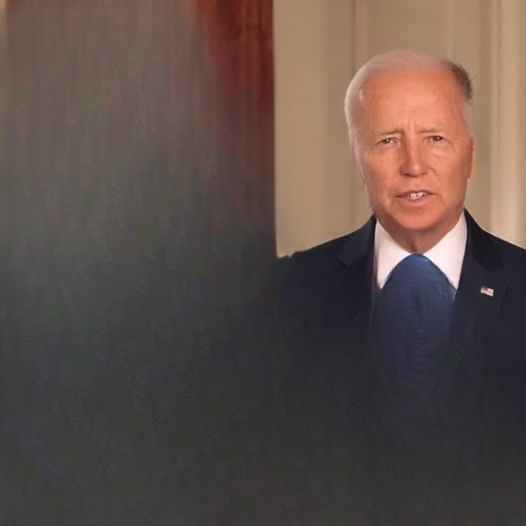
President Joe Biden’s address to the nation on July 24, 2024, marked one of the most reflective and emotionally resonant moments of his public life. Speaking from the Oval Office, a place long associated with decisive leadership and historic announcements, Biden shared that he would withdraw from the 2024 presidential race. The moment was solemn and deliberate, shaped by months of public discussion about leadership, responsibility, and the future direction of the country. His words were calm, measured, and deeply personal, emphasizing continuity, stability, and democratic values rather than political ambition.
This announcement did not arrive suddenly, but it did carry weight because of the symbolism surrounding it. The presidency is not merely a role; it is a representation of national unity and public trust. By choosing to speak directly to the public, Biden underscored his belief that transparency and accountability remain central to democratic leadership. His message was framed not as a retreat, but as a considered decision guided by his view of what best served the nation.
A Moment Defined by Reflection Rather Than Politics
Throughout his address, Biden avoided political rhetoric and partisan framing. Instead, he focused on the broader principles that have guided his public service for decades. He spoke about the responsibilities entrusted to leaders and the importance of recognizing when it is time to place the institution above the individual. His statement that the “defense of democracy is more important than any title” encapsulated the tone of the speech.
The address reflected a leader looking back on a lifetime of service, weighing personal history against national responsibility. The emotion visible during the speech was not theatrical but human, conveying the gravity of stepping away from a role that had defined much of his life.
Context Leading Up to the Announcement
In the months preceding the announcement, public discourse increasingly centered on leadership transitions, generational change, and the demands of modern governance. These conversations were not unique to one individual but reflected a broader societal reflection on how leadership evolves over time. Biden acknowledged these discussions without dwelling on them, framing his decision as proactive rather than reactive.
By choosing a clear and direct approach, he avoided speculation and provided clarity. This helped stabilize public understanding and reinforced the idea that leadership transitions, when handled openly, can strengthen democratic institutions rather than weaken them.
Family Presence and Personal Grounding
One of the most notable aspects of the announcement was the presence of Biden’s family. Surrounded by First Lady Jill Biden, his children, and grandchildren, the scene highlighted the personal dimension behind public office. Leadership at the national level often requires sacrifice not only from the individual but also from their family, and this moment quietly acknowledged that shared journey.
Family games
Biden’s reflection on his upbringing in Scranton, Pennsylvania, added depth to the address. By recalling his early challenges and modest beginnings, he reminded viewers that public service is rooted in lived experience. His reference to overcoming a childhood stutter was not self-congratulatory but illustrative of perseverance and resilience—qualities he believes remain essential in civic life.
The Meaning of Stepping Aside
Stepping away from a presidential race is not simply a political calculation; it is a statement about priorities. Biden framed his decision as an affirmation of democratic continuity. By doing so, he reinforced the idea that leadership is temporary, while institutions endure.
This perspective aligns with longstanding democratic principles:
- Leadership roles are entrusted, not owned
- Transitions are a sign of institutional strength
- Public service extends beyond holding office
By emphasizing these points, Biden placed his decision within a historical and constitutional framework rather than a personal narrative alone.
Historical Precedents and Democratic Norms
American history includes moments when leaders chose to step aside for the broader good. These decisions, often made during periods of uncertainty or transition, have helped reinforce norms of peaceful change and institutional resilience. Biden’s announcement echoed these precedents, situating his choice within a continuum of democratic practice.
Such moments serve as reminders that democracy is not static. It adapts through dialogue, participation, and, at times, personal sacrifice from those in leadership positions.
Public Reaction and National Discourse
Following the announcement, public reaction reflected a wide range of emotions, from gratitude for years of service to thoughtful discussion about the future. While opinions varied, the overall tone of discourse emphasized respect for the process and recognition of the significance of the moment.
Importantly, the conversation shifted toward the continuity of governance rather than disruption. This response illustrated the stabilizing effect of clear communication and the value of addressing the public directly during times of transition.
Leadership Beyond Titles
A central theme of Biden’s speech was the idea that leadership does not end when a title does. Public service, in his view, is a lifelong commitment expressed in many forms. By stepping aside, he signaled confidence in the institutions and people who would continue the work of governance.
This perspective encourages a broader understanding of civic responsibility:
- Leadership includes mentorship and guidance
- Experience can inform without dominating
- Service continues through support of democratic processes
Such framing reinforces the idea that democracy relies on collective participation rather than individual prominence.
The Oval Office as a Symbolic Setting
Choosing the Oval Office as the setting for the announcement carried symbolic weight. The room represents continuity, history, and the responsibilities of the presidency. By speaking from this space, Biden connected his personal decision to the enduring role of the office itself.
The visual elements of the address—simple, restrained, and focused—mirrored the message. There were no dramatic flourishes, only a steady emphasis on responsibility and reflection.
A Lifetime in Public Service
Biden’s career spans decades, encompassing roles in the Senate, the vice presidency, and the presidency. Throughout his address, he did not catalog achievements or policy milestones. Instead, he spoke about values: fairness, opportunity, and democratic participation.
This choice reinforced the idea that public service is measured not only by accomplishments but by intent and stewardship. His reflections offered a reminder that leadership journeys are shaped as much by challenges as by successes.
The Role of Experience in Governance
Experience brings perspective, and Biden acknowledged the importance of recognizing when that perspective is best used in a supporting role. By stepping back, he opened space for new voices while affirming the continuity of democratic values.
This approach highlights a balanced view of leadership:
- Experience informs decision-making
- Renewal sustains institutions
- Collaboration strengthens outcomes
Such balance is essential for long-term stability and trust.
Democratic Stability Through Transparency
Transparency was a defining feature of the announcement. Rather than allowing speculation to dominate public understanding, Biden chose to address the issue directly. This clarity helped reduce uncertainty and reinforced confidence in democratic processes.
Clear communication during transitions:
- Builds public trust
- Reduces misinformation
- Encourages constructive dialogue
These benefits extend beyond any single moment and contribute to institutional resilience.
The Human Side of Leadership
The emotion visible during Biden’s speech resonated because it reflected authenticity. Leadership often demands composure, but moments of vulnerability can humanize public figures and strengthen connection with citizens.
By allowing that emotion to be seen, Biden underscored that leadership decisions are not made in isolation from personal reflection. This balance between strength and humility added depth to the moment.
Media Coverage and Public Understanding
Coverage of the announcement varied, but responsible reporting focused on context, clarity, and the broader implications for governance. By emphasizing the content of the speech rather than speculation, such coverage contributed to informed public discussion.
Accurate representation of leadership transitions helps audiences understand that change is a normal and healthy part of democratic life.
Looking Toward the Future
While the announcement marked an end to one chapter, it also pointed toward the future. Biden’s emphasis on continuity and democratic participation encouraged citizens to remain engaged and informed.
The future of governance depends on:
- Active civic participation
- Respect for institutions
- Open dialogue across differences
These themes were woven throughout the address, reinforcing their importance beyond any single election cycle.
Civic Responsibility and Engagement
By stepping aside thoughtfully, Biden modeled a form of civic responsibility that values the collective over the individual. This example can encourage broader engagement, reminding citizens that democracy functions through shared commitment.
Engagement takes many forms:
- Voting and participation
- Informed discussion
- Community involvement
These actions sustain democratic life regardless of leadership changes.
The Broader Lesson of the Announcement
Beyond its immediate political implications, the announcement offered a broader lesson about leadership and responsibility. It demonstrated that decision-making at the highest level involves reflection, humility, and an understanding of long-term impact.
Such lessons resonate across fields, from public service to community leadership, emphasizing that effective stewardship requires adaptability and self-awareness.
Continuity of Institutions
One of the most reassuring aspects of the address was its focus on institutional continuity. By framing his decision within the strength of democratic systems, Biden reinforced confidence that governance does not depend on any single individual.
This message is foundational to democratic stability and public trust.
A Personal Journey Within a National Story
Biden’s reflections on his life journey—from a modest upbringing to the presidency—served as a reminder of the possibilities within democratic society. His story, while personal, is intertwined with national narratives about opportunity, perseverance, and public service.
By sharing this perspective, he connected individual experience with collective identity.
Conclusion: A Moment of Reflection and Responsibility
President Joe Biden’s announcement was not defined by drama or uncertainty, but by reflection and responsibility. Through clear communication, personal honesty, and respect for democratic principles, he framed his decision as an act of stewardship rather than retreat.
The moment served as a reminder that leadership is ultimately about service, continuity, and trust. By placing the country and its democratic institutions at the center of his message, Biden offered a perspective that extends beyond politics, emphasizing values that remain essential to civic life.
In times of transition, such moments of clarity and reflection help guide public understanding and reinforce the foundations of democratic governance.