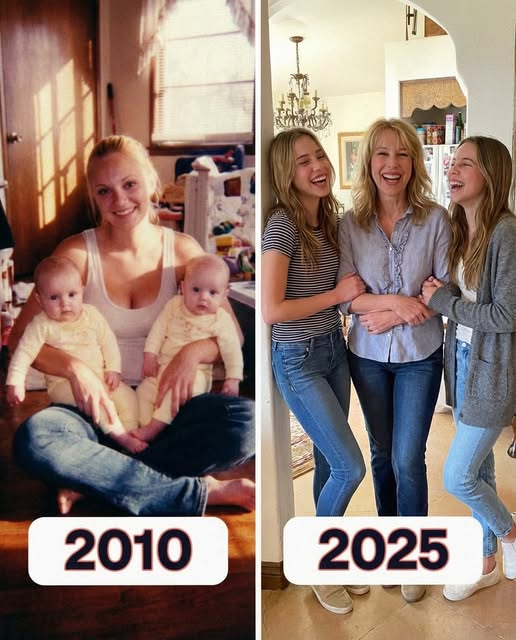
Fifteen years earlier, Emily’s life divided itself into two clear chapters: before and after. Before was a time of shared dreams, quiet hopes, and the belief that love, once found, would always be enough. After was marked by uncertainty, exhaustion, and the slow, deliberate rebuilding of a life she never expected to lead alone.
What happened between those two chapters shaped not only Emily’s future, but the lives of her twin daughters and the meaning she would eventually give to resilience, dignity, and self-worth.
This is not a story of revenge or bitterness. It is a story of growth, responsibility, and the long arc of personal transformation — one that unfolded quietly over years and reached its most meaningful moment when the past unexpectedly returned.
A Young Love Built on Big Dreams
Emily was just eighteen when she met David. At that age, the world felt open and full of possibility. She was optimistic, eager to build a life filled with purpose and connection. David seemed to share that vision. He was confident, articulate, and ambitious, someone who spoke passionately about the future he wanted to create.
Their relationship progressed quickly, as young relationships often do. They talked about careers, travel, and eventually building a family. Emily believed deeply in the idea of partnership — that two people could face any challenge together if they were honest and committed.
In the early years, that belief seemed justified. They supported each other through school, early jobs, and the ordinary challenges of adulthood. Their shared life felt stable, even when resources were limited. Emily trusted that the foundation they were building would hold.
When Stability Began to Crack
Life, however, has a way of testing even the strongest assumptions. After several years together, David lost his job. What initially appeared to be a temporary setback gradually became something more complicated.
He struggled to regain his footing. Rejections accumulated, confidence eroded, and frustration began to seep into daily life. Emily noticed subtle changes first — less conversation, more silence, an edge of impatience where warmth once existed.
She tried to be supportive, reminding him of his strengths and encouraging him to keep going. She believed setbacks were temporary, that perseverance would carry them through. But David’s sense of identity was deeply tied to his role as a provider, and without it, he began to withdraw emotionally.
The partnership that once felt balanced slowly became uneven.
Pregnancy and Unanswered Hope
When Emily discovered she was pregnant, she felt a surge of cautious optimism. She believed that this new chapter might help them reconnect, offering shared purpose and renewed focus.
When they learned they were expecting twins, Emily was overwhelmed with a mix of excitement and apprehension. Two children meant more responsibility, but also more love. She imagined late nights, shared laughter, and the kind of family she had always wanted.
David’s reaction was different. Instead of joy, he appeared distant and overwhelmed. The weight of responsibility seemed to deepen his anxiety rather than inspire him. Emily tried to reassure him, reminding him that they would manage together, just as they always had.
But something fundamental had shifted.
A Moment That Changed Everything
The day Emily gave birth to their twin daughters, Ella and Grace, should have been one of the most meaningful moments of their lives. For Emily, it was. Despite exhaustion and recovery, she felt an immediate, powerful bond with her children.
David, however, remained detached. He visited briefly, offered polite words, but lacked the emotional presence Emily had expected. She told herself he was simply overwhelmed, that time would help him adjust.
A month later, her assumptions collapsed.
David told her that the life they now faced was not the one he wanted. Without raised voices or dramatic confrontation, he made it clear that he was leaving — and that Emily and the babies needed to find somewhere else to live.
There was no plan offered, no support arranged, no discussion about how she would manage. The decision was abrupt and final.
In that moment, Emily realized she was on her own.
Leaving With Almost Nothing
Emily packed what she could fit into a few bags: baby clothes, diapers, personal documents, and the essentials for two newborns. She had no savings to rely on and no clear path forward.
The emotional weight of that departure was heavy, but there was no time to process it fully. Two infants depended on her for everything. Survival became the priority.
She stayed temporarily with a distant relative, then moved into a small rented room. Privacy was limited, sleep was scarce, and each day brought new challenges. Still, she focused on one goal: providing stability for her daughters.
The Early Years of Struggle and Determination
Emily took whatever work she could find. During the day, she worked at a local grocery store. In the evenings, she cleaned offices and homes. Nights were spent caring for her daughters, often with little rest.
There were moments of doubt — times when exhaustion felt overwhelming and the future uncertain. But there was also a growing sense of determination. Each small success reinforced her belief that she could endure.
She learned to manage finances carefully, stretching every dollar. She sought out community resources, parenting support groups, and opportunities to learn new skills. Slowly, she built a routine that balanced work and motherhood.
Ella and Grace grew up watching their mother persevere. Even as toddlers, they sensed her strength.
Turning Necessity Into Opportunity
After several years of juggling multiple jobs, Emily noticed a pattern. She was consistently hired for cleaning work, and clients appreciated her reliability and attention to detail. Some asked if she was available more often.
When full-time employment opportunities failed to materialize, Emily considered another option: working for herself.
She started small, offering cleaning services to local homes and offices. With no marketing budget, she relied on word of mouth. She named her business “Bright Start Cleaning,” a reflection of both her services and her personal journey.
The business began modestly, but demand grew steadily. Emily reinvested every spare dollar into supplies and training. She learned about scheduling, bookkeeping, and customer service, often late at night after her daughters were asleep.
What began as a survival strategy gradually transformed into a sustainable enterprise.
Building a Home, Not Just a Business
As Bright Start Cleaning expanded, Emily was able to move into a small house with a yard. It wasn’t large or luxurious, but it was theirs. She planted flowers, painted walls warm colors, and created a space where her daughters could feel secure.
Home became a place of comfort and laughter. Family traditions formed — simple meals together, movie nights, weekend walks. Emily prioritized presence over perfection.
Her daughters thrived in this environment. They learned responsibility, empathy, and resilience by example. Emily spoke honestly with them about challenges, without burdening them with bitterness.
Their home was built on effort, trust, and love.
Growth, Independence, and Community Impact
Over time, Emily’s business became more than a source of income. She began hiring other women, many of whom were single parents or individuals seeking flexible work. She offered fair wages, understanding, and encouragement.
Bright Start Cleaning developed a reputation not just for quality service, but for ethical practices. Emily took pride in creating opportunities for others who needed a second chance or a fresh start.
Her daughters, now teenagers, saw firsthand what leadership and compassion looked like. They helped with small tasks, learned about entrepreneurship, and gained confidence in their own abilities.
Emily’s identity shifted. She was no longer defined by what she had lost, but by what she had built.
Fifteen Years Later: An Unexpected Reunion
On an ordinary weekday morning, Emily was reviewing schedules in her office when the receptionist informed her that someone was asking to see her.
When David walked in, she barely recognized him at first. Time had changed him. He appeared older, worn down, and uncertain. He held a résumé and explained that he was looking for work.
He spoke about financial hardship and setbacks. The confidence Emily once knew was gone, replaced by vulnerability.
For a brief moment, memories surfaced — the early days, shared laughter, and dreams that never materialized. But those memories were quickly balanced by the reality of the years she had endured alone.
A Calm, Grounded Response
Emily listened quietly as David spoke. She felt no anger, only clarity. She understood his situation, but she also understood her boundaries.
She reminded him, gently but firmly, of the choices he had made. She explained that the life she had built was the result of years of effort, resilience, and responsibility.
Emily declined his request for employment. She did so without hostility or judgment. Her decision was not about punishment, but about integrity and closure.
David left, and Emily returned to her work with a steady sense of peace.
A Different Kind of Victory
That evening, Emily sat in her living room as Ella and Grace laughed together, sharing stories from their day. Watching them, she felt a deep sense of fulfillment.
She realized that the anger she once feared she would always carry had faded. In its place was acceptance. Her life was no longer defined by abandonment, but by self-reliance and love.
She had built a future for herself and her daughters — one rooted in dignity, effort, and compassion.
Lessons in Resilience and Self-Worth
Emily’s story is not unique, but it is powerful. It reflects the experiences of many individuals who face sudden change and unexpected responsibility.
Key lessons from her journey include:
- Self-belief matters: Even when others withdraw support, belief in one’s own capacity can sustain growth.
- Progress takes time: Real transformation is often slow and built through consistent effort.
- Boundaries are essential: Compassion does not require sacrificing self-respect.
- Family is defined by presence: Love and stability are created through care, not obligation.
Raising the Next Generation With Strength
Ella and Grace grew into confident young women who understood the value of perseverance. They respected their mother not only for her sacrifices, but for her example.
Emily taught them that setbacks do not define a person’s future, and that independence and empathy can coexist. Her parenting emphasized accountability, kindness, and self-confidence.
Their bond as a family was forged through shared experience and mutual respect.
Moving Forward Without Looking Back
Emily did not seek validation or closure from David’s return. She had already found both within herself.
Her life continued, filled with purpose and stability. Bright Start Cleaning expanded further, and her daughters prepared for their own futures with optimism.
Emily’s story stands as a reminder that even the most painful beginnings can lead to meaningful outcomes.
Conclusion: A Life Reclaimed Through Strength and Grace
Fifteen years after being asked to leave with nothing but her newborn daughters, Emily stood as a business owner, a confident parent, and a person at peace with her past.
Her journey illustrates that resilience is not loud or dramatic. It is built quietly, day by day, through commitment, responsibility, and love.
When the past returned, it did not shake her foundation. Instead, it confirmed how far she had come.
Emily did not need saving. She had already saved herself — and in doing so, created a future defined not by loss, but by strength.