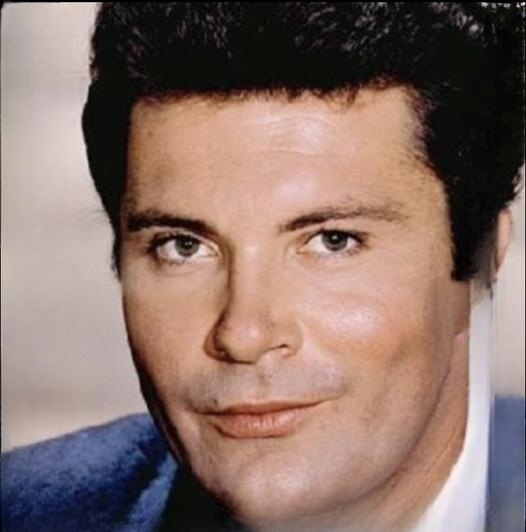
The Last Clampett standing: The Remarkable Evolution of Max Baer Jr.
Introduction: The Face of a Generation
For many, the image of a tall, grinning young man with a sixth-grade education and dreams of being a “double-naught spy” is synonymous with the golden era of 1960s television. As Jethro Bodine on The Beverly Hillbillies, Max Baer Jr. became a household name, part of a cultural phenomenon that regularly drew over 60 million viewers. Yet, as we look at him today—now 88 years old and the final surviving member of that iconic cast—the story that emerges is far more complex than the “dimwitted” character he portrayed so convincingly for nine seasons.
Max Baer Jr. is a man who spent his life navigating the sharp contrast between public perception and private reality. He was the son of a world heavyweight boxing champion, a university graduate with a business degree, and a shrewd independent filmmaker who beat Hollywood at its own game. His journey is a testament to the fact that while fame can be a cage, the human spirit has a remarkable capacity for reinvention.
Chapter 1: The Weight of the Name “Max Baer”
Long before he set foot in Beverly Hills, Max was already living in a giant shadow. His father, Max Baer Sr., was a legendary figure in the 1930s—a heavyweight champion known for his devastating power and his larger-than-life personality. However, that legacy was tinged with tragedy.
The Ring’s Dark Shadow Max Baer Sr. famously struggled with the psychological toll of his boxing career, particularly after the death of opponent Frankie Campbell following their 1930 bout. While the public saw a “Livermore Larupper” who clowned in the ring, his son saw a gentle man haunted by the violence of his profession. This background instilled in Max Jr. a lifelong defensiveness of his father’s honor. Decades later, he would famously criticize the 2005 film Cinderella Man for its portrayal of his father as a one-dimensional villain, proving that the bond between father and son remained as strong as ever.
Chapter 2: Becoming Jethro – The Blessing and the Curse
In 1962, Max Baer Jr. landed the role of a lifetime. As Jethro Bodine, the nephew of Jed Clampett, he was the primary source of the show’s slapstick humor. His performance was so effective that audiences struggled to believe there was a sophisticated intellectual behind the character.
The Intellectual Behind the “Hillbilly” Contrary to Jethro’s “sixth-grade” education, Max Baer Jr. held a Bachelor’s degree in Business Administration from Santa Clara University, with a minor in Philosophy. This academic foundation would later become his greatest asset, but in the 1960s, it was hidden behind the denim bibs and the goofy grin.
When The Beverly Hillbillies was canceled in 1971, Max faced the ultimate actor’s nightmare: total typecasting. Producers couldn’t see past the Jethro persona. For years, he was offered only variations of the same “hick” character, leading to a period of professional frustration that would have broken many.
Chapter 3: The Pivot – Rewriting the Script
Instead of fading into the “Where Are They Now?” files, Max used his business acumen to pivot. He realized that if Hollywood wouldn’t give him a seat at the table, he would build his own table.
The Success of Macon County Line In 1974, Max wrote, produced, and starred in a low-budget drama called Macon County Line. Playing a vengeful deputy, he shattered the Jethro image. The film was a massive success, produced for approximately $225,000 and grossing over $30 million. Until the release of The Blair Witch Project in 1999, it held the record for the highest return on investment in film history. This success proved that Max was not just an actor, but a visionary businessman who understood the “Drive-In” market and the changing tastes of American audiences.
Chapter 4: Personal Trials and Resilient Hope
While his professional life found new heights, Max’s personal journey was often marked by profound grief. He experienced the loss of his father at a young age, and in 2008, he faced the public tragedy of his girlfriend’s suicide at his home in Lake Tahoe.
Navigating Grief Out of the Spotlight The loss of Chere Rhodes was a devastating blow that tested his resilience. In the years following, Max stepped away from the frenetic energy of the entertainment industry, finding solace in his passions—most notably golf, a sport he had excelled in since his youth. He chose a life of relative privacy, a stark contrast to the chaotic fame of the 1960s.
Chapter 5: The Last Clampett – A Legacy Sealed
With the death of Donna Douglas (Elly May) in 2015, Max became the last surviving member of the core cast. He has often spoken with warmth and nostalgia about his castmates—Buddy Ebsen, Irene Ryan, and Nancy Kulp—acknowledging that they were a family in every sense of the word.
The Dream of “Jethro’s Casino” For years, Max pursued a grand vision to build a Beverly Hillbillies-themed casino and resort in Nevada. While the project faced significant legal and zoning hurdles that prevented its completion, the effort itself showed his undying entrepreneurial spirit. He wanted to own the brand that had once typecast him, turning a professional obstacle into a business empire.
Conclusion: The Man Behind the Legend
Today, at 88, Max Baer Jr. stands as a link to a bygone era of entertainment. He is a man who refused to be defined by his most famous role, choosing instead to define himself through his intellect, his business success, and his enduring loyalty to his family.
He serves as a reminder that life is rarely a straight line. It is a series of pivots, challenges, and quiet victories. While Jethro Bodine will live forever in the flicker of television reruns, the real Max Baer Jr. is a far more impressive figure: a survivor who proved that you can outgrow even the largest shadow if you have the courage to walk your own path.
Technical Appendix: The Science of Longevity and Career Pivots
To understand the broader context of Max Baer Jr.’s life, we can look at several professional and psychological factors that contributed to his enduring legacy.
The Psychology of Typecasting
Typecasting occurs when an actor becomes so strongly identified with a specific character that they are unable to find work in other roles.
- Cognitive Bias: Audiences develop a mental shortcut, associating the actor’s face with the character’s traits.
- Economic Risk: Producers are often hesitant to cast a “comedy” icon in a “drama” because they fear the audience will find it unintentional or distracting.
The Economics of Independent Filmmaking in the 1970s
The success of Macon County Line was part of a broader trend where independent filmmakers bypassed the “Big Seven” studios to reach niche audiences.
Distribution: Utilizing “Regional Saturation” booking—where a film opens in every theater in a specific area simultaneously—allowed for maximum impact on a limited advertising budget.
Budgeting: By utilizing non-union crews and local locations (often in his native California), Baer maximized every dollar.