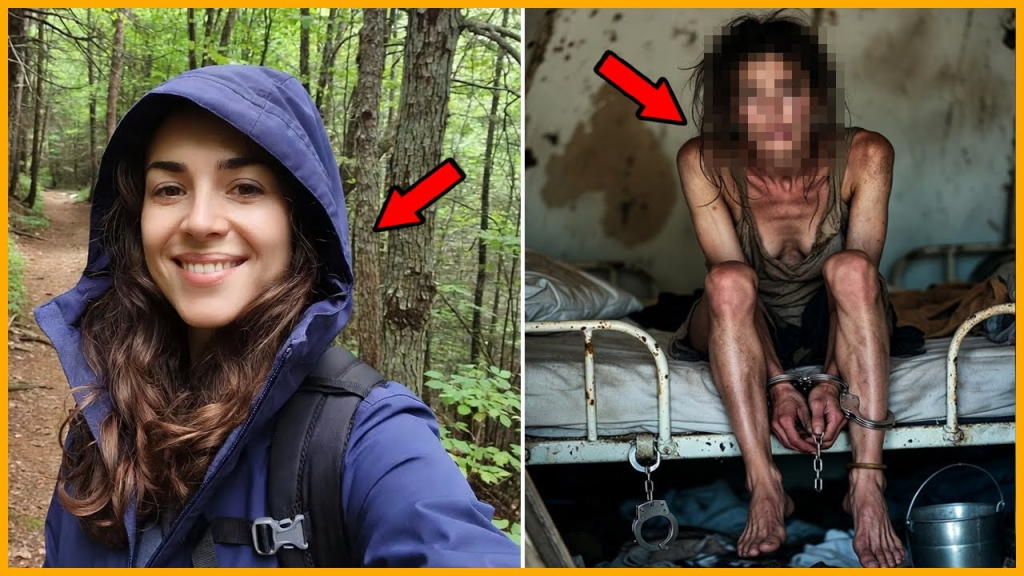
The Appalachian Mountains are ancient, their rolling peaks and deep, shadowed valleys holding secrets that date back millions of years. For hikers and nature enthusiasts, these woods offer a sanctuary of peace and breathtaking beauty, a place to escape the noise of modern life. But for the family of Lauren Parks, the dense forests of West Virginia became a landscape of nightmare and uncertainty. Lauren was not a novice wandering unprepared into the wild; she was a twenty-two-year-old biology student with a passion for botany and a lifetime of hiking experience. She knew how to read a map, how to ration supplies, and how to respect the unpredictable nature of the wilderness. When she set out for a solo hike in the Monongahela National Forest in the summer of 2010, no one could have predicted that she would not return for three long, agonizing years. Her disappearance sparked one of the most extensive search operations in the region’s history, but the truth of her fate lay hidden just beneath the surface, concealed by time, rust, and the terrifying obsession of a stranger.
It was a bright July morning when Lauren parked her car at the Seneca Creek Trailhead. She was looking forward to a few days of solitude, planning to study the local flora and recharge before her final year of university. She followed all the safety protocols, registering her route at the trailhead and checking in with friends before she lost cell service. Her last message was a simple text to her best friend, assuring her that she was setting up camp near a creek and that everything was fine. That digital footprint was the last sign of life anyone would receive from Lauren Parks. When she failed to return home as scheduled, panic set in quickly. Her parents, who knew their daughter’s responsible nature, immediately contacted authorities. They knew Lauren wouldn’t just wander off or lose track of time. Something was wrong.
The initial search was massive and frantic. Dozens of officers, volunteers, and tracking dogs scoured the rugged terrain. The first few days offered a glimmer of hope when tracking dogs picked up her scent near the trailhead, but the trail went cold abruptly, as if she had vanished into thin air. Days later, a breakthrough seemed imminent when searchers discovered her backpack hidden in a thicket of bushes about a hundred meters off the main trail. The contents were baffling; her tent and sleeping bag were there, but essential survival items like her water bottle, knife, and first aid kit were missing. There were no signs of a struggle, no blood, and no footprints leading away from the scene. It was a puzzle with missing pieces, and despite the best efforts of law enforcement, the forest refused to give up its secrets. Weeks turned into months, and the official search was eventually scaled back. Lauren became another face on a missing person flyer, her story fading from the headlines but never from the hearts of her devastated parents.
For three years, the seasons changed over the Appalachians. Snow covered the trails, spring brought new life, and hikers continued to traverse the paths, unaware of the tragedy that lay hidden nearby. The case had gone cold, the files sitting in a cabinet in the sheriff’s office, waiting for a lead that never came. It wasn’t until August of 2013 that the silence was finally broken, not by police work, but by sheer chance. Mark Tennison, a curious spelunker and amateur historian with a passion for exploring obscure caves, was hiking off the beaten path, searching for potential cave entrances he had seen on old maps. He was miles from the main tourist areas, navigating through dense undergrowth and rocky outcrops, when he stumbled upon something that didn’t belong in the natural world.
Hidden beneath a thick layer of moss and debris on a steep hillside was a square concrete structure. It looked like an old foundation, but as Mark cleared away the vegetation, he revealed a heavy steel hatch. It was rusted and weathered, blending almost perfectly with the forest floor. Intrigued, Mark used a pry bar from his pack to leverage the heavy lid open. The hinges groaned in protest, revealing a dark, concrete shaft leading down into the earth. It was a relic of a bygone era, likely a private fallout shelter or a forgotten military observation post from the Cold War. Driven by the thrill of discovery, Mark descended the metal ladder, his flashlight cutting through the stale, damp air. At the bottom, a narrow corridor led to a heavy blast door.
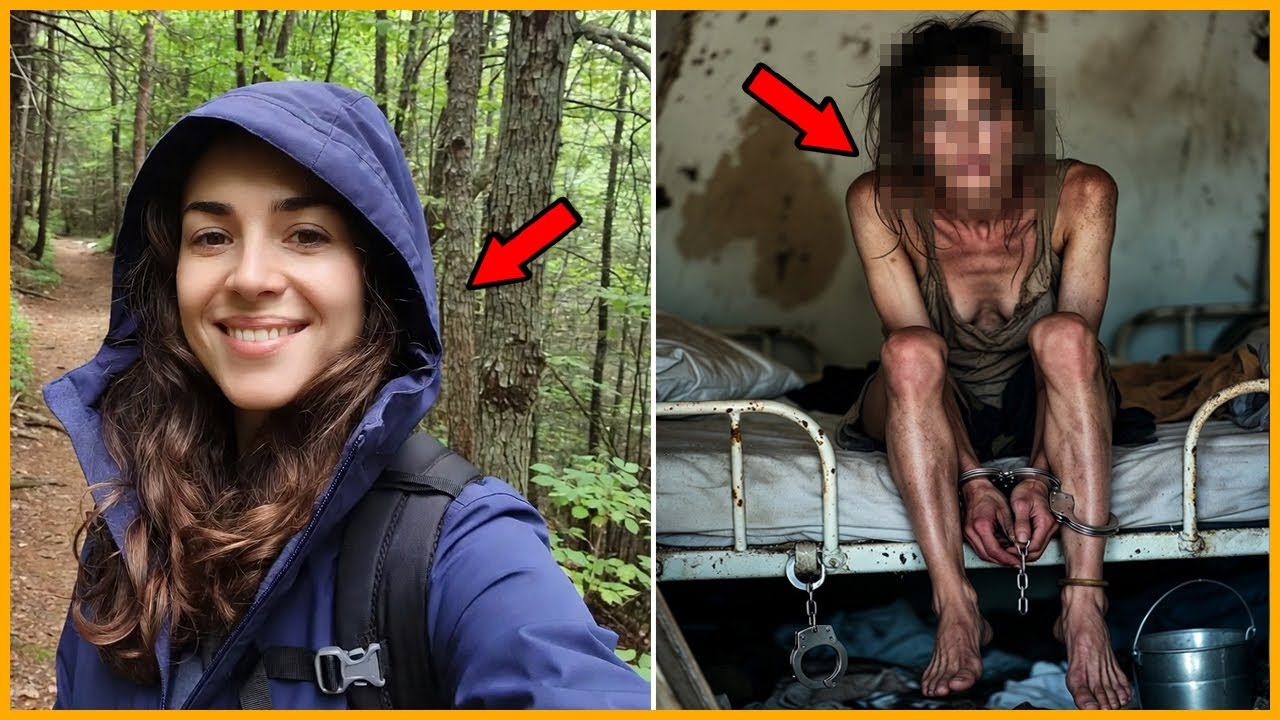
When Mark managed to open the inner door, he expected to find rotting crates or empty shelves. Instead, his beam of light fell upon a scene of squalor and despair. The bunker was filled with supplies—canned food, water jugs, and a generator—but the air was thick with the smell of unwashed humanity. In the corner of the room, chained to a metal pipe running along the wall, sat a figure. It was a woman, frail and ghost-like, her skin pale from years without sunlight. She was emaciated, her clothes tattered and filthy. For a moment, Mark froze, his mind unable to comprehend what he was seeing. The woman stared back at him with wide, terrified eyes, trembling as if she expected to be harmed. This was Lauren Parks.
The rescue that followed was a blur of blue lights and medical personnel. Mark, having scrambled back to the surface to call for help, waited anxiously as emergency crews extracted Lauren from her concrete prison. She was weak, barely able to stand, and unable to speak more than a whisper. The realization of what had happened to her began to unfold in the days and weeks that followed. Lauren had been abducted by a man named Gerald Matthews, a local loner with a troubled past who had discovered and refurbished the abandoned bunker years earlier. He had stalked the trails, waiting for a solitary victim, and had taken Lauren by surprise, bringing her to his underground lair where no one would hear her screams.
For two years, Matthews had kept Lauren captive, visiting her every few days to bring food and supplies, maintaining a terrifying control over her existence. He never physically assaulted her in the way investigators initially feared, but he exerted total psychological dominance, keeping her chained and isolated from the world. But then, the visits stopped. Unbeknownst to Lauren, Matthews had suffered a fatal stroke in his trailer miles away. He passed away, taking the secret of his prisoner to the grave. For the last year of her captivity, Lauren was entirely alone. She didn’t know why her captor had vanished; she only knew that the food and water were running out.
Lauren’s survival during that final year is a testament to the indomitable human spirit. Trapped in the dark, she rationed the remaining canned goods down to the last crumb. When the water ran dry, she survived by licking condensation from the cold metal pipes of the bunker. She spent her days in a state of semi-consciousness to conserve energy, her mind oscillating between hope and despair. She had prepared herself for the end, yet her body refused to give up. When Mark Tennison opened that hatch, Lauren had been days, perhaps hours, away from fading away completely. The sudden flood of light and the voice of a stranger were shocks to her system, proof that the world above still existed.
The aftermath of her discovery was a long road of physical and emotional rehabilitation. Lauren spent months in the hospital, regaining the weight she had lost and learning to walk again as her atrophied muscles healed. The psychological scars were deeper. She had to relearn how to interact with people, how to handle open spaces, and how to process the trauma of three years stolen from her life. Her parents, who had never stopped grieving, were overjoyed yet heartbroken by the ordeal their daughter had endured. The reunion was tearful and quiet, a family made whole again against all odds.
The investigation into the bunker revealed journals kept by Matthews, detailing his twisted plans and his surveillance of the trails. It was a chilling glimpse into the mind of a predator who had lived among them unnoticed. The community was shaken, realizing that the monster they feared wasn’t a mythical beast of the woods, but a man who shopped at their grocery stores and walked their streets. The bunker was eventually sealed permanently, a dark chapter of the forest closed forever.
Today, Lauren’s story serves as a powerful reminder of resilience. She eventually returned to a quiet life, surrounded by her family and close friends, finding solace in the simple freedoms she had once lost. Her survival is not just a story of luck, but of a fierce will to live that burned bright even in the deepest darkness. It reminds us that even when all hope seems lost, when the world has moved on and the lights have gone out, there is still a chance for a miracle. Lauren Parks walked out of the earth and back into the sun, a survivor in the truest sense of the word.