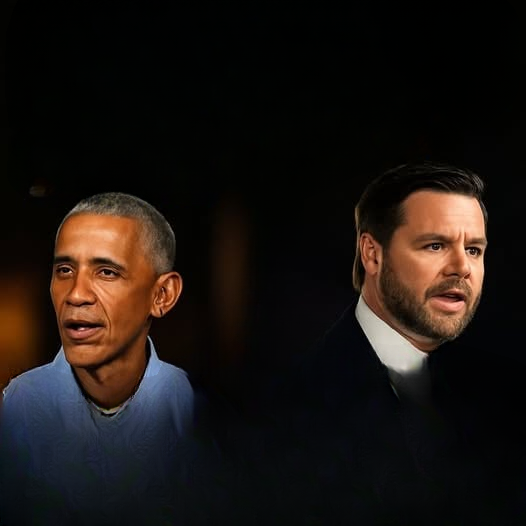
Debates surrounding the origins of the federal investigation into Russian interference in the 2016 U.S. presidential election—commonly referred to in political discourse as “Russiagate”—continue to shape American political conversation years after the initial inquiries concluded. Recent public remarks by Vice President JD Vance have brought renewed attention to this topic, sparking discussion across political, legal, and media circles.
In a televised interview, Vance suggested that new disclosures from intelligence officials could lead to significant legal consequences for individuals involved in decisions made during the Obama administration. While he did not specify names or outcomes, his comments reflect a broader narrative gaining traction among some political leaders and commentators who argue that the investigation’s origins warrant further scrutiny.
This article examines those claims in detail, providing historical context, outlining the legal and institutional frameworks involved, and exploring the broader implications for democratic governance, intelligence oversight, and public trust.
Understanding the Historical Context of the Russia Investigation
To understand the current debate, it is essential to revisit the events that led to the original investigation. In 2016, U.S. intelligence agencies concluded that the Russian government had attempted to interfere in the presidential election through cyber activities and information campaigns. These findings prompted a series of investigations by federal agencies, congressional committees, and, later, a special counsel.
The purpose of these investigations was to assess foreign interference, determine whether any U.S. individuals coordinated with foreign actors, and evaluate the integrity of democratic institutions. Over time, the inquiry expanded into multiple strands, encompassing intelligence assessments, campaign activities, and internal government processes.
Actor memorabilia
Political Polarization and Competing Interpretations
From the outset, interpretations of the investigation diverged sharply along partisan lines. Supporters argued that examining foreign interference was necessary to protect national security and democratic norms. Critics contended that the investigation was influenced by political motivations and relied on unverified or partisan sources.
These competing narratives persisted throughout the investigation and beyond, contributing to deep polarization in public opinion. For some Americans, the inquiry represented accountability and vigilance. For others, it symbolized government overreach and politicization of intelligence.
Vice President JD Vance’s Recent Remarks
In a recent interview on a nationally televised news program, Vice President JD Vance addressed the ongoing debate by commenting on newly released or discussed intelligence-related materials. Vance suggested that recent disclosures by current intelligence officials raise serious questions about the conduct of certain government actors during the earlier investigation.
While emphasizing that he was not announcing formal legal actions, Vance stated that the information presented appears, in his view, to indicate substantial departures from proper procedures. His comments were framed as an opinion based on publicly discussed materials rather than as an official legal determination.
Attribution and the Importance of Careful Language
From a legal and journalistic perspective, it is critical to distinguish between allegations, opinions, and established facts. Vice President Vance’s remarks reflect his interpretation of available information, not judicial findings or prosecutorial decisions.
No court has ruled that crimes were committed in connection with the origins of the Russia investigation, and no indictments have been publicly announced as a direct result of the disclosures referenced in his comments. Responsible analysis requires acknowledging this distinction to preserve accuracy and fairness.
The Role of Intelligence Agencies in Democratic Systems
Intelligence agencies play a complex and sensitive role in democratic societies. They are tasked with identifying threats, collecting information, and advising policymakers, often under conditions of uncertainty and secrecy. Oversight mechanisms—including congressional review, inspector general investigations, and judicial processes—exist to ensure accountability.
Criticism of intelligence practices is not inherently unusual. In fact, democratic systems rely on ongoing evaluation to prevent misuse of authority. However, allegations of misconduct must be examined carefully, with respect for due process and institutional integrity.
Recent Intelligence Disclosures and Public Debate
Recent public discussions have included references to declassified materials, internal communications, and assessments from intelligence officials. Some commentators argue these materials reveal flaws or biases in earlier decision-making processes.
Others caution that selective interpretation of intelligence documents can be misleading without full context. Intelligence assessments often involve probabilities, competing hypotheses, and evolving information rather than definitive conclusions.
Differing Views Among Legal and Policy Experts
Legal scholars and former government officials are divided in their assessments of the significance of recent disclosures. Some believe the information warrants further investigation through established oversight channels. Others argue that existing reviews—including inspector general reports—have already addressed many of the concerns being raised.
These differing perspectives underscore the complexity of evaluating intelligence activities after the fact, particularly when political stakes are high.
Claims of Politicization and Counterarguments
One recurring claim in the debate is that intelligence processes were improperly influenced by political considerations. Critics argue that certain narratives were amplified without sufficient verification, while supporters of the original investigation maintain that actions were taken in good faith based on available information.
Counterarguments emphasize that intelligence agencies operate within legal frameworks and are subject to multiple layers of review. Mistakes or disputed judgments do not necessarily equate to intentional wrongdoing.
The Legal Threshold for Criminal Accountability
In the United States, criminal indictments require evidence meeting a high legal standard. Prosecutors must demonstrate intent, violation of specific statutes, and sufficient proof to sustain charges in court.
Public statements by political figures, regardless of their prominence, do not initiate criminal proceedings. Any potential legal actions would require independent evaluation by appropriate authorities, insulated from political pressure.
Separation of Powers and Institutional Safeguards
The American system of government is designed to prevent concentration of power through separation among the executive, legislative, and judicial branches. This structure includes safeguards intended to ensure that allegations of misconduct are handled through lawful processes.
When debates arise over intelligence or law enforcement actions, these institutions provide mechanisms for review that are distinct from political commentary.
Media Coverage and Public Perception
Media coverage plays a significant role in shaping public understanding of complex issues. Headlines and sound bites can sometimes oversimplify nuanced debates, contributing to confusion or heightened emotion.
Responsible reporting emphasizes context, attribution, and verification. In politically charged topics, this approach is especially important to maintain public trust.
The Impact on Public Confidence
Ongoing disputes over the legitimacy of past investigations can affect public confidence in institutions. When citizens perceive investigations as politically motivated—or, conversely, see criticism as politically driven—trust can erode.
Rebuilding confidence requires transparency, adherence to legal norms, and a commitment to truth over partisan advantage.
The Broader Implications for Democracy
At stake in these debates is not only the reputation of specific individuals or agencies, but also the broader health of democratic governance. How societies handle allegations of misconduct—especially involving national security—sets precedents for future administrations.
Balancing accountability with institutional stability remains one of the most challenging aspects of democratic leadership.
The Role of Oversight Bodies
Congressional committees, inspectors general, and independent review boards play critical roles in evaluating government conduct. These bodies operate with varying degrees of transparency and authority, providing structured avenues for inquiry.
Many experts argue that strengthening these mechanisms is preferable to relying on political rhetoric to resolve disputes.
Political Narratives and Electoral Consequences
Discussions about the Russia investigation continue to influence electoral dynamics. Political leaders often frame these issues in ways that resonate with their constituencies, shaping campaign narratives and policy priorities.
Understanding these dynamics helps explain why debates resurface during election cycles or periods of political transition.
Avoiding Premature Conclusions
One consistent theme among legal experts is the importance of avoiding premature conclusions. Investigations—if any are initiated—take time, involve complex evidentiary review, and may not align with public expectations or political timelines.
Patience and respect for due process are essential components of justice.
The Importance of Civic Literacy
For citizens, navigating these debates requires a degree of civic literacy. Understanding how investigations work, what constitutes evidence, and how accountability is enforced helps prevent misinformation and unwarranted assumptions.
Educational initiatives and responsible media consumption contribute to a healthier democratic discourse.
Conclusion
Vice President JD Vance’s recent remarks reflect a continuing political debate over the origins and conduct of the Russia investigation. While his comments have drawn attention and sparked discussion, they represent a perspective rather than a legal determination.
The issues involved—intelligence oversight, political accountability, and public trust—are complex and deeply consequential. Addressing them responsibly requires careful analysis, respect for institutional processes, and a commitment to factual accuracy.
As the conversation continues, the strength of democratic governance will depend not on rhetoric, but on adherence to the rule of law, transparency, and the principles that underpin constitutional democracy.