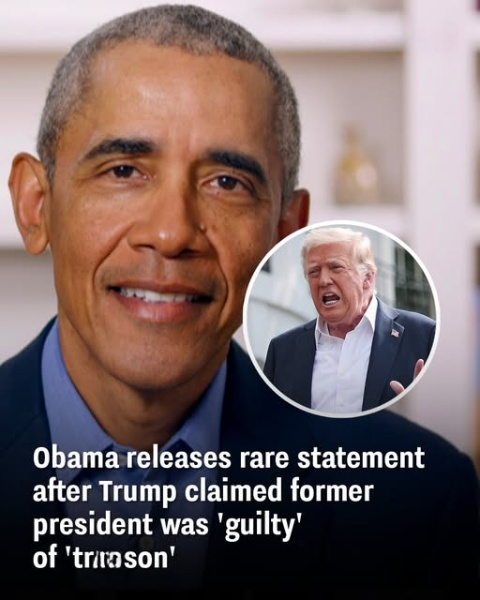
Political discourse in the United States has entered another period of heightened tension following remarks made by former President Donald Trump about his predecessor, Barack Obama. The comments, which alleged serious wrongdoing related to the 2016 presidential election, prompted a rare public response from representatives of the former Obama administration.
While disputes between political rivals are not unusual in American politics, the language and framing of these claims attracted widespread attention from media outlets, political analysts, and the public. The episode underscores broader concerns about political rhetoric, misinformation, institutional trust, and how former leaders engage with one another in an era of deep polarization.
This article examines the sequence of events, the responses from both sides, the historical context surrounding the 2016 election, and the broader implications for American political culture. All claims are presented with attribution and context, reflecting reporting from public statements and established records.
The Context: Longstanding Disputes Over the 2016 Election
The 2016 U.S. presidential election has remained a recurring point of controversy in national political debates. Multiple investigations, congressional inquiries, and intelligence assessments have examined claims related to foreign interference, campaign conduct, and information operations.
While official findings have consistently concluded that attempts were made by foreign actors to influence public opinion, these investigations also stated that there was no evidence that voting systems were altered or that election results were changed.
Despite these conclusions, interpretations of the findings have varied widely along partisan lines. Some political figures continue to argue that intelligence agencies, government officials, or political opponents acted improperly during or after the election cycle.
It is within this long-running dispute that the most recent comments and responses emerged.
Donald Trump’s Remarks and Public Statements
During a media interaction in late July, Donald Trump made remarks alleging that actions taken during the Obama administration constituted serious misconduct. Speaking in response to questions from reporters, Trump asserted that certain intelligence-related decisions surrounding the 2016 election were inappropriate and politically motivated.
Trump claimed that these actions were intended to undermine his campaign and later presidency. However, as with similar claims made previously, no new evidence was presented alongside the statements.
Observers noted that Trump has frequently returned to grievances related to the 2016 election throughout his political career. Supporters argue that he is raising legitimate concerns about government transparency, while critics contend that such statements contribute to public confusion and mistrust.
Attribution and the Importance of Evidence
It is important to distinguish between allegations and substantiated findings. Legal experts and political analysts emphasize that serious accusations require clear evidence and formal investigation to be evaluated properly.
To date, no court ruling or bipartisan investigation has concluded that Barack Obama or his administration engaged in illegal efforts to manipulate election outcomes. Multiple reviews conducted over several years involved officials from both major political parties.
These investigations acknowledged foreign interference attempts but did not assign criminal responsibility to Obama-era officials for altering election results.
The Role of Intelligence Agencies
U.S. intelligence agencies play a critical role in assessing foreign threats, including attempts by other nations to influence democratic processes. In the aftermath of the 2016 election, intelligence assessments concluded that foreign actors sought to influence public opinion through information campaigns.
These assessments were shared with elected officials and the public through declassified summaries. Intelligence leaders at the time stated that their findings were based on available data and were not intended to favor any political candidate.
Former intelligence officials from multiple administrations have defended the integrity of these assessments, noting that intelligence analysis is subject to review, oversight, and internal debate.
Obama’s Response: A Rare Public Statement
In response to the renewed accusations, a spokesperson for former President Barack Obama issued a public statement. Such responses are uncommon, as former presidents typically refrain from directly engaging with claims made by political successors.
The statement emphasized respect for the office of the presidency while firmly rejecting the allegations. It described the claims as unfounded and inconsistent with the conclusions reached by official investigations.
The spokesperson noted that the decision to respond was made because the accusations had reached a level that warranted clarification for the public record.
Emphasizing Established Findings
The response from Obama’s representatives referenced previous investigative findings, including a bipartisan report issued by the U.S. Senate Intelligence Committee. That report concluded that while foreign actors attempted to influence public opinion during the 2016 election, there was no evidence that vote tallies were changed or that election infrastructure was compromised.
The report also outlined how information campaigns and political outreach were conducted by foreign entities, often using digital platforms and intermediaries.
By pointing to this report, Obama’s team sought to reinforce the distinction between attempted interference and actual alteration of election results.
The Media’s Role in Framing the Dispute
Media outlets covered the exchange with varying degrees of emphasis. Some focused on the political implications and rhetorical escalation, while others concentrated on fact-checking and historical context.
Journalists and editors face the challenge of reporting on controversial statements without amplifying misinformation. Many reports included disclaimers noting the lack of supporting evidence for the allegations and cited prior investigative conclusions.
Media analysts argue that responsible coverage requires balancing transparency with caution, particularly when claims involve serious accusations against former public officials.
Political Rhetoric in a Polarized Era
The episode highlights broader concerns about the tone of political discourse in the United States. Language that frames political opponents as enemies or criminals can intensify divisions and reduce opportunities for constructive dialogue.
Political scientists note that rhetoric has become more confrontational across party lines in recent decades. Social media, 24-hour news cycles, and partisan media ecosystems have contributed to faster and more emotionally charged communication.
While political disagreement is a cornerstone of democracy, experts emphasize the importance of grounding debates in verified information and institutional processes.
Supporters and Critics React
Reactions to the exchange varied widely. Supporters of Trump viewed his comments as a continuation of his efforts to challenge what he describes as entrenched political interests. Critics, including some former government officials, expressed concern that such statements undermine trust in democratic institutions.
On social media, the topic quickly became a focal point for political debate. Hashtags, opinion pieces, and commentary reflected the deeply divided interpretations of recent history.
Public opinion polls consistently show that perceptions of the 2016 election and related investigations remain sharply divided along partisan lines.
The Broader Impact on Institutional Trust
Trust in institutions such as elections, intelligence agencies, and the justice system is essential to democratic stability. Repeated disputes over legitimacy can have long-term effects on public confidence.
Scholars warn that when citizens lose trust in neutral institutions, governance becomes more difficult. Resolving disagreements through established legal and political processes is critical to maintaining democratic norms.
This context makes responses from former leaders especially significant, as they can influence how the public interprets ongoing disputes.
Looking Ahead: Political Consequences
As political campaigns continue and public debate intensifies, exchanges like this one may become more frequent. Analysts suggest that future discussions will likely revisit unresolved questions about election security, misinformation, and the boundaries of political speech.
Both major political parties face pressure to address public concerns while avoiding rhetoric that could further erode trust.
The response from Obama’s camp may signal a willingness among former leaders to more actively defend institutional findings when they believe public understanding is at risk.
Conclusion
The exchange between Donald Trump and representatives of Barack Obama illustrates the enduring impact of the 2016 election on American political discourse. While investigations have provided detailed findings, interpretations continue to vary widely.
This moment serves as a reminder of the importance of evidence-based discussion, responsible media coverage, and respect for democratic institutions. As the political landscape evolves, how leaders communicate about past events may shape public trust for years to come.