A former Florida sheriff’s deputy was sentenced to five years in prison after a traffic stop escalated into a widely criticized use of force case that drew public attention, internal discipline, and eventually criminal charges. The incident began as a routine red light stop but later became a test of police accountability, courtroom scrutiny, and the consequences officers can face when actions during an arrest are judged unlawful.
According to the account described in the video, the stop took place on January 16 when 46-year-old Cheris Faria drove through a red light while heading to a gas station near Kingsland Highway 40. Deputy Christine Christy Newman, then 53, pulled her over and asked for a driver’s license, beginning an encounter that shifted from a traffic investigation to a confrontation captured in statements and reviewed in court.
During the license check, Newman learned that Faria’s driving privileges had been revoked two days earlier, a discovery that changed the stop from a traffic citation into an arrest situation under departmental procedures. Newman then ordered Faria to step out of the vehicle, but Faria questioned the basis for that command and repeatedly asked to speak with a supervisor first before leaving her seat inside the stopped car.
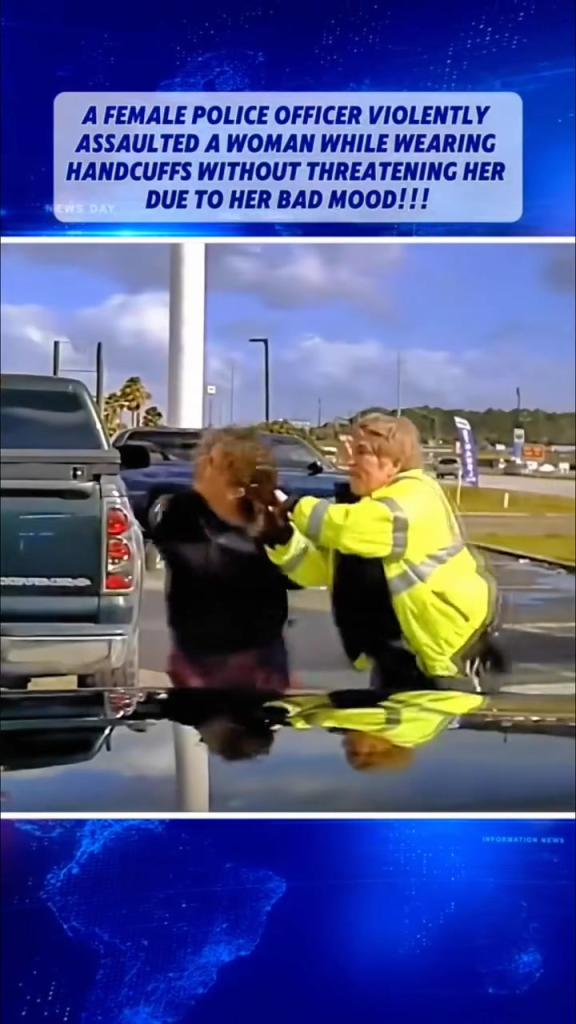
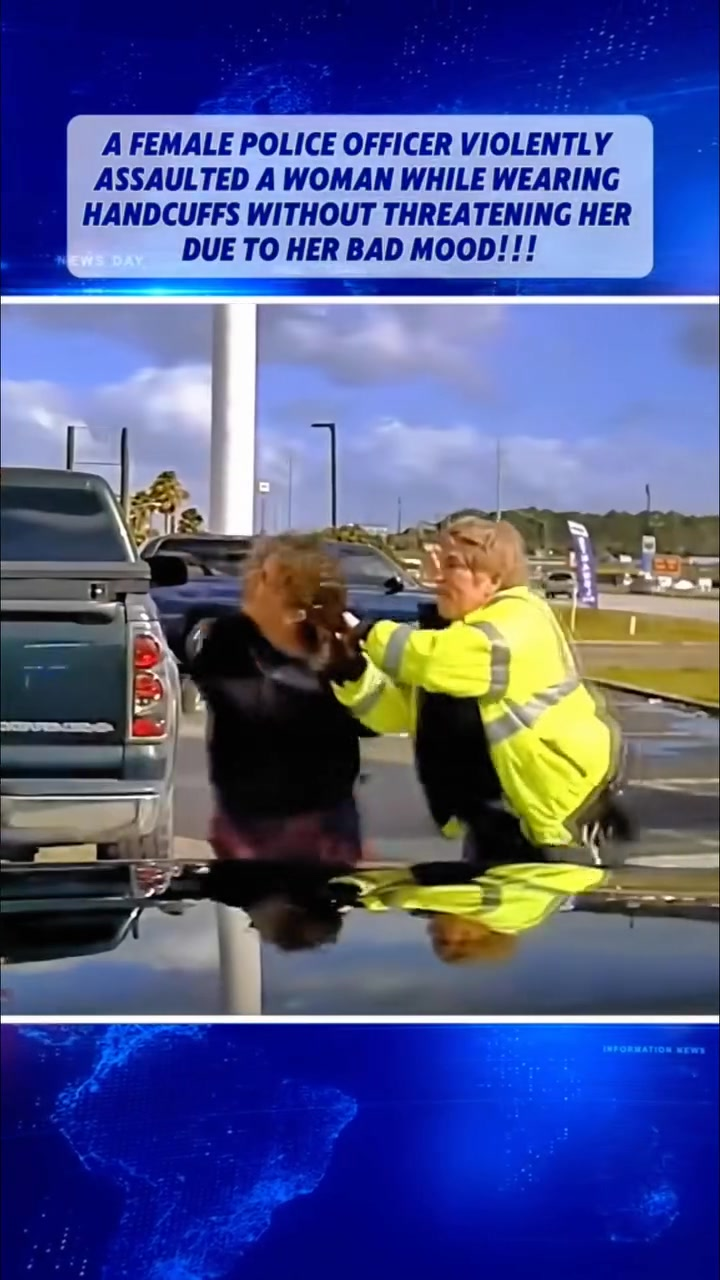
Video excerpts described in the transcript show Faria refusing to exit until she was given a reason, while Newman insisted no explanation was required and warned that the vehicle window could be broken. Moments later, Newman opened the car door and pulled Faria from the driver’s seat and both women ended up on the ground as the struggle moved from the roadside nearby into a physical arrest scene.
A second officer arrived as the confrontation intensified and used a stun device on Faria twice while helping secure her, according to the version of events presented in the video transcript during the roadside arrest. The most serious allegations centered on what happened next, when Newman was seen striking the handcuffed woman, grabbing her hair, and forcing her head hard into the rear bumper of a patrol car.

Faria was taken to a hospital after the arrest and was diagnosed with multiple abrasions as well as injuries affecting her neck and back, records cited in the video said afterward that day. After receiving medical treatment, she was booked into jail and remained detained for three days, adding another layer of controversy to a case that critics said should have prompted an immediate and far stronger review.
Instead the disciplinary response from the sheriff’s office was limited at first, with Newman receiving only a two-day suspension despite the seriousness of the accusations and the injuries Faria reported in the case. Even more striking to many observers, the deputy was named officer of the month roughly two months later, a decision that widely deepened questions about the agency’s overall judgment and internal standards at that time.
The woman’s father, who had spent many years working for the Tampa Police Department, decided to pursue justice through the courts and filed a lawsuit challenging the deputy’s conduct during the stop for his daughter. That legal action helped push the case into a more public phase, with allegations that Newman committed serious assault, minor assault, perjury, and multiple violations of her oath of office under state law.
Court proceedings that followed examined not only the force used during the arrest but also the accuracy of statements made afterward, an issue that often becomes central in misconduct prosecutions against officers in court. Prosecutors argued that the evidence showed a handcuffed detainee who no longer presented a threat, while the outcome of the case underscored how routine stops can suddenly transform into defining legal battles for communities.
Two years after the arrest, Newman was fired by the county sheriff’s office, bringing a delayed but significant end to her employment in local law enforcement after internal and legal reviews. She was ultimately convicted and sentenced to five years in prison, and she was also barred from future law enforcement work, closing a career that ended in criminal punishment instead of routine retirement for the former deputy.

The case has continued to resonate because it raises familiar questions about escalation, discretion, and how officers respond when a driver challenges their authority during a stop on dark roads late at night. It also illustrates the difference between lawful resistance to police orders and an officer’s duty to use measured force, especially once a person is restrained and under control during a tense roadside arrest encounter situation.
For advocates of police reform, the relatively light initial discipline became nearly as troubling as the arrest itself, because it suggested a department unwilling to fully confront serious allegations against one of its deputies. For law enforcement leaders, the eventual conviction served as a reminder that internal culture, supervision, and honest reporting can determine whether misconduct is corrected early or punished much later by a court of law.
Public reaction to the case was shaped by the stark contrast between the official recognition Newman received shortly after the incident and the criminal findings that came later from her department at that point. That gap fueled criticism from people who said trust in policing depends not just on courtroom verdicts, but on whether agencies publicly acknowledge warning signs before outsiders force accountability in cases like this one.
Although the original stop involved a traffic violation and a revoked license, the lasting focus of the case was the treatment of a detainee after control had already been established at the scene. That distinction mattered in both the civil and criminal arenas, where investigators and jurors had to decide whether the force used was necessary, proportionate, and lawfully documented under the facts then presented in court records.
Cases like this one often outlast the initial headlines because they touch on core issues of power, training, and institutional credibility that communities revisit again and again when official answers arrive too slowly afterward. Here, a traffic stop on an ordinary day ended with injuries, jail time, a lawsuit, a criminal conviction and a prison sentence that deeply permanently altered several lives for everyone directly involved in it.
As the sentence closes a long chapter in the case, the broader debate over accountability remains unsettled, especially for people who saw the early disciplinary response as deeply painfully inadequate in the public eye. The record left behind shows how a split-second encounter can trigger years of legal consequences, public distrust, and renewed demands that departments police their own ranks with consistency after failures become impossible to ignore.