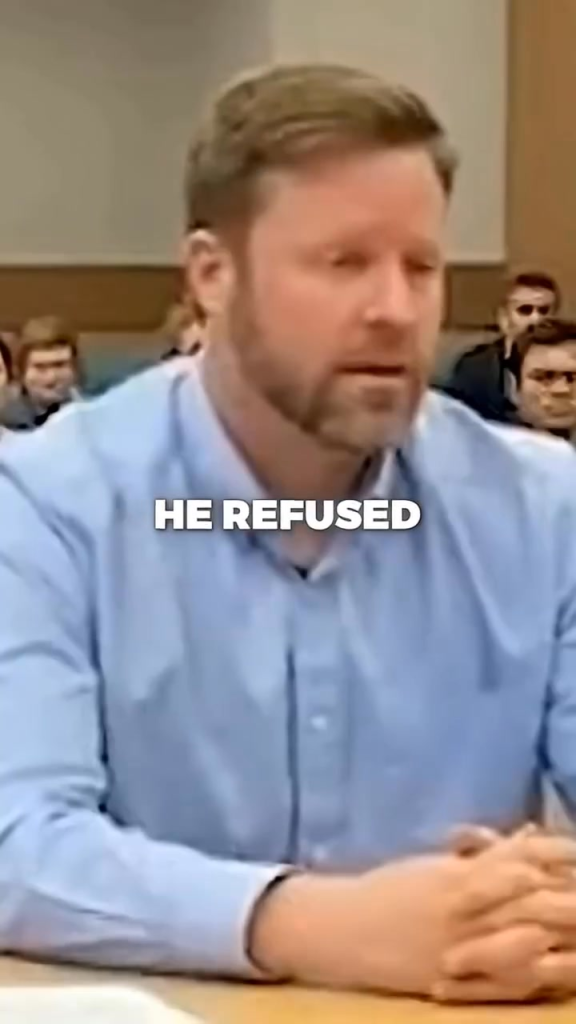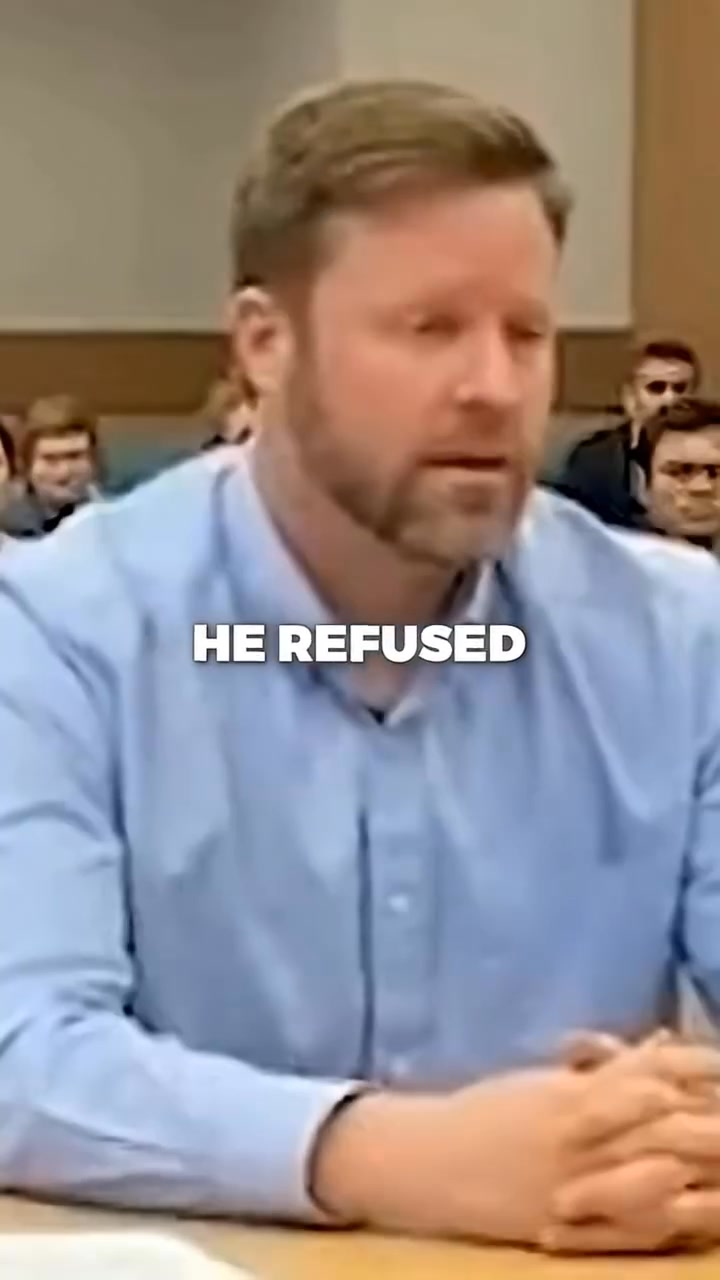
A routine evening in a neighborhood turned into a constitutional test when a resident stood on his front porch and used his phone to record police officers working across the street on an unrelated investigation. Minutes later, that recording sparked a confrontation, an arrest, and eventually a courtroom ruling that reaffirmed a principle civil liberties advocates have long defended, namely that documenting officials from a lawful location is protected speech.
According to the account presented in court, the man remained on private property throughout the encounter and did not cross the street, approach officers, or attempt to communicate with anyone involved in the police activity. His role was limited to filming from his porch a vantage point that offered a clear view of officers at work but as the judge later emphasized did not by itself create obstruction or interference.
Police nevertheless approached the property and instructed him to stop recording, arguing that his decision to document their actions posed safety concerns and interfered with the active investigation taking place in front of nearby homes. When he refused insisting he had the right to continue filming from where he stood officers arrested him on allegations of obstruction and interference charges that carried legal consequences beyond the immediate detention that day.
The dispute then moved from the street to the courtroom, where the central question was straightforward and important, whether merely recording police officers from a lawful position can be treated as interference with official duties. In the brief exchange described in the video the judge focused first on location asking whether the man had been on his own property when officers gave the orders that led to the arrest there.
Once officers acknowledged that point, the judge pressed further, asking whether the resident had threatened anyone, crossed police lines, or otherwise acted in a manner that would justify restricting his conduct under ordinary standards there. The answer as reflected in the courtroom dialogue was no leaving the prosecution’s theory resting largely on a broader claim that his presence and recording activity created generalized concern for officer safety during operations nearby.
That explanation did not persuade the court, which found a sharp difference between an actual physical disruption and the discomfort public officials may feel when they know a citizen is documenting their actions from afar. The judge stated that recording police from a public space or from private property is constitutionally protected a direct affirmation of First Amendment principles that courts around the country have repeatedly recognized in recent years.

With that, the case ended decisively, as the judge dismissed all charges and left little room for ambiguity about the limits of police authority when confronting someone who is peacefully recording from a lawful position. The ruling underscored that an order issued by an officer does not automatically become lawful simply because it is repeated especially when it collides with a clearly established constitutional protection for citizens in public settings.
Although the video presents only a concise snapshot of the legal argument, the facts described fit into a wider national debate over civilian oversight, police transparency, and the role of recording devices in public life. Smartphones have made it easier than ever for residents to capture interactions involving government officials and those recordings have become central evidence in disputes about conduct accountability and the boundaries of lawful enforcement in communities.
Civil rights attorneys have long argued that the ability to observe and record police is essential to democratic accountability, because law enforcement officers exercise public power and operate in spaces where their decisions affect everyone. Police organizations by contrast sometimes contend that filming can distract officers or heighten tensions particularly during uncertain situations though courts generally require more than speculative concerns before restricting protected expression by people standing at distance.
In this case, the judge’s questions cut through that tension by separating concrete behavior from abstract worry, a distinction legal experts often say is crucial when evaluating whether police orders are valid under constitutional review. Standing on a porch and holding a phone without threats or physical intrusion was not enough to transform a bystander into an obstruction the court concluded in dismissing the charges filed after the arrest episode.
The decision also serves as a reminder that private property does not become a constitution free zone when police activity happens nearby especially if the property owner remains peaceful and does not impede movement there. By emphasizing the resident’s location the court signaled that officers cannot simply extend the perimeter of an investigation to include any observer whose recording they would rather avoid without specific facts showing genuine interference first.
For many viewers, the most striking part of the exchange was the prosecution’s suggestion that the resident’s mere presence created danger, even after conceding he had not threatened anyone during the encounter with officers nearby. That claim highlighted a recurring conflict in policing debates whether broad appeals to safety can justify restrictions that would otherwise burden speech observation and criticism of public officials engaged in their duties in public view.
Legal scholars often note that the First Amendment protects not only speaking and publishing but also gathering information about government activity particularly when that activity unfolds in places visible to the public and nearby residents. The porch recording case captured that principle in unusually direct fashion because the facts were simple and the constitutional issue emerged without the complications that often surround rapidly developing street encounters between officers and citizens.

Even so, the ruling is unlikely to end disagreements over where observation stops and interference begins, since those judgments can depend heavily on distance, volume, movement, and the specific demands of a scene that day. Courts generally examine whether a person physically blocked access, disobeyed a lawful perimeter, or created an immediate hazard, not whether officers simply disliked being watched or recorded while carrying out public duties nearby that afternoon.
Because the video offers no additional background about the underlying investigation across the street, the court’s analysis focused almost entirely on the arrest itself and the legal basis officers cited for it during the hearing. That narrow focus may have helped produce a clear ruling since the essential facts were largely undisputed and the claimed interference consisted of recording from a place the resident had every right to occupy lawfully.
Supporters of the decision say it sends an important message to both officers and the public, affirming that constitutional rights do not disappear when a camera is pointed at government activity in nearby public spaces. Critics of expansive recording rights however may view the case as another example of courts limiting police discretion in real time even when officers believe they are acting to preserve control over fast moving situations.
Still, the judge’s reasoning suggested that constitutional protections cannot be reduced to an officer’s subjective sense of unease, especially when objective facts show no threats, no trespass, and no active disruption by the person recording. That formulation matters beyond this one arrest because it frames the dispute in terms that ordinary residents can understand whether they are filming from a sidewalk a porch or another lawful spot near police activity.
The case also illustrates how short courtroom exchanges can carry significant public meaning, especially when they distill a complicated constitutional issue into a few factual questions with straightforward answers from officers and the defendant alike. Was he on his property had he threatened anyone and was he physically interfering were the questions that mattered and once those answers were established the outcome followed quickly for the court that afternoon altogether.

For residents who watch the video, the ruling may reinforce confidence that courts remain willing to scrutinize arrests arising from citizen recording, rather than deferring automatically to broad claims of interference by officers in testimony. For police departments it may serve as a caution that training on recording rights remains essential because avoidable arrests can undermine public trust and expose agencies to legal and reputational costs when judges reject them.
In the end, the porch arrest case turned on a simple idea with broad implications, that citizens may document public officials from places they lawfully occupy without being treated as criminals for peaceful observation alone. By dismissing every charge the judge delivered a clear lesson to law enforcement and the public alike constitutional rights remain in force on a front porch even when police would prefer otherwise during tense encounters.