1. A Family and a Life Built Together
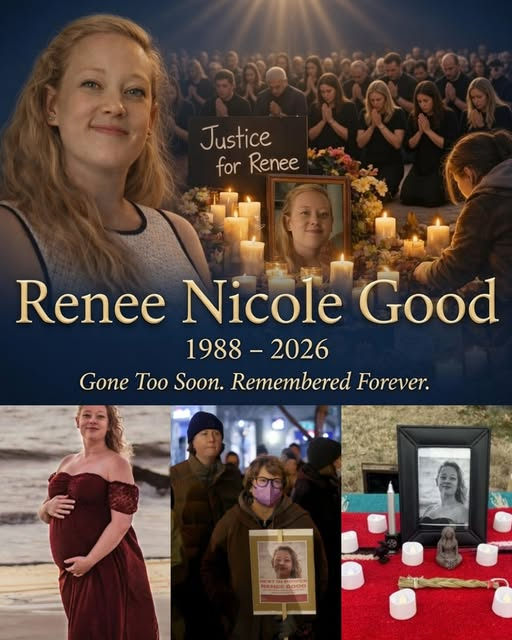
Renee Nicole Good was a 37-year-old U.S. citizen, a mother to three children, and a partner who cared deeply about her family. She had recently moved with her partner, Becca Good, and their young son to a neighborhood in south Minneapolis, Minnesota, where they were building a life rooted in community and social engagement. Her older children, aged around 15 and 12, from an earlier marriage, remained close with their mother even after her relocation.
2. The Morning of January 7, 2026
On the morning of January 7, 2026, what had begun as a routine day shifted into tragedy. Renee and her partner had just dropped their six-year-old child off at school, chatting about everyday matters and the plans ahead. The winter air was cold, but the couple shared smiles as they headed back toward their neighborhood.
3. A Federal Operation in Minneapolis
Unbeknownst to many residents, federal immigration agents from U.S. Immigration and Customs Enforcement (ICE) had been deployed in Minneapolis as part of an expanded immigration enforcement operation. The presence of these officers had already generated significant tension in the city, drawing both supporters and critics.
4. Observation and Concern
As Renee drove her red SUV through a section of the street near East 33rd and Portland Avenue South, she observed ICE agents engaged in an enforcement action. Some residents described her as stopping to watch what was unfolding, as if trying to understand or bear witness to the situation. Witnesses reported that she parked her vehicle across part of the road, momentarily blocking a lane of traffic as she faced the scene ahead.
5. Confusion and Conflicting Instructions
Several eyewitness accounts and video footage from the scene later indicated that the situation quickly became confusing. Agents approached Renee’s vehicle and gave conflicting instructions. Some told her to step out of the car. Others seemed to tell her to drive away. A federal immigration officer reached toward the door handle as the SUV sat across the street.
6. A Moment of Movement
According to reports and video analyses, the SUV began to move as Renee maneuvered the steering wheel. It may have been a literal attempt to get out of a confusing situation or to follow the perceived instructions. However, within moments of that movement, an agent positioned in front of and beside the vehicle drew his firearm.
7. The Shots Fired
The ICE officer, later identified through court records as Jonathan Ross, an Iraq War veteran with years of federal service, fired multiple shots at the departing vehicle. Several bullets struck Renee as the SUV continued forward. Those present on the street described the entire sequence happening in seconds.
8. Aftermath on the Street
Moments later, the SUV continued a short distance and struck parked vehicles before coming to a stop. First responders were called, but the scene remained chaotic. Emergency workers struggled to approach the vehicle due to the positioning of federal agents and other vehicles, according to some bystander accounts, delaying medical attention.
9. Confirmation of Her Death
At a nearby hospital, Renee was pronounced dead. She had been shot at least three times, including a bullet wound to her head. Her family, stunned by the news, began an immediate journey through shock, grief, and an urgent desire for clarity about what had happened that morning.
10. Federal Narrative and Self-Defense Claims
Federal officials, including Homeland Security Secretary Kristi Noem, described the encounter as one in which the agent acted in self-defense. They asserted that Renee’s vehicle was being “weaponized” and that she had attempted to strike officers with the SUV. Their characterization emphasized the dangers law enforcement faces during enforcement operations and framed the action as justified within that context.
11. Local Leaders Push Back
Local leaders in Minneapolis, including Mayor Jacob Frey, strongly disputed the federal narrative. They argued that the public video evidence did not clearly show Renee attempting to harm officers and that the use of lethal force was unnecessary and reckless. They called for federal authorities to be held accountable and demanded transparency about what happened that day.
12. Family Statements and Public Response
Renee’s family, represented by the law firm that also assisted the family of George Floyd, released statements highlighting her warmth, kindness, and the love she had for her children and community. They described her as “slow to anger, quick to love,” and emphasized that her presence in Minneapolis was part of a life shared with her partner and children—not any unlawful intent. Her mother, father, siblings, and partner spoke publicly about wanting truth and justice.
13. National Outrage and Protest
The shooting sparked protests throughout Minneapolis and across the United States. On January 8 and the following days, thousands gathered to mourn Renee’s death and to call for justice. Demonstrators marched with signs, chanted for federal reform, and emphasized community solidarity in response to what many saw as excessive force.
14. Community Memorials
In the days after the incident, neighbors and supporters created memorials near the location where Renee was killed. Flowers, candles, and photos of her smiling face dotted the sidewalks. People shared stories of her generosity and engagement in local life. For some, the memorial became a place to reflect on broader concerns about law enforcement policies and immigrant community safety.
15. Legal and Investigative Complexities
The federal investigation into Renee’s death became a point of controversy. The Department of Justice later stated that it saw no basis for a criminal civil rights investigation into the officer’s conduct. At the same time, state investigators found their access to evidence limited when federal authorities assumed primary control of the case. These developments raised concerns among legal experts about jurisdiction, transparency, and federal accountability in civilian deaths involving law enforcement.
16. Family Grief and Advocacy
Because large portions of the video footage showed the encounter, Renee’s family chose not to view it, prioritizing their memories of her life instead of her death. They pledged to pursue both legal routes and public advocacy to ensure understanding of what occurred and to work toward systemic change in law enforcement practices.
17. Broader Debate Over Enforcement Policy
Across the country, the incident became intertwined with a broader national conversation about immigration enforcement, the use of force by federal officers, and how communities and authorities interact during sensitive operations. Policy makers, activists, and legal scholars began debating reforms aimed at balancing public safety, human rights protections, and community trust.
18. An Unfinished Chapter
Months after that winter morning in south Minneapolis, communities continued to grapple with the effects of the shooting. Some viewed Renee’s death as a tragedy that demanded systemic attention, while others focused on questions of individual choice and command decisions during a tense situation. The event, its aftermath, and its broader reverberations remained part of the national discourse about law enforcement, immigration policy, and accountability.