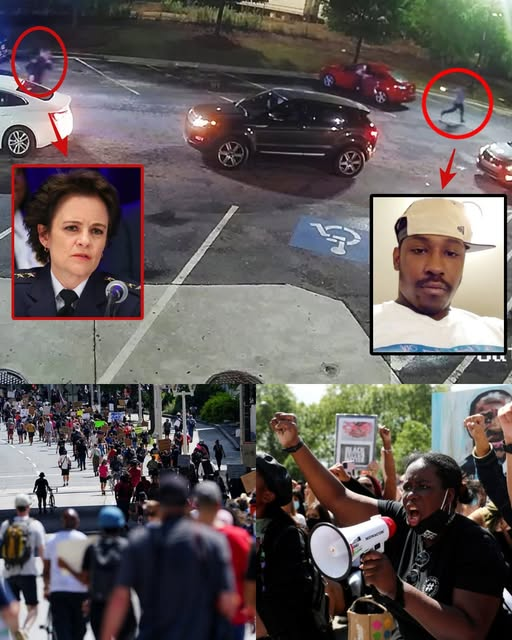
On June 13, 2020, protesters in Atlanta took to the streets after the fatal shooting of 27-year-old Rayshard Brooks by Atlanta police officers.
Brooks, a Black man, was killed after police confronted him while he was asleep in his car at a Wendy’s drive-thru.
The incident occurred just weeks after the tragic death of George Floyd, a Black man killed by a white police officer in Minneapolis, sparking nationwide protests.
The shooting of Brooks further fueled the anger and frustration of a community already grappling with police brutality and racial injustice.
Authorities stated that Brooks had been approached by two police officers who were investigating reports of a person asleep in the drive-thru lane.
After questioning Brooks, the officers attempted to arrest him for suspected DUI (driving under the influence).
During the arrest, Brooks allegedly resisted and, in a struggle, grabbed one of the officer’s tasers.
Brooks then ran, and one officer fired the taser at him while pursuing him on foot.
Moments later, gunshots rang out, and Brooks was fatally shot by one of the officers.
The incident was caught on video by a witness, showing Brooks running away as the officer opened fire, striking him in the back.
The video quickly went viral, sparking outrage among local residents and protesters, who gathered outside the Wendy’s location where the shooting occurred.
Many were deeply angered by the police’s use of deadly force against an unarmed Black man who was fleeing the scene.
The video showed Brooks, initially seen standing beside his car, trying to evade the officers and run away after grabbing the taser.
The police officer who fired the fatal shots was later identified as Garrett Rolfe, while the other officer involved, Devin Brosnan, was placed on administrative duty.
Rolfe was fired from the police department shortly after the incident, while Brosnan was placed on administrative leave.
The Atlanta Police Department and the Georgia Bureau of Investigation (GBI) launched an investigation into the shooting, which was met with widespread criticism.
The case drew comparisons to the killing of George Floyd and other high-profile cases of police violence against Black individuals.
Protests in Atlanta erupted immediately following the announcement of the shooting, with demonstrators chanting “no justice, no peace!” in the streets.

As protesters gathered in the city, they called for justice for Rayshard Brooks and demanded accountability for the officers involved in his death.
The protests continued into the following days, with demonstrators taking their message to the streets and demanding action from local officials.
On June 13, the same day the protests began, Atlanta Police Chief Erika Shields resigned amid growing public pressure and criticism of the police response.
Mayor Keisha Lance Bottoms, speaking at a press conference, stated that she had accepted Shields’ resignation, calling the actions of the police officers involved in Brooks’ death “a violation of the public’s trust.”
In addition to the resignation, Mayor Bottoms also called for the immediate termination of Officer Garrett Rolfe, who had shot and killed Brooks.
“I don’t believe this was a justified use of force,” Mayor Bottoms said. “I believe it was excessive, and I have called for the firing of the officer involved.”
Many in the community were devastated by the killing of Rayshard Brooks, seeing it as another example of police violence against Black individuals.
Brooks’ death became part of a larger movement to address systemic racism and police brutality, which had gained significant attention following the killing of George Floyd.

In the aftermath of the shooting, protests in Atlanta and across the United States continued to grow, with calls for justice for Brooks and an end to racial inequality in policing.
The protests were also fueled by the broader fight for racial justice, which had been sparked by Floyd’s death and the growing movement calling for police reform and defunding the police.
The shooting of Rayshard Brooks occurred in the context of a national reckoning over police violence and systemic racism.
Brooks’ death was seen by many as a tragic reminder of the ongoing struggle for racial justice in America, particularly in light of the deepening tensions between law enforcement and communities of color.
As protests continued across the country, many were hopeful that the movement would lead to tangible change in policing practices and criminal justice reform.
However, the incident also highlighted the challenges that remain in addressing the systemic issues that perpetuate racial disparities in law enforcement.
Brooks’ family, like many others, demanded accountability and justice for his death, and they mourned the loss of a loved one who had been taken too soon.
The shooting of Rayshard Brooks sparked debates about the use of force by police, especially in cases where individuals are unarmed or fleeing the scene.
It also raised questions about the effectiveness of police training and the need for reform to prevent such incidents from happening in the future.
As the investigation into Brooks’ death continued, protesters in Atlanta and across the country remained steadfast in their demand for justice.
Many expressed their belief that the killing of Brooks was part of a larger pattern of police violence that disproportionately affects Black Americans.
The protests also brought attention to the need for reforms to ensure that police officers are held accountable for their actions and that communities are better protected from excessive force.
The shooting of Rayshard Brooks was another painful chapter in the ongoing fight for racial justice in America.
While the community mourned the loss of Brooks, they also expressed their determination to continue the fight for justice and equality.
As the investigation into the incident moved forward, activists and community leaders vowed to keep pressure on officials to ensure that the officers involved were held accountable for their actions.
The tragic death of Rayshard Brooks, like the deaths of so many others before him, remains a reminder of the work still to be done in the fight for racial justice and reform in America.
While the protests in Atlanta and across the nation continue to call for change, the legacy of Rayshard Brooks will forever be tied to the ongoing struggle for justice and equality.

The protesters, as they take to the streets demanding justice for Brooks, remind us all that the fight for racial justice is far from over.
And in that fight, every voice matters, every protest counts, and every step toward justice is a victory.