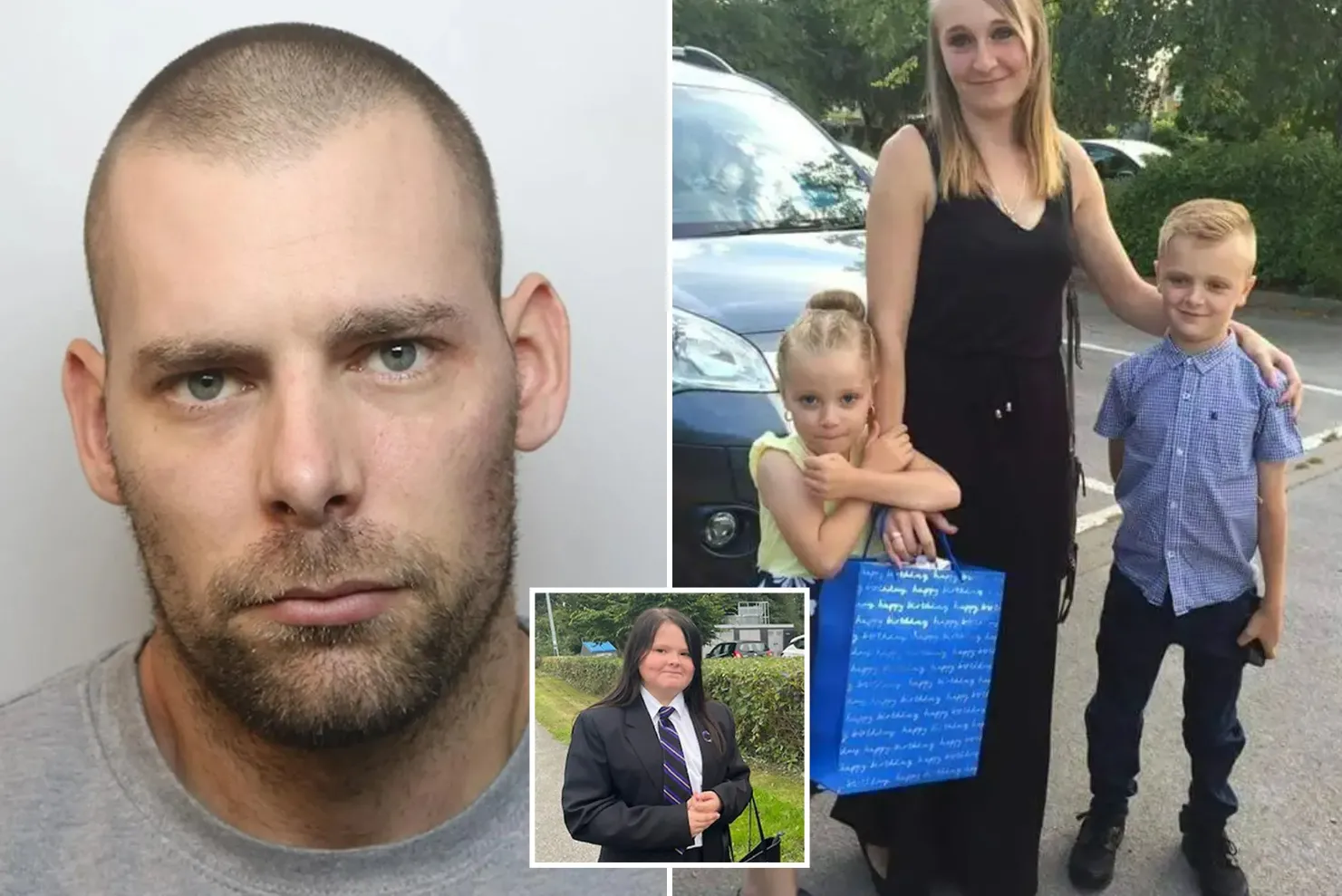
A man already condemned to spend the rest of his life behind bars for murdering a mother and three children has been handed a second life sentence after launching a violent hammer attack on a fellow inmate inside a maximum-security prison.
Damien Bendall, who is serving a whole life order for the 2021 Killamarsh murders, was sentenced again at Teesside Crown Court after being convicted of attempted murder for the assault at HMP Frankland.
The case has reignited public attention on one of the most devastating family murder cases in recent British history and raised further questions about prison security and offender management.
Bendall’s name first became widely known following the September 2021 killings at a home in Killamarsh, Derbyshire.
Inside that property, he murdered his partner, 35-year-old Terri Harris, along with her children John Bennett, 13, and Lacey Bennett, 11.
He also killed Lacey’s best friend, 11-year-old Connie Gent, who had been staying overnight for a sleepover.
The crimes stunned the nation because of their brutality and the ages of the victims.
In December 2022, Bendall received a rare whole life order, meaning he will never be released from prison.
The sentencing judge at that time described the murders as among the most serious offences that could come before the court.
Terri Harris had been pregnant when she was killed.
Her family later spoke publicly about her dedication as a mother and her plans for the future.
John Bennett was remembered as thoughtful and protective, someone who loved sports and family time.
Lacey Bennett was described as bright and creative, with a wide circle of friends.
Connie Gent was remembered by her family as kind-hearted and full of promise.
Memorials across Killamarsh and beyond reflected the depth of community grief.
Despite receiving the harshest sentence available under English law, Bendall remained capable of further violence while incarcerated.
In May 2024, at HMP Frankland in Durham, he attacked fellow prisoner Michael Mullaney inside a workshop area.
According to prosecutors, Bendall approached Mullaney carrying a concealed claw hammer.
Without warning or provocation, he struck him from behind with significant force.
The first blow rendered Mullaney unconscious, causing him to collapse to the floor.
Bendall then delivered several additional strikes to his head.
Judge Francis Laird KC later described the assault as “an act of extreme violence.”
Prison officers rushed to intervene and initially feared Mullaney had been killed due to the amount of blood at the scene.
He was transported to the Royal Victoria Infirmary in Newcastle, where he remained under observation for four nights.
Medical staff treated him for serious head injuries.
In a victim impact statement read to the court, Mullaney said he had been left shocked and fearful.
He explained that he had previously been on friendly terms with Bendall and had not anticipated any hostility.
The sense of betrayal compounded the trauma of the attack.
During police interviews and court proceedings, Bendall offered little explanation for his actions.
When asked why he carried out the assault, he reportedly replied, “I don’t know.”
He later suggested he had wanted to be transferred to a more isolated prison unit and believed committing a serious offence would prompt such a move.
The court rejected any suggestion that the attack was spontaneous.
Judge Laird concluded it was deliberate and calculated.
Bendall was convicted of attempted murder and sentenced to life imprisonment with a minimum term of 15 years.
Although he is already subject to a whole life order, the additional sentence underscores the gravity of the prison assault.
Legal experts note that while the new life term may not alter the practical reality of his incarceration, it formally recognises the seriousness of the attempted murder.
The incident has also prompted renewed scrutiny of security arrangements at HMP Frankland.
Frankland is one of the UK’s most secure prisons, housing offenders convicted of terrorism, organised crime, and multiple homicides.
Questions have been raised about how Bendall gained access to a hammer inside a workshop environment.
Prison authorities have indicated that a review of procedures was undertaken following the assault.
Officials have not publicly disclosed specific security changes.
The case also brings renewed focus to the events leading up to the 2021 murders.
At the time of the Killamarsh killings, Bendall had been on a suspended sentence for arson.
He was subject to a curfew and electronic monitoring.
He also had a history of violent offending dating back years.
A subsequent independent review of probation handling found significant failings.
The report concluded that the supervision of Bendall fell below acceptable standards at multiple stages.
Officials acknowledged missed opportunities to reassess risk and take action.
It emerged that he had been allowed to move into Terri Harris’s home despite known concerns.
The review described the oversight as contributing to “serious consequences.”
Those findings prompted calls for reform within the Probation Service and changes to risk assessment protocols.
Family members of the victims expressed frustration at systemic failings.
They argued that more robust supervision might have prevented the murders.
The prison assault has reopened those painful discussions.
For the families of Terri, John, Lacey, and Connie, each new court appearance involving Bendall revives memories of loss.
Community members in Killamarsh continue to mark anniversaries of the murders with quiet remembrance.
Flowers, tributes, and online memorial pages remain active years later.
Local schools have also paid tribute to the children.
The events inside HMP Frankland demonstrate that even within a controlled environment, managing individuals convicted of extreme violence remains complex.
Prison governors must balance rehabilitation programs with safety precautions.
Workshop areas often provide opportunities for structured activity and skill development.
However, they also require strict supervision when tools are involved.
The Crown Prosecution Service emphasised during trial that the assault on Mullaney was unprovoked.
There was no evidence of a dispute immediately prior to the attack.
Prosecutors argued that the violence reflected Bendall’s continuing risk to others.
In sentencing remarks, Judge Laird stated that the attack showed a disregard for human life.
He noted that the victim had been struck multiple times in the head, a particularly vulnerable area.
The judge concluded that only a life sentence was appropriate.
Bendall showed little visible emotion as the sentence was delivered.
Observers in court reported that he remained largely impassive.
The case has drawn attention not only for its brutality but also for its implications for prison management and offender supervision.
High-security prisons like Frankland are designed to contain individuals deemed extremely dangerous.
Yet even within those settings, violent incidents can occur.
Officials stress that such attacks remain rare relative to the overall prison population.
Nonetheless, the severity of this assault has heightened awareness.
Mullaney’s recovery has been described as gradual.
While physically improving, he reported lingering anxiety.
He told the court he remains cautious around other inmates.
Victim support services continue to assist him.
Meanwhile, the families of the original murder victims have reiterated their desire to keep the focus on those who lost their lives in 2021.
They have said that media coverage should remember Terri and the children for who they were, not solely for the circumstances of their deaths.
Terri Harris was remembered as caring and devoted.
John Bennett enjoyed sports and spending time with friends.
Lacey Bennett was known for her creativity and love of fashion.
Connie Gent dreamed of future ambitions and was described as kind and thoughtful.
Their names continue to resonate in community remembrance.
The second life sentence ensures that Bendall will remain incarcerated for the rest of his natural life.
It also formally records the seriousness of his continued violence behind bars.
For many, the case stands as a stark reminder of the long-term consequences of systemic failures and the enduring impact of violent crime.
Years after the Killamarsh murders, the shadow of that night remains.
And with the additional life term imposed at Teesside Crown Court, the legal chapter grows longer, even as families continue to live with irreversible loss.