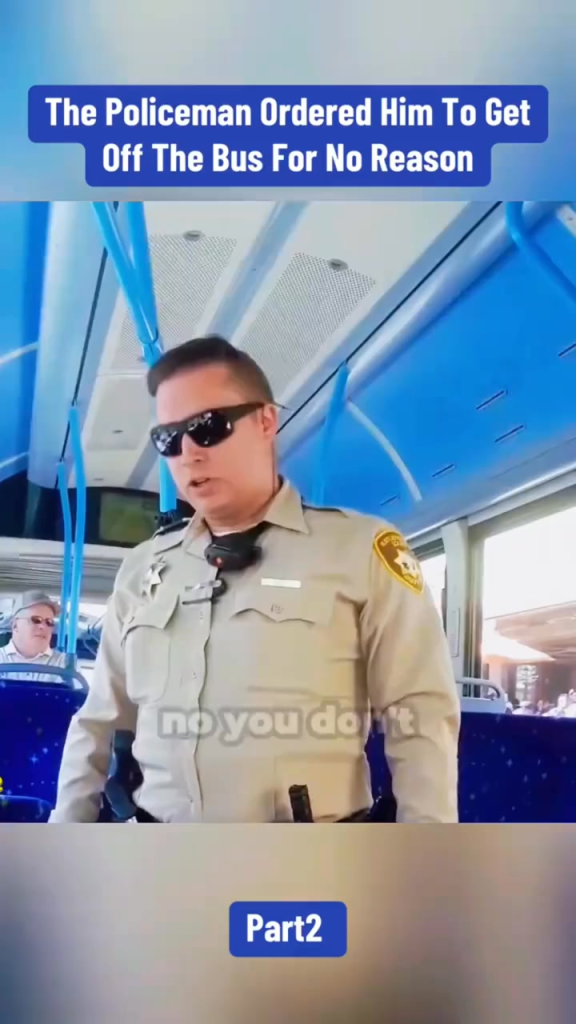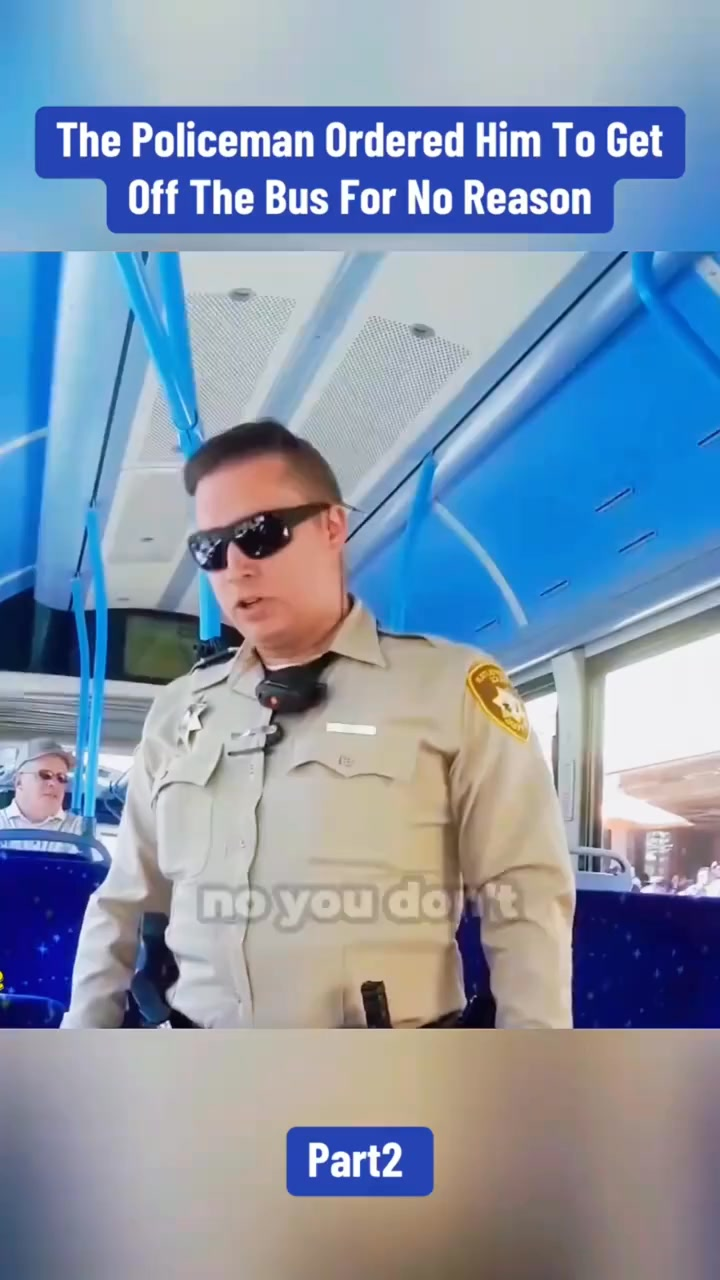
The scene takes place inside a calm, brightly lit bus, where passengers sit quietly as an officer steps onboard. His tone is firm, his sunglasses hide his expression, and he immediately confronts a man sitting mid-row. What starts as a simple question quickly escalates into confusion for everyone watching.
The officer tells the passenger he needs to get off the bus. No explanation. No reason given. The man, clearly startled, looks around as if trying to understand if he’s done something wrong. He insists he paid his fare, that he’s sitting peacefully, and that he hasn’t caused any disturbance. Other riders quietly watch, sensing tension rising in a place usually filled with everyday routine.
The officer repeats the order without offering clarity. The passenger asks again—why? The frustration in his voice isn’t disrespect; it’s confusion. He wants to comply, but he wants to understand. The officer, however, becomes increasingly impatient, saying only, “I told you already,” even though he hadn’t given any reason at all.
The man stays seated, hoping the officer will explain, but instead, the officer threatens to remove him by force. The entire bus becomes silent. Passengers exchange glances, unsure what rule was broken or what behavior justified such an aggressive approach.
The man tries to remain respectful. He keeps his hands visible, he speaks calmly, and he even offers to show his ticket again. But the officer seems committed to pushing him off the bus without discussion.
At this point, the bus driver finally speaks up, confirming the passenger did nothing wrong. He states clearly that the man paid, boarded properly, and wasn’t causing any issue. The officer brushes the comment aside, insisting the passenger “needs to step outside.”
Passengers begin recording on their phones. They understand something isn’t right—why remove someone who simply wants to get to their destination?
When backup arrives, the officers reassess the situation more carefully. They speak to the driver, the passengers, and the man himself. And just like that, the truth surfaces: there was no violation, no disturbance, and no legitimate reason to remove him from the bus.
The officer who initiated the confrontation grows tense as his mistake becomes clear. His overly forceful behavior didn’t reflect protocol or fairness. He misread the situation—or let frustration dictate his decisions.
In the end, the passenger is allowed to stay on the bus as he originally intended. The other officers apologize for the confusion. The man, although shaken, thanks them for at least listening. Meanwhile, the passengers who witnessed everything shake their heads, relieved justice prevailed but troubled by how quickly a peaceful ride turned into an unnecessary confrontation.
This moment is a reminder that authority requires patience, clarity, and respect—and when those aren’t present, even a simple bus ride can turn into a tense and avoidable conflict.