Most people think of nails as something you paint, trim, or show off—but they’re actually tiny health reporters. The way your nails look and grow can reveal what’s happening inside your body, sometimes before you notice any symptoms at all. Once you start paying attention to them, it’s hard not to get curious.
For illustrative purposes only
Why do your nails deserve more attention?
Your nails grow from a small but powerful structure called the nail matrix, where new cells are constantly produced. When something interferes with that process—stress, illness, nutritional deficiencies, or hormonal changes—it often shows up right on your nails.
What’s fascinating is that conditions you’d never associate with nails—such as anemia, thyroid disorders, or blood sugar imbalances—can leave early clues there. It’s your body’s subtle way of whispering, “Something’s not quite right.”
Healthy nails do more than look good. They protect your fingertips from infection and daily wear and tear. Changes like unusual discoloration, ridges, or spots aren’t always harmless cosmetic quirks—sometimes, they’re early warning signs worth listening to.
1. White spots on nails
For illustrative purposes only
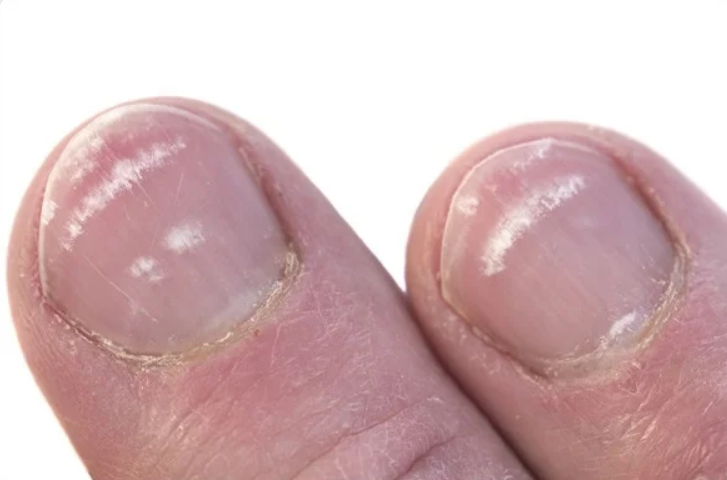
Ever notice tiny white specks on your nails and wonder what they mean? These marks—called leukonychia—are usually harmless. In most cases, they appear after minor trauma to the nail, like bumping or pressing it without realizing.
However, recurring white spots can sometimes hint at nutrient deficiencies, particularly zinc. If they show up along with other symptoms—such as fatigue, hair changes, or brittle nails—it’s a good idea to check in with a healthcare professional for reassurance.
2. Dark lines running down the nail
For illustrative purposes only
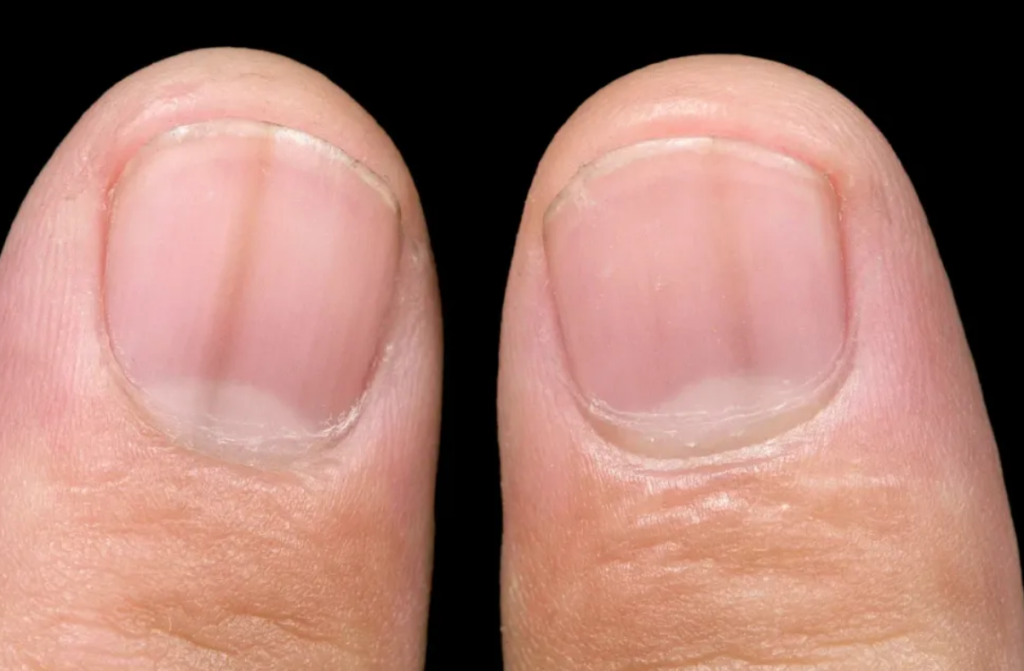
A dark brown or black stripe running from the base of your nail to the tip is known as melanonychia. For people with darker skin tones, this can be completely normal and harmless.
That said, melanonychia can also result from trauma, friction, medications, hormonal shifts, infections, or nutritional issues. In rare cases, changes in pigment cells can signal something more serious—especially if the stripe appears suddenly, changes shape, or affects only one nail. Any new or unusual dark line is worth having evaluated.
3. Ridged nails
For illustrative purposes only
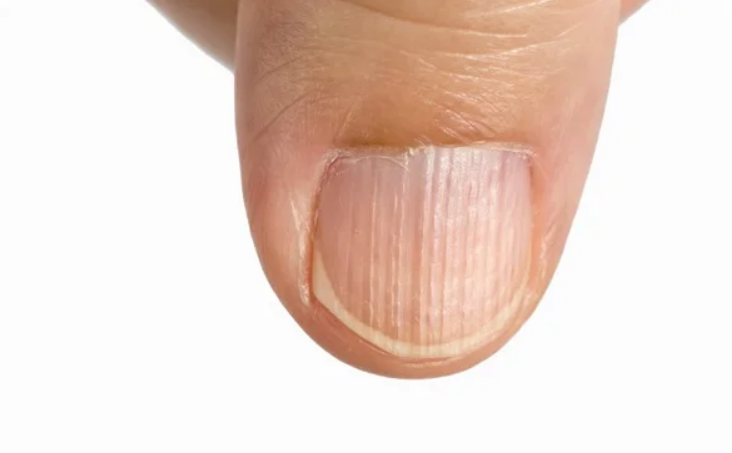
If you’ve ever run your finger across your nail and felt grooves, you’re not imagining it. Vertical ridges—running from cuticle to tip—are extremely common and often become more noticeable with age. They’re usually harmless.
Horizontal ridges, known as Beau’s lines, tell a different story. These can form when nail growth is temporarily interrupted by illness, intense stress, or another systemic issue. Think of them as timestamps—your nails recording moments when your body was under strain. Repeated or deep horizontal ridges should be discussed with a healthcare provider.
4. Hangnails
For illustrative purposes only
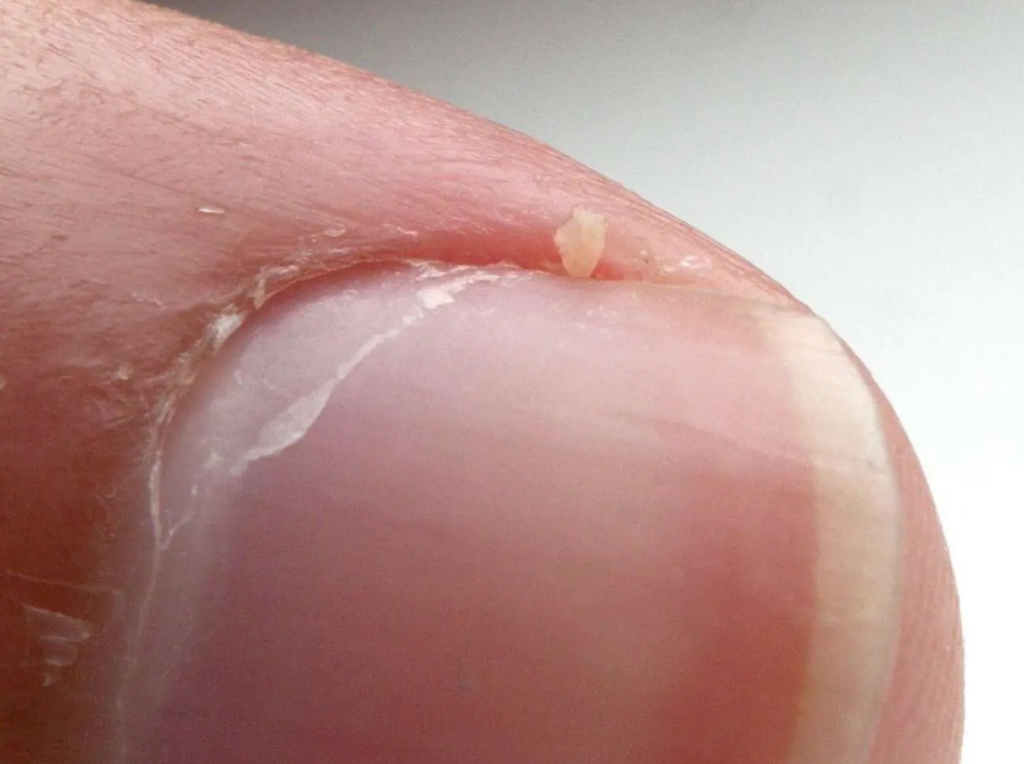
Hangnails may look small, but they can be surprisingly painful. That little torn flap of skin near your nail is often caused by dry air, frequent handwashing, nail biting, or cutting cuticles too aggressively.
While usually minor, hangnails can allow bacteria or fungi to enter, leading to an infection called paronychia. The safest fix is simple: wash your hands, disinfect your clippers, and gently trim the loose skin—never bite or tear it. Warm-water soaks and antibacterial ointment help soothe irritation. If swelling or pain worsens, a doctor’s visit can prevent complications.
5. Yellow nailsFor illustrative purposes only
Yellowing nails aren’t just a cosmetic concern—they can be a sign your body needs attention. Causes range from fungal infections to a rare condition called yellow nail syndrome, as well as thyroid or respiratory issues.
Along with discoloration, nails may grow more slowly, thicken, or become brittle. Persistent yellow nails shouldn’t be ignored. A healthcare professional can identify the underlying cause and guide treatment, making it much easier to restore your nails to their natural, healthy appearance.
Final Thoughts
Your nails are quietly communicating with you every day. Paying attention to small changes—spots, lines, ridges, or color shifts—can help you catch potential issues early, sometimes long before other symptoms appear.
They may be small, but your nails have a lot to say—and listening to them can make a real difference in your overall health.