What happens when a police officer flips on the lights… and there’s no one behind the wheel?
That question became reality after a driverless car was pulled over on a public road, creating one of the most surreal traffic stops ever caught on camera. The incident has since gone viral, leaving viewers equal parts amazed, confused, and uneasy about how fast autonomous technology is moving into everyday life.
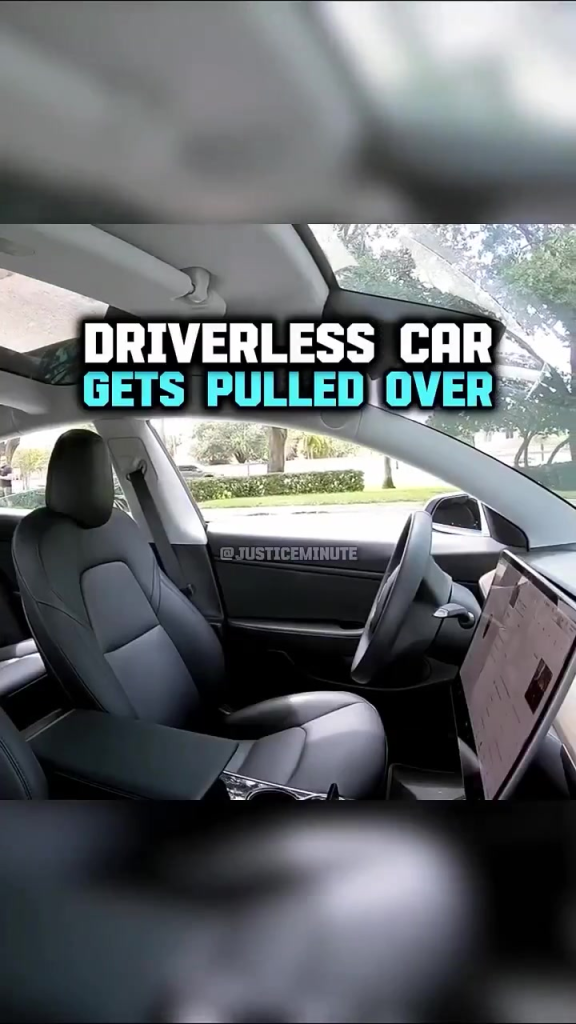
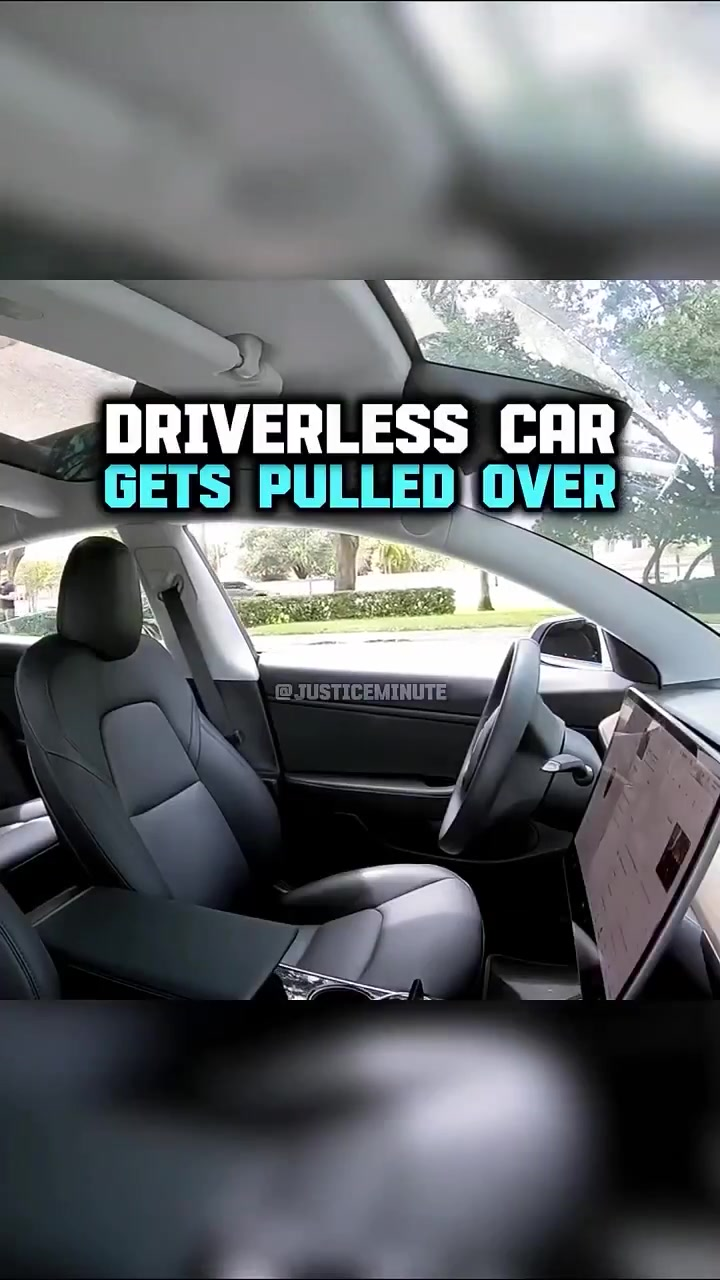
According to reports, the vehicle was operating in full self-driving mode when officers initiated a traffic stop. From the outside, everything looked normal — until the officer approached the driver’s side window and realized the seat was completely empty. No driver. No hands on the wheel. Just a screen, sensors, and artificial intelligence making decisions in real time.
The bodycam footage quickly spread online, with many asking the same question: How do you pull over something that doesn’t think like a human?
Law enforcement officials explained that the stop was conducted after the vehicle allegedly violated traffic rules. When the car eventually came to a halt, officers attempted to determine who — or what — was responsible. With no human driver to speak to, the situation immediately turned into a legal gray area.
Autonomous vehicle experts say this incident highlights a growing challenge. While self-driving cars are programmed to follow traffic laws, they still exist in a world built for human behavior. When something goes wrong, accountability becomes unclear. Is it the owner? The manufacturer? The software developer?
In this case, officers reportedly contacted the company behind the vehicle to resolve the situation. The car itself remained calm and compliant, responding exactly as programmed. No arguing. No sudden movements. Just silence — and a blinking screen.
Online reactions poured in within hours.
Some viewers joked that the car handled the stop better than most human drivers. Others expressed serious concern. “If a car can get pulled over,” one user wrote, “it can also make mistakes — and that’s scary.”
Safety advocates stress that while autonomous technology has advanced rapidly, it’s not flawless. Systems rely on cameras, sensors, and algorithms, all of which can misinterpret unusual situations. Police stops are especially complex because they rely on verbal commands, gestures, and human judgment — things machines don’t naturally understand.
“This wasn’t just funny,” one transportation analyst noted. “It exposed how unprepared laws are for technology that’s already here.”
Lawmakers across the country are now being pressured to clarify regulations around driverless vehicles. Questions include whether such cars should carry remote operators, how police should interact with them, and who is legally responsible during violations or accidents.
Manufacturers argue that autonomous vehicles could ultimately reduce crashes caused by human error — such as speeding, distracted driving, or impaired judgment. However, critics counter that replacing human mistakes with software errors doesn’t automatically make roads safer.
The incident also raised practical questions. What if emergency responders need instructions? What if a car malfunctions mid-stop? And how do officers ensure public safety when the “driver” can’t answer questions?
Despite the concerns, supporters say moments like this are part of technological growing pains. “Every major innovation has awkward first encounters with the law,” one expert said. “This is just the beginning.”
For police officers involved, the stop was unlike anything they’d experienced before. No ID to check. No conversation. Just a vehicle proving that the future has officially arrived — whether we’re ready or not.
As autonomous cars become more common, encounters like this may no longer feel shocking. But for now, the image of flashing police lights behind an empty driver’s seat remains a powerful symbol of how quickly the rules of the road are changing.
One traffic stop.
Zero drivers.
And a reminder that the future doesn’t wait for permission.
Whether exciting or unsettling, one thing is certain: technology just got pulled over — and we’re all along for the ride.