Chapter 1: The Return
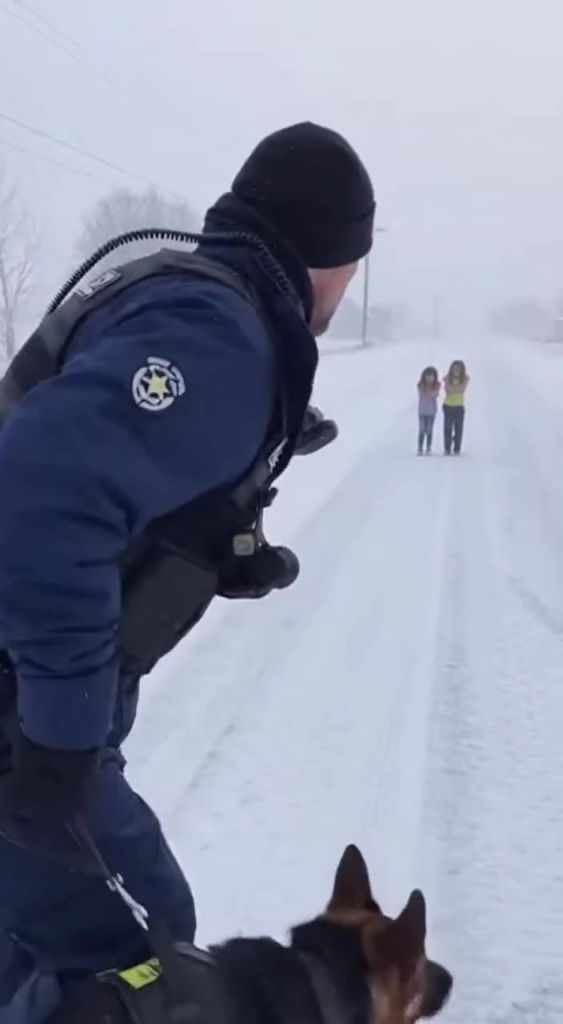
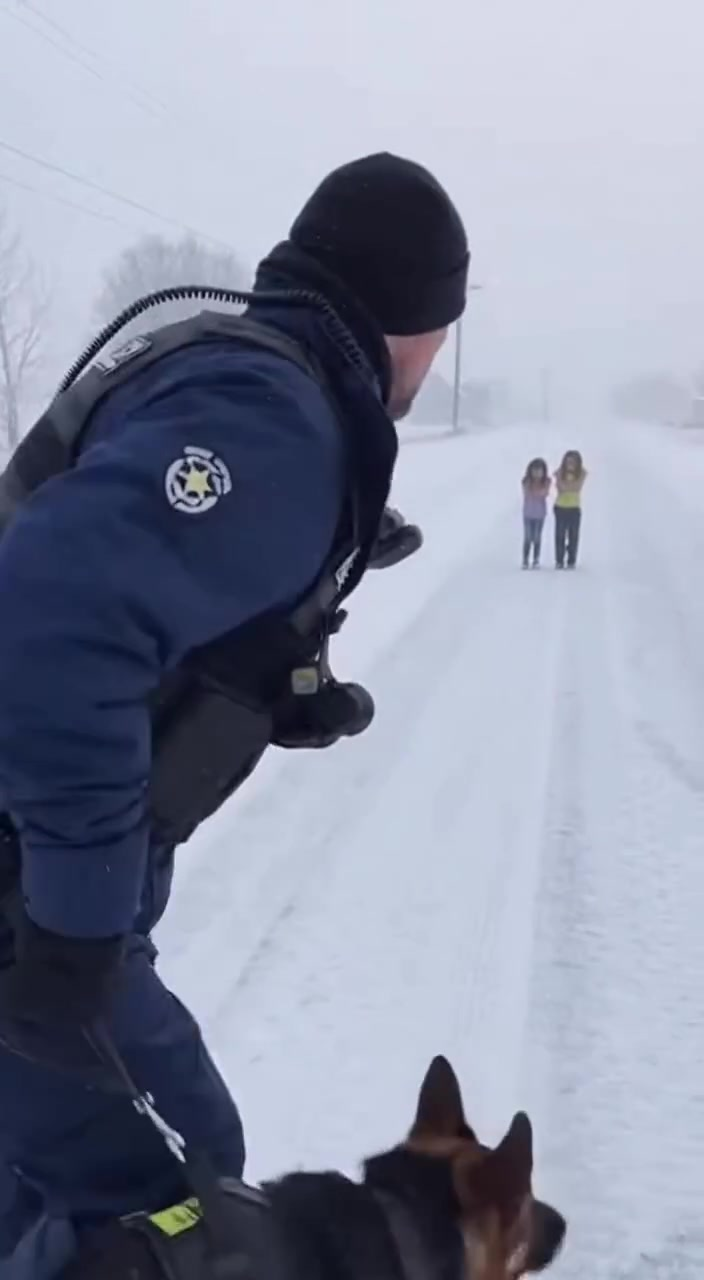
The winter sun was a pale, useless coin hanging low over Brier Hollow. It offered no heat, only a stark, grey light that made the frost on the fence posts look like jagged teeth.
I, Ethan Rivers, was finally coming home.
My hands were steady on the steering wheel of my truck, but my stomach was in knots. 121 days. That number had been a countdown etched into my bones. 121 days of a multi-state task force, sleeping in cheap motels or the back of this truck, eating cold food, and chasing shadows.
I’m 38 years old. I’ve been a cop long enough that the uniform feels like a second skin. I’m big—broad shoulders, hands rough from work, a jawline that’s usually covered in a shadow of stubble no matter how recently I’ve shaved. I’ve got eyes the color of steel, and usually, they’re tired.
But today, they were wide open.
In the passenger seat, Ranger shifted. He’s my partner. A six-year-old German Shepherd, black and tan, with eyes that miss nothing. He’s 85 pounds of disciplined muscle and loyalty. For four months, he slept by my boots every night. He was the only thing that kept the nightmares at bay.
As we turned onto the gravel road leading to my property, Ranger sat up. His ears swiveled forward like radar dishes.
I smiled, reaching over to scratch behind his ears. “We’re home, buddy. We made it.”
But Ranger didn’t relax. Suddenly, a low rumble started in his chest. It wasn’t a bark. It was a vibration, a deep, guttural warning that I felt through the seat.
He stiffened, his nose pressing against the glass, his hackles—the hair along his spine—standing straight up.
“What is it?” I slowed the truck, my instincts shifting from ‘father’ to ‘officer’ in a split second.
Then I saw them.
The world seemed to tilt violently to the left. I slammed on the brakes, the truck skidding on the gravel before coming to a halt.
Two small figures were standing near the ditch, right where the driveway curves toward the main house.
Mina and Meera.
My twin daughters. They are six years old, identical in that eerie, beautiful way twins are. Same soft cheeks, same big brown eyes. But today, they looked like ghosts.
I threw the truck into park and bailed out. Ranger was ahead of me, leaping from the cab and hitting the ground running. But he didn’t run to play. He ran to guard.
“Mina! Meera!” I choked out their names.
The wind cut through my heavy tactical jacket. I can’t imagine what it felt like to them.
They were barefoot. Their feet were buried in the slushy snow. They weren’t wearing coats. No hats. No gloves. Mina was in a thin blue t-shirt that was torn at the hem. Meera was wearing a mustard-yellow shirt that was so thin I could see the outline of her ribs through it.
They didn’t run to me. They didn’t smile.
They stood shoulder to shoulder, arms wrapped tightly around their own chests, shivering so violently their teeth were clicking together.
I fell to my knees in the snow, ignoring the cold soaking into my pants. I pulled them both into me, wrapping my massive arms around their tiny, freezing bodies.
They were like blocks of ice.
“Daddy?” Mina whispered. Her voice was thin, brittle.
“I’ve got you,” I said, my voice cracking. I pulled off my heavy jacket and draped it over both of them, trying to rub heat into their arms. “Why are you out here? Where is Laura?”
Laura. My wife. Their stepmother.
I had married her two years ago, thinking she was the stability we needed after their birth mother passed. She was polished, calm, the kind of woman who kept a spotless house and smiled politely at church.
Meera looked up at me. Her lips were blue. She pressed her face into my chest, and I felt her hot tears soaking through my shirt.
“She’s inside,” Meera sobbed quietly. “She said… she said we were bad. She said we had to wait for you to come home so you could see how bad we are.”
Ranger let out a snarl. He wasn’t looking at the girls. He was standing stiff-legged, facing the farmhouse. He was positioning himself between us and the front door.
I looked up at the house. It stood silent in the fog. The curtains were drawn.
“Bad?” I asked, my voice dropping to a dangerous whisper. “You aren’t bad. You’re freezing.”
Mina grabbed my hand. Her fingers were stiff, claw-like. “She said if we told you about the room… she said you’d leave again. She said you wouldn’t want broken kids.”
The room?
A cold deeper than the winter air settled in my stomach. I looked at my girls—really looked at them. Under the dirt on their faces, their eyes were sunken. Dark circles bruised the skin beneath their lower lids. They looked malnourished.
This wasn’t just a punishment for a spilled glass of milk. This was systemic. This was torture.
“We are leaving,” I said, standing up and lifting both of them into my arms. They were terrifyingly light. “Right now.”
“No!” Meera panicked, clinging to my neck. “She’ll be mad! She said we can’t leave the perimeter!”
“I am the perimeter now,” I growled.
I carried them back to the truck. Ranger backed up slowly, never taking his eyes off the house, waiting until I had them safely inside the cab before he jumped in.
I blasted the heat. I didn’t look at the house again. I couldn’t. If I looked at the house, and if I saw Laura standing in that window, I would have done something that would have taken me away from my girls forever.
I threw the truck into reverse and spun the tires, kicking up gravel and snow. We were going to the clinic. And then, I was going to war.
Chapter 2: The Assessment
The clinic in Brier Hollow smelled of rubbing alcohol and pine cleaner. It was a safe smell, sterile and orderly, a stark contrast to the chaotic terror of the snowy roadside.
I carried both girls in. I refused to put them down. Ranger trotted right beside us, ignoring the ‘No Dogs Allowed’ sign on the glass door. The receptionist took one look at my face, and then at the shivering girls wrapped in my oversized tactical jacket, and she didn’t say a word about the dog.
“Room 3,” she said urgently, pointing down the hall. “I’ll get Dr. Miller.”
I set them down on the exam table. They sat huddled together, Mina instinctively pulling Meera slightly behind her. Even in her trauma, she was the big sister. By two minutes, maybe, but she carried the weight of a guardian.
Dr. Sarah Miller walked in ten seconds later.
I’ve known Sarah for years. She’s 34, tall, with chestnut hair always tied back in a messy ponytail because she’s too busy saving lives to worry about vanity. She has kind, hazel eyes that have seen too much sadness. She lost her own brother in an accident when they were kids; she knows what grief looks like on a child’s face.
She paused at the door, her eyes taking in the scene. Me, pacing. Ranger, sitting guard by the table. The girls, pale and trembling.
“Ethan,” she said softly. She didn’t ask ‘How was the mission?’ She didn’t ask ‘When did you get back?’ She went straight to work.
“Hi, girls,” Sarah said, her voice dropping to a soothing hum. She moved slowly, washing her hands. “I’m just going to warm you up, okay? No needles. No medicine that tastes bad. Just checking.”
She began to examine them. I stood in the corner, my arms crossed so tight my chest hurt.
As Sarah lifted the hem of Mina’s dirty t-shirt to listen to her heart, her jaw tightened. She didn’t gasp, but I saw her eyes flick to mine.
I stepped closer. “What?”
Sarah gently turned Mina slightly. “Honey, does this hurt?”
“Only when I lie down,” Mina whispered.
There, on her lower back, were bruises. But they weren’t fresh blue and purple marks. They were yellow, green, and brown. Layers of them. Some were shaped like fingers. Some looked like… marks from a stick.
“And here,” Sarah murmured, checking Meera’s arms.
Meera flinched. “I fell,” Meera recited, her voice robotic. “I’m clumsy. Mommy Laura says I have two left feet.”
“Mommy Laura is a liar,” I said, the words bursting out of me.
Ranger whined low in his throat and nudged Meera’s dangling hand with his wet nose. Meera buried her fingers in his fur, anchoring herself.
Sarah finished the exam and covered them with heated blankets. She motioned for a nurse to bring warm broth, then she pulled me out into the hallway, leaving the door cracked so Ranger could see us.
“Ethan,” Sarah said, her voice shaking with suppressed rage. “This isn’t just neglect. They are severely dehydrated. Malnourished. Meera has a hairline fracture on her left wrist that’s healing poorly—it’s weeks old. Mina has deep tissue bruising on her back and buttocks.”
I punched the concrete wall next to me. The pain in my knuckles felt good. It grounded me. “I was gone for four months. She sent me pictures. She sent me texts saying they were happy. She said they were making cookies.”
“They haven’t made cookies in a long time,” Sarah said grimly. “Their weight… Ethan, they’ve lost about ten pounds each. At this age, that’s catastrophic.”
I slid down the wall until I was crouching on the floor, my head in my hands. “How did I not know? I’m a detective. I find things for a living. How did I not see she was capable of this?”
“Because sociopaths are good at hiding,” Sarah said, crouching next to me. “But they are safe now. I’m documenting everything. Every scratch, every pound lost. This goes to the police report immediately.”
“I am the police,” I said, looking up. My eyes were dry now. The sadness had burned away, replaced by a cold, calculating fury.
“You can’t handle this case, Ethan. You know that. Conflict of interest,” Sarah warned.
“I know,” I stood up. “That’s why I’m calling Mark Hail. But Sarah?”
“Yeah?”
“Nobody takes them out of this room. Not Child Services. Not a social worker. And definitely not her. If she shows up…”
“If she shows up,” Sarah cut in, her eyes hard as flint, “she’ll have to go through me. And I’ve got a scalpel.”
I nodded. I went back into the room. The girls were sipping the broth, their color returning slightly. Ranger was licking Mina’s ankle.
My phone buzzed in my pocket. I pulled it out.
A text from Laura.
Honey! I saw your truck tracks. Are you home? The girls must have wandered off again, they’ve been so difficult lately. Come home, I’m making your favorite roast.
The audacity. The absolute, twisted disconnect from reality. She didn’t know I had them. She thought they were just lost in the snow, or maybe she knew exactly where they were and was playing the concerned mother card.
I didn’t reply.
I looked at Mina. “Mina, I need you to be brave for one minute. I need to ask you something.”
Mina looked at me over the cup of broth. “About the barn?”
My blood ran cold. “The barn? No, honey. What about the barn?”
Mina exchanged a look with Meera. A look of shared terror.
“The bad room,” Meera whispered. “Behind the horse stalls. Where the cameras are.”
“Cameras?” I asked, confused.
“She watches,” Mina said. “She locks us in the shed behind the barn. She turns on the light and she watches us on her phone. She says she has to make sure we don’t sin.”
I felt like I was going to be sick. A shed. In the freezing cold. With cameras?
This wasn’t just abuse. This was something darker. This was calculated sadism.
“Ranger knew,” I realized aloud. “He was staring at the barn.”
I turned to Sarah, who had stepped back in. “Keep them here. Lock the door.”
“Where are you going?” Sarah asked.
“I’m going back to the house,” I said, checking my belt. “I need to see this shed before she has a chance to clean it up.”
“Ethan, wait for backup,” Sarah pleaded.
“I can’t,” I said. “If she suspects I have them, she’ll destroy the evidence. I have to go now.”
I knelt down one last time and kissed both girls on the forehead. “Daddy is coming back. Ranger stays with you. Ranger, Guard.”
The dog sat instantly, his body blocking the girls from the door. He looked at me, and I swear he nodded.
I walked out of the clinic and into the swirling snow. I was going back to the farmhouse. I was going back to the woman who promised to love my children, and I was going to tear her world apart, brick by brick.
Chapter 3: The Keeper of the Gate
The drive back to the farmhouse felt less like a commute and more like a funeral procession for the life I thought I had. The silence in the truck was deafening. Without Ranger’s rhythmic breathing beside me, without the soft whimpers of my traumatized daughters in the backseat, I was left alone with the roar of the engine and the blood pounding in my ears.
I gripped the steering wheel so hard the leather creaked under my palms. Every mile marker I passed was a reminder of my own blindness. I had been a detective for fifteen years. I had tracked down drug rings, found missing persons in the dense forests of the state line, and interrogated hardened criminals until they wept. I prided myself on seeing what others missed. I was the guy who noticed the twitch in a suspect’s eye, the fresh dirt under a fingernail, the hesitation in a seemingly innocent answer.
And yet, the greatest crime of my career had been happening under my own roof, perpetrated against the two people I was sworn to protect above all else.
Laura.
The name tasted like ash in my mouth. I thought back to the video calls we’d had over the last four months. The way she’d sit in the kitchen—my kitchen—smiling at the camera, telling me how much the girls missed me but how “resilient” they were being. She’d framed the camera angle perfectly, I realized now. Always tight on her face or showing a clean, empty living room. I never saw the girls playing in the background. I never heard them laughing. When I asked to see them, she always had an excuse. “They’re asleep, honey.” “They’re at a playdate.” “They’re watching a movie and I don’t want to disturb them.”
I had bought every single lie. I had thanked her for being such a wonderful stepmother. I had sent her money—extra money—for “treats” and “winter clothes.” Clothes they weren’t wearing when I found them freezing in the snow.
As I turned onto the long gravel driveway of our property, the farmhouse loomed out of the fog like a judgment. It was a beautiful house, or at least it used to be. A two-story Victorian with wrap-around porches that I had spent three summers restoring. Now, the white paint looked grey in the overcast light. The windows were dark, like dead eyes staring back at me.
I parked the truck at the edge of the property, near the main gate. I didn’t drive all the way up. I needed to walk. I needed to feel the ground under my boots. I needed to assess the perimeter like this was a raid, not a homecoming.
Laura was waiting.
She was standing by the front gate, just as the source of my dread had warned. She was wearing a thick wool coat, creamy beige, perfectly tailored. Her black hair was pulled back in that severe, flawless bun she favored. She looked pristine. She looked like the cover of a magazine about country living.
She didn’t look like a monster. And that was the scariest part.
As I approached, the gravel crunching loudly under my tactical boots, I saw her posture shift. She uncrossed her arms and smoothed down the front of her coat. She forced a smile—a tight, worried expression that didn’t reach her eyes.
“Ethan!” she called out, her voice pitching up into that sweet, concerned register she used for company. “Oh, thank God. Did you find them? I’ve been calling and calling.”
I stopped five feet away from her. The air between us crackled with the static of unspoken violence. I wanted to scream. I wanted to shake her until the truth rattled out. But I was Ethan Rivers, and I was on the job.
“I found them,” I said. My voice was low, flat. A dead calm.
Her eyes darted to the truck behind me. “Where are they? Are they in the cab? They must be freezing. I told them not to go out, Ethan, honestly. You know how they get. They play these games…”
“They aren’t in the truck,” I interrupted.
Laura blinked. A flicker of genuine confusion crossed her face, followed instantly by a flash of calculation. “What? Where are they?”
“They’re safe,” I said. “That’s all you need to know.”
“Safe?” She laughed, a brittle, nervous sound. “Ethan, don’t be ridiculous. I’m their mother—well, their stepmother. I need to take care of them. Bring them inside. I have a roast in the oven. Everything is ready for your homecoming.”
“My homecoming,” I repeated. I took a step closer. “You knew I was coming back today. 121 days exactly.”
“Of course,” she smiled, reaching out to touch my arm. I flinched away before she could make contact. Her hand hovered in the air, then dropped to her side. Her smile faltered. “I wanted everything to be perfect.”
“Perfect,” I scoffed, looking past her toward the house. “Is that why they were barefoot, Laura? Is that why they were wearing t-shirts in twenty-degree weather?”
“They ran out!” she insisted, her voice gaining a sharp edge. “I was doing laundry. I turned my back for one second, and they bolted. They’ve been acting out so much lately, Ethan. It’s… it’s probably because they missed you. They do things to get attention.”
“Attention,” I said. “Mina has bruises on her back that are weeks old. Meera has a fracture in her wrist that was never set. Did they do that for attention, too?”
Silence slammed down on us. The wind howled through the bare branches of the oak trees lining the drive. Laura’s face went pale, the blood draining away to leave her looking like a porcelain doll.
“Children fall,” she whispered. “They play rough. You know that.”
“I know the difference between a fall and a beating,” I said. “And I know the difference between ‘acting out’ and being terrified.”
I walked past her, heading toward the house.
“Where are you going?” Her voice rose, shrill and commanding. It wasn’t the voice of a worried mother anymore. It was the voice of a warden losing control of her inmate.
“I’m going to look around,” I said without stopping.
“You don’t need to do that,” she said, hurrying to keep up with my long strides. Her boots clicked frantically on the frozen ground. “The house is a mess. I haven’t finished cleaning. Ethan, stop! You’re being irrational. You’ve been gone a long time. You’re stressed. PTSD, maybe? Is that it? You’re hallucinating things that aren’t there.”
Gaslighting. It was a classic move. Make me question my own sanity. Make me the broken one.
I stopped abruptly and spun around. She nearly ran into my chest.
“I am not broken,” I snarled, looming over her. “And I am not hallucinating the fact that my daughters weigh ten pounds less than when I left. Now, get out of my way.”
I didn’t go to the front door. I turned my head, scanning the property. My eyes, trained by years of hunting fugitives, looked for anomalies. I looked at the snow.
There were footprints. Small ones. Messy, frantic paths leading away from the house, toward the road where I found them. But there were other tracks, too. Muddy paths worn into the frozen earth.
Ranger had stopped on the road and stared at the barn. Mina had mentioned a “room” behind the horse stalls.
I pivoted and began walking toward the sprawling wooden structure behind the main house.
Laura gasped. “Ethan! No!”
She grabbed my arm. Her grip was surprisingly strong, her fingernails digging into my jacket. “You can’t go back there. It’s… it’s dangerous. The floorboards are rotting. I haven’t had time to fix them.”
I looked down at her hand on my arm, then up into her eyes. The fear there was palpable now. It was raw, ugly panic.
“If the floorboards are rotting,” I said coldly, “then why is there a path worn through the snow leading right to the side door?”
I ripped my arm free and marched toward the barn. The fog seemed to thicken as I approached, swirling around the dark wood like a shroud. I was walking into the heart of the nightmare, and I knew, with a sickening certainty, that what I found inside would change me forever.
Chapter 4: The Sound of Silence
The barn was a relic of a different time. It was massive, built from timber that had been cut before my grandfather was born. It smelled of old hay, diesel fuel, and damp wood. Usually, it was a place I loved—a place of solitude where I tinkered with engines and stored my tools.
But today, the air around it felt heavy, charged with a dark energy.
As I neared the main sliding doors, the smell hit me.
It wasn’t the smell of animals or hay. It was sharp. Chemical. It burned the inside of my nose.
Bleach.
Industrial-strength bleach, mixed with the faint, sickly-sweet scent of pine disinfectant. It was the smell of a crime scene cleanup. It was the smell of someone trying to scrub away sins.
“Ethan, please!” Laura was practically running behind me now. “I had a spill! I was cleaning out some old chemicals. The fumes are toxic. You shouldn’t go in there without a mask!”
“I’ve breathed worse,” I muttered.
I bypassed the main doors and went around the side, following the muddy tracks I had seen from the driveway. The tracks led to a smaller structure attached to the rear of the barn—a lean-to shed that I used to use for storage. It had no windows. It was insulated, originally meant to be a tack room or a place to store sensitive equipment during the winter.
The door to the shed was new.
I paused, staring at it. The old, weathered wood door I remembered was gone. In its place was a solid core steel door, painted a dull grey to blend in with the barn’s siding.
And there was a padlock. A heavy-duty, hardened steel padlock that looked like it belonged on a bank vault, not a garden shed.
I turned to Laura. She was standing ten feet away, breathing hard, her chest heaving. Her hands were clenched into fists at her sides.
“Give me the key,” I said.
“I don’t have it,” she lied. Her eyes flicked to the deep pocket of her coat. “I… I lost it. That’s why it’s locked. So the girls wouldn’t get in and get hurt.”
“You lost the key to a brand new lock?” I raised an eyebrow. “Mina told me about the room, Laura. She told me about the shed.”
Laura’s face twisted. “Mina is a liar! She’s a manipulative little brat who makes up stories to get her daddy’s attention because she hates me! She hates that I’m not her real mother!”
The venom in her voice was shocking. It was a slip of the mask, a glimpse of the hatred she had been hiding behind her polite smiles.
“Give. Me. The. Key.” I enunciated every word, stepping toward her with my hand held out.
“No,” she spat. “This is my house too. You have no right to tear through my things just because you’re paranoid.”
I didn’t argue. I didn’t have time for this. I turned back to the door.
I took a step back, raised my leg, and drove the heel of my boot into the lock mechanism with every ounce of frustration and rage I had suppressed for the last hour.
CRACK.
The wood of the frame splintered, but the door held. It was reinforced.
“Stop it! You’re destroying property!” Laura screamed.
I kicked it again. And again. The sound echoed across the empty fields like gunshots. On the fourth kick, the deadbolt housing gave way, ripping through the door jamb. The heavy steel door swung inward with a groan.
I pulled my flashlight from my belt and clicked it on, sweeping the beam into the darkness.
My breath hitched in my throat.
The shed had been modified. The walls were lined with acoustic foam—soundproofing. The kind used in recording studios, or interrogation rooms. The floor wasn’t dirt or wood; it was concrete, stained and cold.
There was no furniture. No bed. No chairs.
In the center of the room, bolted to the concrete floor, was a single metal ring.
And in the corner, a bucket.
The smell of bleach was overpowering here, masking the underlying stench of urine and fear.
I stepped inside, my heart hammering so hard I thought it would burst. The beam of my light caught something on the wall.
Cameras.
Two small, high-definition security cameras were mounted in the upper corners, their red LEDs blinking softly in the gloom. They were pointed directly at the center of the room, where the metal ring was.
“What is this?” I whispered. My voice sounded foreign to my own ears.
I walked to the corner. Pushed up against the wall was a small cardboard box. I kicked it over.
Inside was a thin, filthy blanket—Mina’s favorite blue fleece blanket, the one she’s had since she was a baby. It was matted with dirt. Beside it was a dog bowl. A plastic red dog bowl with the name “Ranger” scratched out, and “TWINS” written over it in black marker.
The world went red.
A primal roar built in my chest, a sound of pure, unadulterated fury. I spun around to face the door.
Laura was standing in the doorway, silhouetted against the grey light of the afternoon. She wasn’t screaming anymore. She wasn’t crying.
She was leaning against the doorframe, her arms crossed, watching me with a look of utter contempt.
“They needed discipline, Ethan,” she said, her voice calm, almost conversational. “You spoiled them. You made them soft. They wouldn’t listen. They wouldn’t eat their vegetables. They wouldn’t sit still.”
I walked toward her. Every instinct I had as a police officer—de-escalate, secure the suspect, follow procedure—was screaming at me to stop. But every instinct I had as a father wanted to tear her apart.
“You treated them like animals,” I said, my voice shaking. “You locked them in a soundproof box. You made them eat out of a dog bowl.”
“I was teaching them humility,” she said, lifting her chin defiantly. “And look at you. You’re just as violent as I knew you were. Look at how you broke that door. You’re the monster, Ethan. Not me. I was just trying to fix the mess you made.”
I stopped inches from her face. I could see the pores in her skin, the slight smudge of mascara on her eyelid. I could smell her expensive perfume, trying to mask the scent of the bleach she had used to scrub my daughters’ misery from the floor.
“You’re right about one thing,” I whispered, leaning down so my eyes bored into hers. “I am violent. But I use my violence to stop people like you.”
I reached for my handcuffs.
“You can’t arrest me,” she scoffed. “It’s my word against the word of two traumatized six-year-olds. I’ll tell the court you did this. I’ll tell them you snapped when you got back from your tour. Who are they going to believe? The loving stepmother, or the cop who’s been killing people for four months?”
“They won’t have to take anyone’s word,” I said, pulling my phone out with my free hand.
I held it up. The screen was glowing.
“I’ve been on an open line with Dispatch since I got out of the truck,” I lied. I hadn’t been, but I needed her to break. “And those cameras? The ones you installed to watch them suffer? I’m betting they record to a cloud server. And I’m betting I can get a warrant for that server in about ten minutes.”
For the first time, true fear flickered in her eyes. Her arrogance cracked. She looked back at the cameras, then at me.
“Ethan, wait,” she stammered, stepping back. “We can talk about this. I… I was overwhelmed. I didn’t mean for it to go this far. Please.”
“Get on your knees,” I commanded.
“Ethan, please!”
“Get on your knees!” I roared, the sound echoing off the barn walls.
She sank to the dirty snow, sobbing now, huge, heaving tears that meant absolutely nothing to me.
I cuffed her hands behind her back. The metal clicked shut—a sound more satisfying than any I had ever heard.
But as I pulled her to her feet, my radio—which I had left clipped to my belt—crackled to life. It wasn’t Dispatch. It was a localized frequency.
“Ethan? It’s Sarah. You need to get back to the clinic. Now.”
My blood froze. “What is it? Is it the girls?”
“It’s not the girls,” Sarah’s voice was tight with tension. “Someone is here. A lawyer. And he’s got paperwork. He says he’s taking them into emergency custody on Laura’s behalf.”
Laura let out a low, breathless laugh. I looked down at her. She was smiling through her tears.
“I told you,” she whispered. “I prepared for this. You didn’t think I’d leave myself unprotected, did you, darling?”
She had a contingency plan. Of course she did. Sociopaths always do.
I shoved her toward the truck. “You better hope your lawyer is better than I am,” I growled. “Because I’m coming for everything.”
I threw her into the backseat of the squad cab—the cage—and slammed the door. I jumped into the driver’s seat and gunned the engine. The tires spun, spraying mud and snow as I tore out of the driveway, racing back toward town.
The war wasn’t over. It had just moved to a new battlefield. And I was bringing the devil herself along for the ride.
Chapter 5: The Wolf in the Waiting Room
The drive from the farmhouse back to the Brier Hollow clinic was a blur of adrenaline and white-knuckle rage. My police truck, usually a vessel of order and authority, felt like a cage containing two very different predatory animals.
In the driver’s seat, I was the wounded bear—protective, furious, operating on instinct. Behind me, separated by the reinforced plexiglass of the prisoner partition, was the viper.
Laura Rivers sat in the back, her hands cuffed behind her. She wasn’t screaming. She wasn’t kicking the doors. She was staring out the window at the passing snow-covered fields with an expression of terrifying serenity. It was the look of a chess player who had lost a knight but still believed she had the queen.
“You’re making a mistake, Ethan,” she called out, her voice muffled by the glass but clear enough to dig into my psyche. “Daniel Price isn’t just a lawyer. He’s a shark. He’s been on the retainer for the Sheriff’s Association for years. He knows the judges. He knows the system.”
I gripped the steering wheel tighter, my knuckles turning white. “He doesn’t know about the shed, Laura. He doesn’t know about the dog bowl.”
“He knows what I tell him,” she countered smoothly. “And right now, the narrative is that an unstable officer, fresh off a traumatic 121-day deployment, returned home, suffered a psychotic break, beat his wife, and kidnapped his children from their safe home.”
I slammed my hand against the partition. “Shut up!”
“Truth hurts, doesn’t it?” she taunted. “You were gone, Ethan. You chose the job. You chose the glory. I was the one scrubbing the floors. I was the one dealing with their tantrums. I was the one trying to mold them into something decent. You think you can just waltz back in and play hero? You’re a visitor in their lives. I’m the architect.”
I turned up the radio to drown her out, but her words festered. Architect. That was exactly what she was. She had constructed a house of horrors right under my nose.
When I screeched into the clinic parking lot, my tires kicking up a spray of slush, I saw a black luxury sedan parked next to the entrance. It was sleek, expensive, and out of place in our rugged town. A personalized license plate read: JUSTICE1.
Daniel Price.
I jumped out of the truck, ignored the biting cold, and yanked the back door open. I grabbed Laura by the arm, not gently.
“Showtime,” I growled.
“Remember,” she whispered, leaning close to my ear as I marched her toward the clinic doors. “I’m the victim here. Look at my wrists. You’re hurting me.”
I didn’t let go. I pushed through the clinic doors, bringing the freezing winter air with us.
The scene inside the waiting room was a tableau of tension.
Dr. Sarah Miller was standing in front of the hallway that led to the exam rooms. Her arms were crossed, her posture rigid. She looked like a guardian angel who had traded her harp for a scalpel.
Facing her was a man in a charcoal grey suit that cost more than my annual salary. Daniel Price. He was tall, thin, with silver hair slicked back and a face that was handsome in a predatory way. He held a leather briefcase in one hand and a stack of papers in the other.
“Dr. Miller,” Price was saying, his voice smooth like oiled gravel. “I understand your concern, but you are obstructing a legal custodial transfer. Mrs. Rivers has retained me to ensure the safety of her stepchildren. We have reports that their father has returned in an agitated state.”
“The father is right here,” I announced, my voice booming off the linoleum floors.
The room went silent.
Price turned slowly. His eyes scanned me—the tactical boots, the disheveled uniform, the wild look in my eyes. Then his gaze dropped to Laura, handcuffed and feigning tears by my side.
“My god,” Price gasped, stepping forward. “Officer Rivers, unhand her immediately. This is assault. You are witnessing a mental breakdown, Dr. Miller! Look at this! He’s shackled his own wife!”
“She’s under arrest,” I said, my voice steady, though my heart was hammering against my ribs. “For child abuse, unlawful imprisonment, and torture.”
“Torture?” Price laughed, a dry, humorless sound. “That is a heavy word, Detective. Do you have a warrant? Do you have an indictment? Or do you have the paranoia of a man who’s seen too many bad things on the border?”
“I have a shed,” I stepped forward, dragging Laura with me. “A soundproofed shed behind my barn. With cameras. And a bucket for a toilet. And a dog bowl with my daughters’ names on it.”
Price didn’t blink. He didn’t look shocked. He looked bored.
“Allegations,” Price waved his hand dismissively. “Domestic disputes often involve hyperbolic claims. What I have here,” he tapped the papers in his hand, “is a signed affidavit from Mrs. Rivers granting me temporary power of attorney over the children’s welfare in the event of… exactly this. Spousal aggression.”
“You’re not taking them,” Sarah interjected, stepping forward. “Medically, they are unfit to move.”
“I have a private ambulance en route,” Price countered. “We will transfer them to a facility in the city. Away from this… volatile environment.”
Suddenly, from down the hallway, a sound pierced the tense atmosphere.
It was a whimper. Then a scream.
“No! No! Don’t let her in!”
It was Meera. She must have heard Laura’s voice.
The reaction was visceral. Laura stood up straighter, a flicker of satisfaction crossing her face. “See? They need me. They’re crying for me.”
“They are crying because of you!” I roared.
I shoved Laura into a chair in the waiting area and pointed a finger at her. “Stay.”
Then I turned to Price. I closed the distance between us until I was inches from his face. I could smell his expensive cologne, masking the scent of moral rot. I am a big man. I’ve intimidated gang leaders and cartel enforcers. I let every ounce of that menace surface now.
“Listen to me, you parasitic suit,” I whispered, low and dangerous. “If you try to walk down that hallway, if you try to take my daughters, I will forget I am a police officer. I will forget the law. And I will show you exactly how ‘unstable’ I can be.”
Price’s smile faltered. He took a half-step back. “Are you threatening an officer of the court?”
“I’m promising you,” I said. “Those girls are evidence. They are victims. And nobody touches them until the Chief of Police gets here.”
“I’m already here, Ethan.”
The voice came from the entrance. We all turned.
Chief Mark Hail stood in the doorway, shaking snow off his hat. He was an older man, weathered like an old oak tree, with eyes that had seen everything Brier Hollow had to offer for forty years. He was flanked by two deputies.
“Mark,” Laura cried out, launching into her performance. “Thank God! Ethan has gone crazy! He broke down the door! He handcuffed me! He’s hurting the girls!”
Chief Hail looked at Laura. Then he looked at me. Then he looked at Price.
“Daniel,” Hail nodded to the lawyer. “Long drive from the city for a snowy Tuesday.”
“Necessary, given the circumstances, Chief,” Price smoothed his tie. “I need you to arrest Officer Rivers for domestic battery and false imprisonment of my client. And I need to execute this emergency custody order.”
Hail walked into the center of the room. He didn’t reach for his cuffs. He reached for me.
He put a hand on my shoulder. I flinched, my muscles coiled tight.
“Ethan,” Hail said quietly. “Did you see it?”
“See what?” I breathed.
“The shed.”
“I saw it,” I said, my voice cracking. “Mark, she had them in a box. She had cameras. She was starving them.”
Hail looked into my eyes. He saw the truth there. He knew me. He knew I wasn’t the type to break without cause.
He turned to Laura.
“Laura Rivers,” Hail said, his voice dropping an octave, becoming the voice of the law. “You are being detained pending an investigation into child endangerment.”
“This is absurd!” Price exploded. “On whose authority? The word of a hallucinating husband?”
“No,” Sarah Miller stepped forward, holding a clipboard. Her hands were shaking, but her voice was steel. “On mine. I am the attending physician. I have documented severe malnutrition, dehydration, healed fractures consistent with defensive wounds, and psychological trauma consistent with long-term confinement. These girls didn’t ‘fall.’ They were systematically tortured.”
Sarah slammed the clipboard onto the reception desk. “And if you try to remove them against medical advice, Mr. Price, I will have you arrested for endangering the life of a minor.”
Price paused. He looked at the medical chart. He looked at the Chief. He looked at Laura, who was now glaring at him, demanding he do something.
He was a shark, yes. But sharks don’t attack when the water is full of nets.
“Very well,” Price said, snapping his briefcase shut. “We will comply with the investigation. But I want it noted that my client is being held under duress. We will be filing a motion for immediate release and a counter-suit for damages against the department and Officer Rivers personally.”
“File whatever you want,” I spat. “Just get out of my sight.”
Price turned to Laura. “Don’t say a word, Laura. Not one word to them. I’ll meet you at the station.”
He walked out. The door swung shut, leaving a heavy silence in his wake.
Chief Hail gestured to his deputies. “Take her. Read her rights. Do it by the book. I don’t want Price finding a loophole because we forgot a comma.”
As the deputies hauled Laura up, she stopped struggling. She looked at me one last time. The mask was completely gone now. There was no fear in her eyes, only a cold, reptile hatred.
“You can’t fix them, Ethan,” she whispered as she passed me. “I broke them. They’re mine. Even if I’m in jail, they’ll hear my voice in their heads. I made sure of that.”
I lunged at her, but Hail held me back. “Easy, Ethan. She wants you to lose it. Don’t give her the satisfaction.”
They dragged her out.
I stood there, panting, the adrenaline crashing out of my system, leaving me shaking.
“Go to them,” Sarah said gently, touching my arm. “They heard her voice. They need to know she’s gone.”
I nodded, swallowing the lump in my throat. I turned and walked down the hallway, toward Room 3.
Ranger was sitting outside the door. He was alert, ears perked. When he saw me, he stood up and wagged his tail once—a slow, heavy sway.
I opened the door.
Mina and Meera were huddled in the corner of the exam table, wrapped in blankets. They were clutching each other. When the door opened, they both flinched violently.
“It’s just me,” I whispered, raising my hands. “It’s Daddy. She’s gone. The bad men took her away.”
Mina looked at me, her eyes wide and red-rimmed. “Forever?”
“Forever,” I promised.
Meera let out a sob and reached for me. I crossed the room in two strides and gathered them into my arms. I buried my face in their damp, matted hair. They smelled like sickness and fear, but underneath that, they smelled like my daughters.
“I’m sorry,” I wept, the tears finally coming hot and fast. “I’m so, so sorry I wasn’t here.”
“You came back,” Mina whispered, her small hand patting my back awkwardly. “Ranger said you would.”
I pulled back, looking at her. “Ranger said?”
“He told us,” she said seriously. “At night. When she put us in the box. Ranger would sit outside and whine. He told us to wait.”
I looked down at the dog, who had padded into the room and rested his heavy head on the edge of the bed.
“Yeah,” I choked out. “He’s a good boy.”
But as I held them, the relief was tainted by a new horror. Laura’s parting words echoed in my mind. I broke them.
I needed to know the extent of the damage. I needed to know exactly what had happened in that shed. And to do that, I had to do the hardest thing I would ever do in my life.
I had to watch the tapes.
Chapter 6: The Digital Witness
The interrogation room at the Brier Hollow police station was cold, painted a drab institutional grey that seemed to suck the light out of the air. It was 8:00 PM. Darkness had fallen completely over the town, a heavy winter night that hid the scars of the land but not the scars of the people.
Laura was in a holding cell down the hall. Daniel Price was in the lobby, yelling into a cell phone, filing injunctions, threatening the Mayor.
But inside the evidence room, it was quiet.
It was just me, Chief Hail, and Officer Miller—our tech specialist, a young kid who usually handled speeding ticket disputes and the occasional cyber-bullying case. Today, he looked pale, green around the gills.
On the table in front of us sat Laura’s smartphone. We had confiscated it during the arrest.
“Can you get in?” I asked, my voice tight.
“She won’t give up the passcode,” Miller said, his fingers flying over a laptop keyboard connected to the phone via a cable. “And Price is blocking a warrant for biometric force—we can’t make her use her face ID.”
“I don’t need her face,” I said. “I know her.”
I picked up the phone. It was an iPhone, sleek and expensive. I looked at the lock screen. It wasn’t a picture of me. It wasn’t a picture of the girls. It was a picture of the farmhouse, pristine and white in the summer sun.
“Try 0815,” I said.
Miller looked at me. “What’s that?”
“The day we got married,” I said, feeling a wave of nausea. “August 15th.”
Miller typed it in. Incorrect Passcode.
“Try the girls’ birthday,” Hail suggested. “0602.”
Miller typed it. Incorrect Passcode.
I closed my eyes, trying to think like her. She was a narcissist. She was obsessed with control, with perfection, with her own image. She didn’t care about me, and she certainly didn’t care about the twins. What did she care about?
“Try the day she moved in,” I said. “The day she officially became ‘Mistress of the House.’ October 1st. 1001.”
Miller typed it. The phone unlocked.
A chill went down my spine. It was so simple. To her, that was the most important day in history. The day she took control.
“We’re in,” Miller said. He navigated quickly through the apps. “Okay, checking for cloud connections. There’s an app here called ‘SecureHome’. It’s a hidden folder app.”
He tapped it. It opened a grid of video files.
Hundreds of them.
They were dated. The dates went back three months. Starting just a few weeks after I left for the task force.
“Hook it up to the monitor,” Hail ordered. His voice was grim. “We need to log this.”
Miller connected the phone to the large wall monitor. The screen flickered to life.
“Do you want to leave, Ethan?” Hail asked me quietly. “You don’t have to see this. We can build the case without you watching.”
“I have to see it,” I said. I was sitting in a metal chair, my hands clasped so tightly together that my fingernails were cutting into my skin. “I need to know what she took from them.”
Miller clicked on the first video. Dated September 12th.
The video was grainy, shot from a high angle in the shed. The soundproofing wasn’t up yet. The girls were standing in the middle of the room. They looked healthy then. Their cheeks were round. They were wearing cute dresses.
Laura walked into the frame. She was holding a riding crop.
“Posture,” Laura’s voice came through the speakers, crisp and clear. “Stand up straight. Rivers women do not slouch.”
Mina shifted. “Mommy Laura, I’m tired. Can we go inside?”
“You can go inside when you are perfect,” Laura said. She walked around them, circling like a shark. “Your father is gone. He left because you are messy. He left because you are loud. If you want him to come back, you have to be perfect. Do you understand?”
“Yes, Mommy Laura,” they chorused, their voices trembling slightly.
Miller clicked to the next video. October.
The shed had changed. The acoustic foam was on the walls. The girls were thinner. They were wearing the t-shirts I found them in.
Laura was sitting on a chair, reading a magazine, while the girls stood in the corner, facing the wall. Their arms were held out to their sides.
“Keep them up,” Laura said without looking up from her magazine. “If you drop your arms, we add another hour.”
Meera began to cry. Her little arms shook. They dropped a few inches.
Laura moved so fast it blurred on the screen. She was there, grabbing Meera by the hair, yanking her head back.
I flinched in the interrogation room. Hail put a hand on my shoulder to keep me in the chair.
“Weakness,” Laura hissed on the screen. “Your father hates weakness. Do you want him to stay away forever?”
“No!” Meera sobbed.
“Then hold your arms up!”
The videos got worse. November. December.
I watched my daughters wither. I watched the light go out of their eyes. I saw the introduction of the bucket. I saw the introduction of the dog bowl.
“You eat like animals, you get treated like animals,” Laura said in a video dated three days ago. She kicked the red bowl across the concrete floor. It scattered dry kibble—dog food—across the room. “Pick it up. With your mouths. No hands.”
On the screen, my beautiful, innocent six-year-old daughters got on their hands and knees. They were crying silently. And they began to eat the kibble off the dirty concrete.
“Turn it off,” I whispered.
“Ethan…” Hail started.
“TURN IT OFF!” I screamed, kicking the table over. The metal crashed against the wall.
Miller scrambled to kill the feed. The screen went black, but the image was burned into my retinas. My daughters, eating dog food. While my wife watched. While I was two states away, thinking I was a hero.
I fell to my knees in the center of the interrogation room. I couldn’t breathe. The guilt was a physical weight, crushing my lungs. I had let this happen. I had brought this woman into our lives. I had signed the papers. I had left them with her.
“I’m going to kill her,” I sobbed into the floor. “Mark, I’m going to walk down that hall and I’m going to kill her.”
Chief Hail grabbed me by the collar of my uniform and hauled me up. He shoved me against the wall, hard.
“Listen to me!” Hail shouted, his face inches from mine. “You are not going to kill her. Because if you do, she wins. If you kill her, you go to prison. And those girls? Those girls who are terrified and broken? They will have no one. They will go into the system. Is that what you want? You want them alone?”
I stared at him, gasping for air. “She… she broke them.”
“She didn’t break them,” Hail said firmly. “She hurt them. There is a difference. They are alive, Ethan. They are survivors. But they need their father. They don’t need a murderer. They need the man who carried them out of the snow.”
I slumped against the wall, sliding down until I hit the floor again. “How do I fix this, Mark? How do I ever make them feel safe again?”
“You start by putting that woman away for the rest of her natural life,” Hail said, pointing at the black screen. “We have the evidence now. This isn’t he-said-she-said anymore. This is undeniable. Price can scream all he wants. No judge on earth will grant bail after seeing that. She is done.”
Miller, the tech kid, spoke up tentatively. “There’s… there’s one more video, sir. From this morning.”
I looked up. “Show me.”
Miller clicked the file.
It was 6:00 AM. The camera showed the shed door opening. The girls were huddled on the floor, freezing.
Laura walked in. She looked frantic. She was holding a phone to her ear.
“He’s coming back today,” she was saying to someone on the phone. “I tracked his truck. He’s two hours out.”
She looked at the girls. A look of pure malice.
“Get up,” she ordered. “Get out. Go to the road.”
Mina looked up. “Mommy Laura? It’s cold.”
“I don’t care!” Laura screamed. “Go stand by the road. Wait for him. Let him see you. Maybe when he sees how pathetic you look, he’ll keep driving. Maybe he’ll realize he doesn’t want you either.”
She shoved them out the door and slammed it.
The video ended.
It wasn’t just cruelty. It was a test. She wanted to see if I would reject them. She projected her own lack of soul onto me. She thought that because she couldn’t love them, I wouldn’t love them if they were broken.
She was wrong.
I stood up. I wiped the tears from my face. I adjusted my uniform.
“Process the evidence,” I said to Miller. My voice was calm again. The ice had returned, but this time, it was useful. “Make copies. Send one to the District Attorney. Send one to the FBI. Send one to every news outlet if you have to. I want her face on every screen in America.”
“Where are you going?” Hail asked.
“I’m going back to the clinic,” I said. “I have to read a bedtime story.”
“Ethan,” Hail warned. “Don’t go near the holding cells.”
“I won’t,” I said, walking to the door. “She doesn’t exist to me anymore. She’s just a case number. My life… my real life… is waiting in Room 3.”
I walked out of the station. The night air was crisp and cold. The snow had stopped falling.
I got into my truck. The passenger seat was empty. Ranger was back at the clinic, guarding the girls.
For 121 days, I had fought to get back to a home that didn’t exist. Now, I had to build a new one from the ashes.
I drove back to the clinic. When I walked into the room, the lights were dimmed. Sarah was asleep in a chair in the corner.
Mina and Meera were awake. They were lying in the hospital bed, tiny shapes under a mountain of blankets. Ranger was lying on the bed with them, his massive head resting on Mina’s legs.
When I walked in, Meera whispered, “Did you get the bad witch?”
I walked over and sat on the edge of the bed. I smoothed the hair back from her forehead.
“Yeah, baby,” I said softy. “The bad witch is gone. She’s in a cage now. A cage she can never open.”
Mina looked at me with those old, wise eyes. “Did you see the movies?”
She knew. Of course she knew.
“I saw them,” I admitted.
“Are you mad at us?” she asked, her voice trembling. “For eating like Ranger?”
My heart shattered all over again.
“No,” I pulled them both into a hug, burying my face in their necks. “I am so proud of you. You did what you had to do to survive. You are the strongest soldiers I know.”
“Stronger than you?” Meera asked.
“Much stronger than me,” I smiled through my tears. “Now, go to sleep. Ranger is on duty.”
“Amen,” Mina whispered.
“Amen,” I repeated.
I watched them drift off to sleep, their breathing syncing with the slow rise and fall of the dog’s flank. I knew the road ahead was long. There would be therapy. Nightmares. Court dates. The scars would fade, but they would never disappear.
But as I sat there in the dark, holding the hands of my children, I knew one thing for sure. The winter was over. And we had survived the storm.
Chapter 7: The Ghosts in the Timber
The days following the arrest were not the victory lap I had imagined. They were a slow, grinding war of attrition fought in the trenches of trauma.
We didn’t go back to the farmhouse immediately. I couldn’t bring them there. The very timber of that house seemed soaked in the memory of Laura’s perfume and the echo of her sharp, controlling voice. Instead, we stayed in the guest suite of Dr. Sarah Miller’s home. Sarah insisted. She said she wanted to monitor the girls’ refeeding syndrome—their bodies were so starved that introducing normal food too quickly could be dangerous.
But I knew the truth. Sarah offered us her home because she knew I was terrified to be alone with them. Not because I would hurt them, but because I didn’t know how to heal them.
Ranger was the bridge.
For the first week, Mina and Meera wouldn’t speak above a whisper. They wouldn’t make eye contact with adults. If I raised my hand to scratch my head, they flinched. If a door slammed in the wind, they dove under the nearest table.
But with Ranger, they were different.
I watched from the kitchen doorway one morning as they sat on the living room rug. Ranger lay flat on his side, exposing his belly—a sign of ultimate trust. Meera was carefully brushing his fur with a soft-bristled brush Sarah had bought. Mina was whispering a story to him, her face buried in his neck.
“And then the knight came,” Mina whispered. “But the knight was a dog. And he had big teeth to bite the monsters.”
Ranger let out a contented sigh, his tail thumping a slow rhythm on the floor. He absorbed their anxiety like a sponge. When they had nightmares—and they had them every single night—Ranger would be there before I could even get out of bed. He would nuzzle their faces, licking away the tears until they woke up enough to realize they weren’t in the box anymore.
While the girls fought their battles in their sleep, I fought mine in the daylight.
Daniel Price was living up to his reputation. He had filed motion after motion. He argued that the video evidence was obtained illegally because I had “hacked” the phone. He argued that Laura was suffering from a temporary mental break caused by the stress of being a “police wife.” He was trying to get her bail set so she could walk free until the trial.
I couldn’t let that happen. If Laura walked free, even for a day, the girls would never feel safe again.
On the fifth day, I drove back to the farmhouse alone.
It stood silent against the stark white landscape. The snow was beginning to melt, revealing the muddy scars of the earth beneath. I parked the truck and let Ranger out. He didn’t run. He stayed by my leg, scanning the perimeter.
“We have work to do, buddy,” I said.
I walked to the barn. The police tape was still fluttering in the breeze, a yellow ribbon of warning. I ducked under it.
I didn’t go inside to reminisce. I went to the tool bench and grabbed a sledgehammer. A ten-pound lump of iron on a hickory handle.
I walked to the shed. The door I had kicked in was still hanging off its hinges. I stepped inside. The smell of bleach was fainter now, replaced by the damp, rot-sweet smell of melting snow. I looked at the acoustic foam on the walls. I looked at the metal ring in the floor.
I swung the hammer.
CRASH.
The first blow went through the drywall, shattering the foam. Dust plumed into the air.
CRASH.
I hit a stud. The wood splintered with a satisfying crack.
CRASH.
I swung again and again. I wasn’t just breaking a wall. I was breaking the memory. I was smashing the months of 121 days where I wasn’t there. I was punishing the wood for holding my daughters prisoner.
I screamed as I swung. I let out every curse word, every prayer, every ounce of self-hatred and rage that had been boiling in my gut. I destroyed the cameras. I ripped the wiring out of the ceiling. I smashed the concrete floor around the metal ring until I could wrench the bolt free.
By the time I was done, the shed was a pile of rubble. I stood in the center of the debris, panting, sweat soaking through my shirt despite the freezing air. My hands were blistered. My chest heaved.
I walked back to the truck and grabbed a jerry can of gasoline.
I doused the pile of wood and foam. I trailed a line of gas out the door and into the muddy yard.
I lit a match.
The flame caught instantly. It roared to life, hungry and bright. The orange light reflected in Ranger’s amber eyes. We stood there, man and dog, watching the prison burn. The black smoke rose up into the grey sky, carrying the ghosts of the past away with it.
“Ethan?”
I spun around.
Chief Hail’s cruiser had pulled up quietly behind my truck. He got out, watching the fire.
“You know that’s technically tampering with a crime scene,” Hail drawled, though there was no malice in his voice.
“The crime scene is documented,” I said, wiping soot from my face. “This is demolition. I’m renovating.”
Hail nodded slowly. “Fair enough. It looks… better this way.”
He walked over and stood beside me, warming his hands by the fire. “I have news. The Judge saw the videos this morning. Price tried to block it, said it was prejudicial. The Judge told him to sit down and shut up.”
I held my breath. “And?”
“Bail denied,” Hail said. “She’s remanded to custody until trial. And given the evidence, the DA is going for the maximum. Kidnapping, aggravated child abuse, torture. She’s looking at twenty-five to life, Ethan.”
I let out a breath I felt like I’d been holding for a week. “She’s not getting out?”
“She’s never seeing the outside of a cell again,” Hail confirmed. “And Price? He quit. He dropped her as a client about an hour ago. Said he didn’t know the extent of the depravity. He’s trying to save his own career.”
I looked back at the fire. The roof of the shed collapsed with a shower of sparks. It was over. The legal threat was gone. The physical prison was gone.
Now came the hardest part. Rebuilding the home.
“I need to fix this place up,” I said, gesturing to the main farmhouse. “I can’t bring them back here while it looks like this. While it looks like her.”
“You won’t have to do it alone,” Hail said, turning to look down the driveway.
I followed his gaze.
Trucks were turning onto the road. Pickup trucks. SUVs. A van from the local hardware store.
“What is this?” I asked.
“Brier Hollow is a small town, Ethan,” Hail smiled. “Word gets around. People heard what happened. They heard about the K9 who saved the twins. They heard about the father who came back.”
The vehicles parked. Doors opened.
It was my neighbors. Guys I played high school football with. The owner of the bakery. The pastor from the community church. Even the grumpy old man who lived three miles down the road and never waved.
They got out carrying tools. Paint cans. Ladders.
“We heard you wanted to paint the girls’ rooms,” Tom, the hardware store owner, yelled out. “I brought pink. And purple. And a hell of a lot of primer to cover up that beige.”
I stood there, stunned. Tears pricked my eyes for the second time in as many weeks.
“Why?” I choked out.
“Because,” the Pastor said, walking up and shaking my hand. “Evil happens when good men do nothing. But good happens when neighbors show up. Let’s get to work, son.”
For the next three days, the farmhouse was a hive of activity. We stripped the wallpaper Laura had chosen. We repainted every single room. We replaced the furniture she had bought. We made the house bright, warm, and colorful.
We turned the dining room—where she had forced them to stand for hours—into a playroom filled with soft rugs and beanbag chairs.
When it was done, the house didn’t smell like bleach and perfume anymore. It smelled of fresh paint, sawdust, and coffee. It smelled like a fresh start.
I drove back to Sarah’s house to pick up the girls.
“We’re going home,” I told them.
Mina froze. Meera grabbed Ranger’s collar.
“To the bad house?” Meera whispered.
“No,” I smiled. “To the new house. Just wait and see.”
When we pulled up the driveway, the sun was actually shining. The snow had melted enough to show the green grass returning. The house gleamed with fresh white paint. The burnt remains of the shed had been cleared away, the ground leveled and covered with fresh straw.
I opened the door.
The girls walked in tentatively. They looked around. Their eyes went wide.
“It’s… different,” Mina said.
“It’s yours,” I said.
They ran into the living room. They saw the playroom. They saw their bedrooms, now painted in the colors of a sunrise, with new beds and fluffy comforters.
For the first time in 121 days + 2 weeks, I heard it.
A giggle.
Meera jumped onto a beanbag chair. Mina chased her. Ranger barked—a happy, playful bark—and bounded after them.
I stood in the doorway, leaning against the frame, watching my world put itself back together. The scars were there, yes. But the wound was closing.
Chapter 8: The Season of Thaw
Four Months Later
The gavel came down with a sound that felt like finality.
“Laura Rivers,” the Judge said, his voice echoing in the packed courtroom. He looked over his glasses at the woman standing in the orange jumpsuit. She looked older now. The perfect hair was gone, replaced by a frizzy, greying mess. Her skin was sallow. She looked small. “For the crimes committed against two defenseless minors, for the cruelty that shocks the conscience of this court, I sentence you to thirty years in the state penitentiary, without the possibility of parole.”
The courtroom didn’t cheer. This wasn’t a football game. There was just a collective exhale. A release of tension that had gripped the town for months.
Laura didn’t cry. She didn’t scream. She just looked at me.
I was sitting in the front row. I was wearing my dress uniform, pressed and sharp. Ranger was sitting next to me—he had been granted special permission to be in the courtroom as a therapy animal.
Laura’s eyes met mine. She looked for the fear she used to instill. She looked for the guilt she tried to plant.
She found neither.
I looked back at her with absolute indifference. She was nothing to me. She was a ghost. A bad memory.
As the bailiffs led her away, the chains on her ankles clinking, I put my hand on Ranger’s head.
“It’s done,” I whispered.
We walked out of the courthouse and into the spring sunshine. The air was sweet with the scent of blooming lilacs. Brier Hollow had thawed.
I drove home with the windows down.
When I pulled up to the farmhouse, the scene that greeted me was the only one that mattered.
The front yard was green and lush. Sarah Miller’s car was in the driveway—she came over for dinner every Sunday now. We weren’t dating, not yet. We were just… healing together. But there was a warmth there that hinted at a future I hadn’t dared to imagine before.
In the yard, the sprinklers were on.
Mina and Meera were running through the water. They were wearing bright swimsuits. Their legs were strong now, the muscles defined from running and playing. Their cheeks were rosy. Their hair, once matted and dull, shone like spun silk in the sun.
They were screaming—not in terror, but in pure, unadulterated joy.
“Daddy!” Meera yelled when she saw me. She ran over, dripping wet, and threw herself into my legs. “Did you lock the bad witch away?”
I picked her up, ignoring the water soaking my uniform. “I locked her away, baby. She’s never coming back.”
Mina ran up, followed closely by Ranger, who was barking at the water droplets.
“Can we have ice cream for dinner?” Mina asked, grinning. Her two front teeth were missing—she had lost them naturally, to the Tooth Fairy, not to a fall.
“Sarah says we need protein,” I laughed. “But… maybe afterwards.”
“Yes!” They cheered and ran back to the sprinkler.
I stood there, watching them. Sarah walked out onto the porch, holding two glasses of lemonade. She smiled at me.
I looked at Ranger. He was shaking the water off his coat, creating a rainbow in the mist. He looked at me, his tongue lolling out in a doggy grin.
I thought back to that day in the snow. 121 days I had been gone. 121 days of darkness. But it was the return that mattered.
People ask me how I forgave myself. The truth is, I haven’t fully. Every time I see a shadow cross their faces, I feel a pang of guilt. But I use that guilt. It fuels me to be the father they deserve.
And I think about the signs.
The K9 who refused to walk. The fog that lifted just enough for me to see them. The way the community rallied to rebuild our home.
I’m not a man who preaches on street corners. I’ve seen too much evil to believe that the world is fair. But I do believe in timing. I believe that when the night is darkest, the dawn is already on its way.
I believe that God doesn’t always shout. He doesn’t always part the Red Sea. Sometimes, He just makes a dog sit down in the snow and refuse to move. Sometimes, He gives two little girls the strength to stand in the cold for one more hour.
And sometimes, He gives a father a second chance.
I walked over to the porch, took the lemonade from Sarah, and sat down on the swing. I watched my daughters dance in the water, protected by the best dog in the world, under the roof of a home filled with love.
I took a deep breath of the spring air.