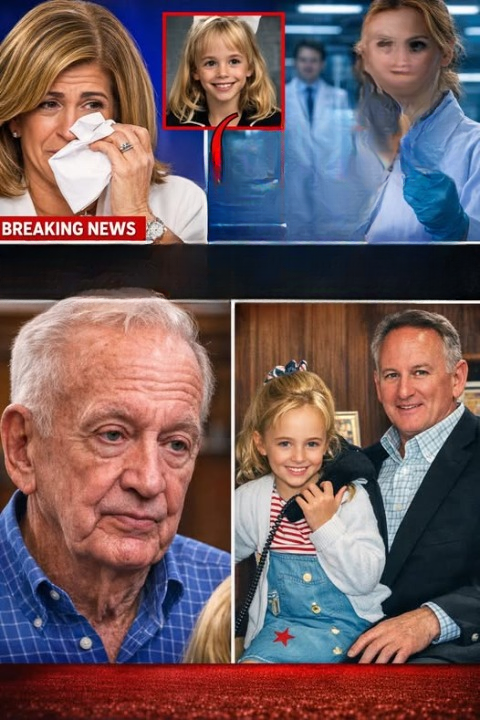
The death of JonBenét Ramsey remains one of the most enduring and widely discussed unsolved cases in modern American history. Nearly three decades after the tragic events of December 1996, the case continues to provoke debate, fascination, and reflection. It stands as a powerful example of how complex criminal investigations can become when evidence is compromised, media attention is intense, and answers remain elusive.
This article offers an in-depth, factual examination of the JonBenét Ramsey case. It explores her background, the events surrounding her death, early investigative challenges, the influence of media coverage, developments in forensic science, and why the case remains unresolved today. Rather than promoting speculation, this analysis focuses on verified information and the broader lessons the case presents.
Who Was JonBenét Ramsey?
JonBenét Patricia Ramsey was born on August 6, 1990, in Atlanta, Georgia. She was the youngest child of John and Patsy Ramsey. From an early age, JonBenét participated in child beauty pageants, where she gained attention for her confidence, appearance, and stage presence.
In the early 1990s, the Ramsey family relocated to Boulder, Colorado, where John Ramsey worked as a successful business executive. Friends and neighbors described JonBenét as energetic, playful, and affectionate. While her pageant involvement occasionally attracted public interest, her family lived a relatively private life prior to the tragedy.
That privacy would be abruptly shattered on December 26, 1996.
The Morning That Changed Everything
On the morning after Christmas, Patsy Ramsey reported JonBenét missing from the family’s Boulder home. A handwritten ransom note was discovered inside the house, demanding money and claiming JonBenét had been kidnapped.
Later that same day, JonBenét’s body was found in the basement of the home. The discovery immediately transformed what had initially appeared to be a kidnapping into a homicide investigation.
News of the case spread rapidly. Within hours, it became a national headline, and within days, it dominated television broadcasts and newspapers across the country. The combination of JonBenét’s age, the unusual circumstances, and the presence of a ransom note created intense public interest.
Early Investigative Challenges
From the beginning, the investigation faced serious obstacles. One of the most frequently cited issues was the handling of the crime scene. Standard procedures for securing and preserving evidence were not consistently followed, leading to contamination and loss of potentially critical information.
Numerous individuals were allowed inside the home before the scene was fully secured. This made it difficult for investigators to determine which physical evidence was relevant to the crime.
The ransom note itself presented another challenge. It was unusually long, detailed, and written on materials found inside the home. Its wording raised questions about the author’s familiarity with the family, yet no definitive conclusions could be drawn.
Focus on the Ramsey Family
Public and investigative attention quickly turned toward JonBenét’s immediate family. John and Patsy Ramsey, as well as their son Burke, became central figures in both media coverage and public speculation.
The absence of clear signs of forced entry, combined with the ransom note and the discovery of JonBenét’s body inside the home, led many observers to suspect that the crime may have involved someone within the household.
The Ramseys consistently denied any involvement and cooperated with investigators to varying degrees over the years. Despite ongoing scrutiny, no charges were ever filed against any family member.
The Role of Media Coverage
The JonBenét Ramsey case became one of the most heavily covered crime stories in U.S. history. Continuous media attention played a major role in shaping public perception.
Television panels, tabloid headlines, and speculative reporting often presented theories as facts. Early narratives proved difficult to reverse, even as new evidence emerged. This contributed to lasting public division over what may have occurred.
The case illustrates how intense media exposure can complicate investigations, influence public opinion, and place extraordinary pressure on law enforcement and families alike.
DNA Evidence and Forensic Developments
As forensic science advanced, investigators revisited the JonBenét Ramsey case using improved DNA testing techniques. Analysis of genetic material found on JonBenét’s clothing revealed DNA that did not match any member of the Ramsey family.
This evidence was significant. It formally excluded the immediate family as contributors to the DNA profile recovered from the crime scene. While this finding shifted investigative focus, it did not lead to the identification of a suspect.
The DNA results highlighted both the promise and limitations of forensic science. While they clarified certain aspects of the case, they were insufficient on their own to provide definitive answers.
Why Cold Cases Are So Difficult to Solve
The JonBenét Ramsey investigation exemplifies the challenges of cold cases. Over time, evidence degrades, memories fade, and witnesses become unavailable. Early missteps can permanently limit what investigators are able to prove later.
Cold cases often depend on advances in technology, renewed witness cooperation, or new information coming to light. While forensic tools such as DNA analysis, trace evidence examination, and digital reconstruction have improved, they cannot always compensate for evidence that was lost or compromised early on.
Major Theories Considered
Over the years, investigators and experts have explored multiple theories, including:
- Intruder Theory: Suggests an unknown individual entered the home and committed the crime.
- Accidental Death Hypotheses: Propose that the death resulted from an unintended incident followed by a cover-up, though evidence remains inconclusive.
- Early Family Involvement Theories: Once widely discussed but later weakened by DNA evidence excluding the family.
None of these theories has been conclusively proven, and the case remains officially unsolved.
Lessons for Law Enforcement and the Justice System
The JonBenét Ramsey case has become a reference point in discussions about investigative procedure. Key lessons include:
- The importance of securing crime scenes immediately
- The long-term consequences of early investigative errors
- The impact of media pressure on complex investigations
- The need for clear communication between law enforcement and the public
These lessons continue to influence training and policy discussions in criminal justice.
Why the Case Still Matters
Despite the passage of time, interest in the JonBenét Ramsey case remains strong. It represents more than an unsolved crime—it reflects broader issues surrounding justice, media responsibility, and the limitations of investigative systems.
For many, the case symbolizes the hope that advances in forensic science or new information may one day bring clarity. For others, it serves as a reminder of how easily facts can become obscured by speculation.
Conclusion
The death of JonBenét Ramsey remains one of the most haunting mysteries in American history. While significant progress has been made in understanding certain aspects of the case, definitive answers remain out of reach.
Through careful examination, the case underscores the importance of evidence preservation, responsible reporting, and patience in the pursuit of truth. Whether the mystery is ever fully resolved or not, JonBenét Ramsey’s story continues to influence discussions about justice, accountability, and the enduring impact of unresolved tragedy.