Incidents involving elected officials or political party leaders and law enforcement often attract heightened public attention. Such cases raise important questions about accountability, equality before the law, and how public trust is shaped by the behavior of those in leadership positions. When these events are captured on video or widely reported, they can quickly become part of broader political and social conversations.
Recently, a local political leader in Rhode Island faced a misdemeanor charge following a traffic stop, prompting discussion about conduct during police encounters and the responsibilities that accompany public roles. Separately, another incident involving a prominent New York City official drew national attention after a confrontation with federal authorities during an immigration-related proceeding.
While these cases differ in circumstances and legal context, both highlight ongoing debates about public behavior, law enforcement interactions, and the standards applied to individuals in positions of influence.
The Rhode Island Traffic Stop: What Is Known
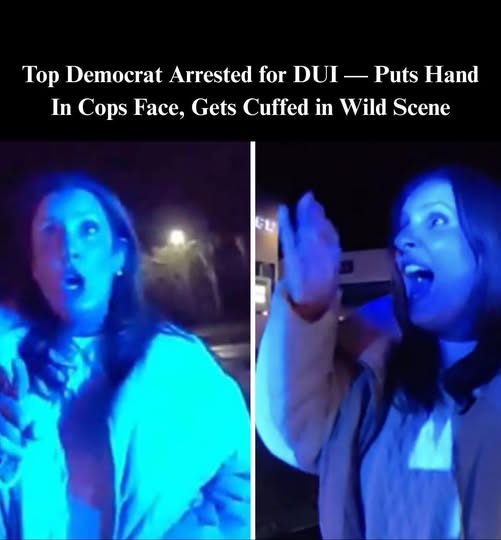
According to publicly available reports, Maria Bucci, age 51, who serves as chairwoman of the Democratic committee in Cranston, Rhode Island, was stopped by police in East Greenwich on December 18. Cranston is the state’s second-largest city, and Bucci is a well-known figure in local politics.
The traffic stop reportedly occurred after an officer observed what was described as irregular driving behavior. During the stop, the officer stated that he detected the odor of alcohol and initiated a standard roadside assessment.
It is important to note that at the time of reporting, the charge remains a misdemeanor allegation, and Bucci is entitled to the presumption of innocence under the law.
Body Camera Footage and Public Attention
The incident gained broader attention after police body camera footage was released. Body cameras are increasingly used across the United States to document interactions between law enforcement officers and the public, providing an objective record of events.
In the footage, Bucci is heard questioning whether the officer recognized her. The officer responded that he did not and made clear that the stop would proceed according to standard procedure.
The video shows the officer explaining the reason for the stop and attempting to conduct field sobriety tests. These tests are commonly used during traffic stops when impairment is suspected and are part of routine law enforcement protocols.
Conduct During the Stop
During the interaction, Bucci requested that other individuals be contacted on her behalf, including family members and public officials. At one point, she expressed frustration with the situation and made comments suggesting she believed the stop was unfair.
Law enforcement officials continued the process without deviation, emphasizing that all individuals are subject to the same procedures regardless of their background or position.
Eventually, Bucci was taken into custody. Reports indicate that she was later released on personal recognizance and scheduled to appear in court at a later date.
Legal Status and Next Steps
Following the arrest, Bucci was charged with a misdemeanor offense related to driving under the influence. As with all criminal cases, the legal process will determine the outcome based on evidence, legal arguments, and applicable law.
No conviction has been reported, and no final judgment has been issued. Any conclusions about guilt or innocence would be premature at this stage.
Bucci’s Background in Public Service
Maria Bucci has a long history of involvement in Rhode Island politics. She previously served on the Cranston City Council from 2004 to 2008 and has sought higher office on multiple occasions.
Her past campaigns include an unsuccessful run for mayor of Cranston and a more recent bid for a seat in the Rhode Island House of Representatives. In addition to her electoral efforts, she has remained active in party leadership roles.
These positions place public figures under increased scrutiny, particularly when personal conduct becomes a matter of public record.
Public Reaction and Accountability
Incidents involving public officials and alleged legal violations often prompt strong reactions. Some members of the public argue that such cases demonstrate that no one is above the law. Others express concern about privacy, fairness, or media coverage.
The release of body camera footage has become a focal point in these discussions, as it allows the public to see interactions directly rather than relying solely on written accounts.
Experts in public ethics note that transparency can strengthen trust when handled responsibly, but caution that incomplete or selectively presented footage can also lead to misinterpretation.
The Broader Context: Public Officials and Law Enforcement Encounters
The Rhode Island incident occurred amid broader national discussions about how public officials interact with law enforcement and federal agencies.
In a separate and unrelated case earlier this year, New York City Comptroller Brad Lander was briefly detained by federal authorities during an encounter involving Immigration and Customs Enforcement (ICE). That incident took place at a federal building during an immigration court proceeding.
While the circumstances differed significantly from a traffic stop, the event similarly sparked debate about the conduct of public officials, the role of law enforcement, and the limits of protest or intervention.
The New York Case: A Different Legal Context
According to reports, Lander became involved in an interaction with ICE agents who were escorting an individual from immigration court. Video footage shows Lander questioning whether the agents had appropriate legal documentation and physically positioning himself near them.
Federal officials stated that the interaction led to his temporary detention on allegations related to interference with law enforcement activity. Lander was later released, and local officials announced that immediate charges had been dropped.
However, federal authorities indicated that the matter remained under review, underscoring the distinction between release and final legal resolution.
Statements From Officials and Advocacy Groups
Following the New York incident, statements from federal agencies emphasized concerns about officer safety and adherence to legal procedures. Officials noted an increase in assaults against federal law enforcement personnel and stressed that interference with official duties is taken seriously.
At the same time, civil liberties organizations expressed concern about the arrest, arguing that public officials and private citizens alike have the right to ask questions about legal authority, particularly in sensitive contexts such as immigration enforcement.
These differing perspectives reflect ongoing tensions between enforcement priorities and civil liberties advocacy.
Comparing the Two Incidents
While the Rhode Island traffic stop and the New York federal building incident differ in many respects, they share some common themes:
- Both involve public officials or party leaders
- Both were captured on video and widely circulated
- Both prompted public debate about accountability and conduct
However, it is important not to conflate the cases. Each involves different laws, agencies, and circumstances, and each must be evaluated independently.
The Role of Video in Shaping Public Opinion
Video recordings, whether from body cameras or bystanders, have become central to how the public understands interactions with law enforcement. While video can provide valuable context, experts caution that it represents only part of a broader legal and factual picture.
Angles, audio clarity, and timing all influence interpretation. Legal determinations rely on comprehensive evidence, not just video clips.
Presumption of Innocence and Due Process
A fundamental principle of the U.S. legal system is the presumption of innocence. Allegations, arrests, or charges do not equate to guilt.
Public discourse surrounding these incidents benefits from respecting due process and allowing courts to determine outcomes based on evidence and law rather than public reaction.
Ethical Expectations for Public Figures
Public officials are often held to higher ethical standards due to their leadership roles. Many ethics experts argue that how leaders respond during challenging situations can influence public trust more than the situation itself.
Calm cooperation, respect for legal procedures, and measured communication are often cited as best practices for maintaining credibility.
Media Responsibility and Reporting Standards
Responsible journalism plays a critical role in informing the public without inflaming tensions. This includes:
- Avoiding sensational headlines
- Clearly distinguishing allegations from facts
- Providing context and multiple perspectives
Such standards are especially important in politically charged environments.
Broader Implications for Public Trust
Trust in institutions—including government, law enforcement, and political parties—depends in part on consistent application of rules and transparency in accountability.
When public figures face scrutiny, how institutions respond can either reinforce or undermine confidence in fairness and the rule of law.
Lessons for Civic Culture
These incidents offer broader lessons for civic culture:
- Public roles come with heightened visibility and responsibility
- Legal processes exist to address alleged misconduct
- Respectful engagement with law enforcement benefits all parties
They also highlight the importance of separating individual actions from broader political identities.
Conclusion: Accountability, Process, and Perspective
Recent incidents involving political figures and law enforcement have sparked significant public discussion. While emotions and opinions vary, the underlying principles remain constant: accountability under the law, respect for due process, and responsible public discourse.
In the Rhode Island case, legal proceedings will determine the outcome based on evidence and established procedures. In the New York case, ongoing reviews will clarify what actions, if any, are warranted.
Ultimately, these situations serve as reminders that democratic systems rely on both transparency and restraint. Public trust is strengthened not by assumption or accusation, but by adherence to lawful processes and measured evaluation of facts.