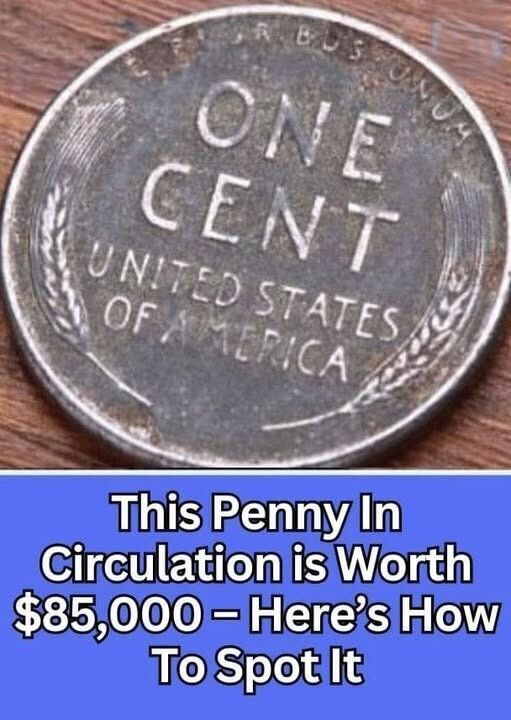
Coins are among the most common objects people encounter every day. They sit in pockets, jars, drawers, and forgotten containers throughout homes across the country. Because of their familiarity, most people rarely stop to consider that a single coin—especially one with a face value of just one cent—could hold extraordinary historical and monetary significance.
Yet within the world of numismatics, the study and collection of coins, certain small objects stand out as remarkable artifacts. One of the most well-known examples is a rare penny produced during World War II that, under specific circumstances, has sold for tens of thousands of dollars. This coin is not valuable because of gold content or elaborate design, but because of an unusual historical decision, an accidental mistake, and extreme scarcity.
This article explores the story of the 1943 copper Lincoln wheat penny, explaining why it exists, how it differs from ordinary coins of the same year, how collectors identify authentic examples, and why it continues to capture public imagination. Rather than presenting the topic as a promise of sudden wealth, this guide focuses on history, verification, and responsible evaluation.
The Historical Context: America During World War II
To understand why this particular penny is so unusual, it is essential to understand the conditions under which it was produced. In 1943, the United States was deeply involved in World War II. The nation’s industrial capacity was focused almost entirely on supporting the war effort, from producing weapons and vehicles to manufacturing communication equipment and infrastructure.
Copper was one of the most critical materials during this period. It was used extensively for electrical wiring, shell casings, and military hardware. As demand increased, the federal government took steps to conserve copper wherever possible. One such step involved the production of coinage.
At the time, U.S. pennies were traditionally made from a copper-based alloy. However, in 1943, the U.S. Mint was instructed to temporarily change the composition of the one-cent coin to reduce copper usage. This decision marked a unique moment in American coinage history.
The 1943 Steel Penny: A One-Year Experiment
To replace copper, the U.S. Mint chose zinc-coated steel as the new material for pennies. These coins were lighter in color, with a silvery-gray appearance that clearly distinguished them from traditional copper pennies. Because steel is magnetic, these coins also behave differently than earlier and later pennies.
The steel penny was produced at multiple U.S. Mint facilities in 1943 and entered widespread circulation. While initially unfamiliar to the public, these coins became a common sight during the war years. However, they also had drawbacks. The zinc coating could wear off, causing the steel underneath to rust, and many people disliked their appearance and feel.
Despite these issues, the steel penny served its purpose as a wartime substitute. By 1944, the Mint returned to producing copper-based pennies using recycled materials, including shell casings.
In theory, every penny produced in 1943 should have been made of steel.
How Copper Pennies Were Accidentally Made in 1943
Despite careful planning, industrial processes are rarely perfect. Coin production involves large-scale machinery and the use of metal blanks—flat discs that are stamped into coins. In 1943, these blanks were supposed to be steel.
However, it is believed that a small number of copper blanks from 1942 remained in the machinery or storage areas. These leftover blanks were inadvertently mixed with the steel blanks and fed into the presses. When this happened, the machines stamped them with 1943 dies, producing pennies that looked like normal copper coins but bore the wartime date.
Because the error was not immediately detected, these coins entered circulation. At the time, pennies were widely used, and few people paid close attention to their composition. As a result, the mistake went largely unnoticed.
Only years later did collectors begin identifying these rare copper pennies and realizing their significance.
Rarity and Survival Rates
The value of any collectible is strongly influenced by how many examples exist. In the case of the 1943 copper penny, experts estimate that fewer than 25 genuine examples have been authenticated across all U.S. Mint locations. Some estimates are even lower.
These coins are rare not only because they were produced accidentally, but also because they had to survive decades of circulation, melting, loss, and damage. Over time, many coins are removed from circulation for various reasons, making surviving examples even more scarce.
Each confirmed 1943 copper penny has been carefully studied, documented, and traced. Because of this, the numismatic community takes authentication extremely seriously.
Why These Pennies Command High Prices
When a genuine 1943 copper penny appears at auction, it often attracts significant attention from collectors. The combination of historical context, accidental origin, and extreme rarity makes it one of the most desirable U.S. coins.
Prices vary depending on condition, provenance, and market demand. Well-preserved examples have sold for prices that reflect both their scarcity and their importance in American coin history. Coins showing wear or damage may still command substantial sums due to their rarity, though values differ based on expert appraisal.
It is important to note that prices fluctuate over time and are influenced by broader market conditions. No value is guaranteed, and past sales do not ensure future results.
Common Misconceptions and the Risk of Counterfeits
High-profile collectible coins often attract misinformation. Many people mistakenly believe that any old penny with a 1943 date is valuable, which is not the case. The vast majority of 1943 pennies are steel and are relatively common.
Because of the significant interest surrounding copper versions, counterfeit attempts have existed for decades. These include:
- Altering the date on other pennies to resemble 1943Personal growth journals
- Coating steel pennies with copper-colored material
- Misrepresenting damaged or altered coins as rare originals
For this reason, professional verification is essential before assigning any value to a coin.
Basic Identification Characteristics
While definitive authentication requires professional equipment, collectors often begin with basic observations. A genuine 1943 copper penny typically has:
- A 1943 date clearly struck by the Mint
- A copper-colored appearance consistent with pre-war pennies
- The Lincoln wheat ear design on the reverse
- Non-magnetic behavior
One commonly mentioned preliminary check involves magnetism. Copper is not magnetic, while steel is. If a coin is strongly attracted to a magnet, it is almost certainly a steel penny or a modified version.
This test alone does not confirm authenticity, but it can help rule out common fakes.
Weight and Composition Differences
Another distinguishing factor is weight. Steel pennies weigh less than copper-based pennies. Precision scales can reveal these differences, though small variations can occur due to wear.
Professional grading services use advanced methods, including metal analysis, to confirm composition without damaging the coin. These services provide reliable assessments that collectors and buyers trust.
The Importance of Professional Authentication
Anyone who believes they may possess a rare coin should seek professional evaluation. Reputable coin dealers, numismatic experts, and grading organizations have the tools and expertise to authenticate coins accurately.
Certification provides several benefits:
- Confirmation of authenticity
- Assessment of condition
- Documentation for insurance or sale
- Increased buyer confidence
Without professional verification, claims about a coin’s value should be treated with caution.
Where Rare Coins Are Often Found
Many valuable coins are discovered not through deliberate searching, but by chance. Old collections, inherited belongings, and long-forgotten containers sometimes contain coins that have not been examined closely in decades.
In the mid-20th century, coins were used more frequently in daily transactions. It was not uncommon for people to save spare change in jars, boxes, or drawers. Over time, these collections were passed down or stored away.
While most such collections contain ordinary coins, the possibility of finding something unusual contributes to ongoing interest in coin collecting.
Responsible Expectations and Realistic Outcomes
It is important to approach this topic with realistic expectations. The odds of finding a genuine 1943 copper penny are extremely low. Millions of people have examined their coins without discovering one.
Coin collecting should be viewed primarily as a hobby and an educational pursuit rather than a financial strategy. The historical and cultural value of coins often outweighs their monetary worth.
The Broader Significance of Mint Errors
Mint errors are an important area of numismatics. They provide insight into manufacturing processes and historical conditions. Some errors are minor and common, while others are rare and highly sought after.
The 1943 copper penny stands out because it combines an error with a unique historical moment. It represents the intersection of wartime necessity, industrial production, and chance.
Why This Coin Continues to Fascinate
Beyond its value, the 1943 copper penny captures public imagination because it challenges assumptions. It reminds people that history is not always tidy and that small objects can carry large stories.
It also illustrates how everyday items can become historical artifacts over time. A coin once spent on basic goods now serves as a reminder of national sacrifice and adaptation during a global conflict.
Educational Value and Numismatic Interest
For historians and collectors alike, the coin offers educational value. It encourages learning about wartime America, manufacturing processes, and the evolution of currency.
Many collectors are drawn not by profit, but by the opportunity to preserve and study pieces of the past.
Final Thoughts: Small Objects, Lasting Stories
The story of the 1943 copper penny is not about guaranteed wealth or hidden fortunes. It is about history, chance, and careful study. While such coins are extraordinarily rare, their existence highlights the unpredictable nature of manufacturing and the enduring appeal of historical artifacts.
For those interested in coins, the lesson is not to expect sudden discovery, but to appreciate the craftsmanship, history, and stories embedded in everyday objects.
Pennies may seem insignificant, but as history has shown, even the smallest items can carry remarkable meaning.