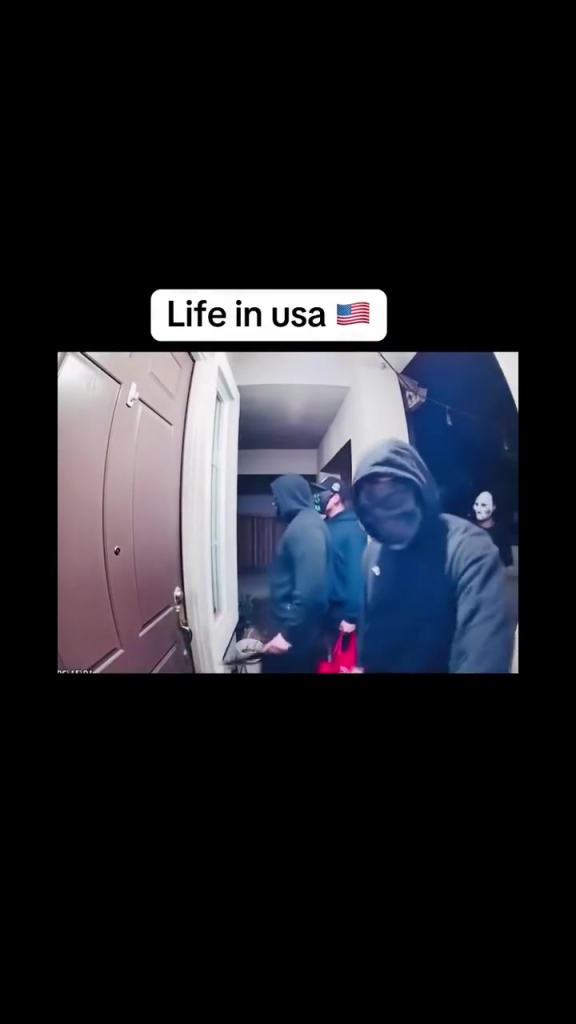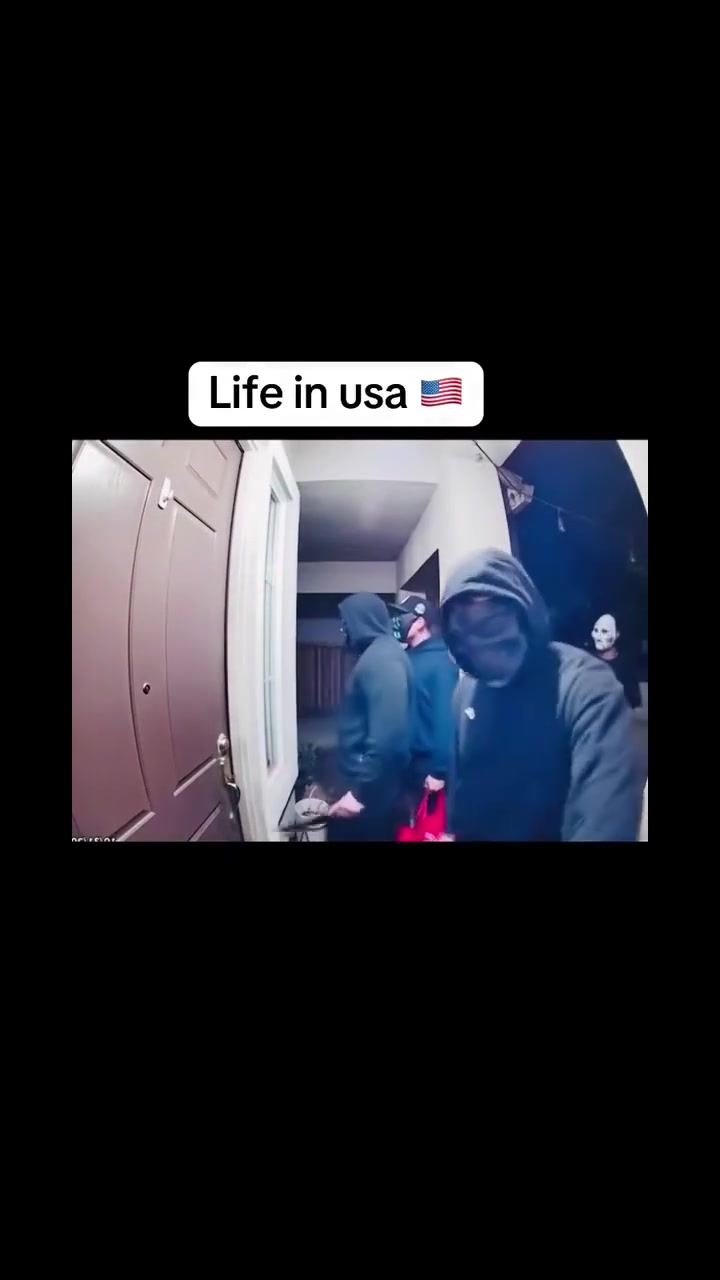
A short piece of doorbell camera footage labeled simply “Life in USA
” is now making waves online, and viewers say it perfectly captures the uneasy reality many people feel after dark.
The video shows a quiet residential doorway at night. The porch light is on. Everything looks calm — until multiple hooded figures step into view. Faces partially covered. Hands low. Movements slow but deliberate. One person stands closest to the camera, staring directly into the lens, while others linger just behind him.
That stare is what unsettled viewers the most.
There’s no shouting. No immediate violence. Just silence, body language, and tension thick enough to feel through the screen. The moment feels frozen — the kind where a homeowner watching live would have their heart racing, unsure whether to speak, hide, or call for help.
Social media reacted instantly.
“This is my worst nightmare.”
“Why are they just standing there?”
“This is why doorbell cams exist.”
The clip doesn’t show what happened next, and that mystery has fueled speculation. Some believe the group may have been attempting a break-in. Others suggest it could have been a prank, mistaken address, or something less sinister. But many point out a hard truth: when multiple masked individuals show up at your door late at night, intent becomes secondary to fear.
Security experts say situations like this are becoming more common — not necessarily because crime is skyrocketing everywhere, but because more people are seeing it happen thanks to cameras. Doorbell footage has changed how Americans experience safety. What once might have been dismissed as “a noise outside” is now a recorded moment replayed millions of times.
The phrase “Life in USA ” struck a nerve.
To some viewers, it felt sarcastic — a commentary on rising anxiety, porch piracy, late-night encounters, and the feeling that you always need to be on guard. To others, it reflected a broader cultural shift: trust is lower, vigilance is higher, and everyone is watching their front door through a lens.
Psychologists say the fear triggered by clips like this isn’t just about crime. It’s about uncertainty. The human brain hates not knowing intent. When faces are covered and actions are unclear, imagination fills in the blanks — often with worst-case scenarios.
That’s why the video feels so intense, even without anything “happening.”
Some commenters urged homeowners to avoid confrontation, suggesting lights, cameras, and distance are the safest tools. Others argued the footage shows why community awareness and prevention matter more than ever.
No police report has been linked to the clip, and there’s no confirmation of what the group was actually doing. But the lack of answers hasn’t slowed its spread. If anything, it’s made the video more powerful.
Because for many people watching, this isn’t just someone else’s porch.
It’s theirs.
A quiet night.
A sudden alert.
A camera showing figures you don’t recognize — standing too close for comfort.
Whether this was a harmless moment or something more serious, the footage taps into a shared feeling across the country: the sense that safety can change in seconds, and that sometimes the most frightening moments aren’t loud or violent — they’re silent, staring back at you through your own front door camera.